For UK businesses chasing growth, tenders represent one of the biggest opportunities and one of the biggest headaches. With the UK public sector spending over £300 billion annually on goods, works and services, roughly 14% of GDP, the prize for winning more bids is enormous. Yet the process of writing proposals remains slow, repetitive and resource hungry. This is exactly where AI proposal writing is transforming how ambitious companies compete.
In this guide we explore how to use AI to write proposals and win more tenders in half the time, from drafting compelling answers to automating compliance checks. Whether you are a solo consultant or a busy construction firm, the right approach to bid writing AI can free your team to focus on strategy rather than admin.
Why Tender Writing Is Ripe for AI Automation
Anyone who has assembled a bid knows the pain. Repetitive questions, tight deadlines, hours spent reformatting boilerplate content and the constant fear of missing a single mandatory requirement. Traditional bid writing is one of the most labour intensive activities in any sales cycle.
The numbers tell the story. Industry analysis suggests teams using AI now save an average of 15 to 20 hours per RFP response, while AI generated drafts typically require only 20 to 30% editing time compared with writing from scratch. For smaller firms the gains are even sharper, with agencies cutting proposal turnaround from three hours to under one hour.
Adoption has surged accordingly. According to recent benchmarking, around 68% of UK proposal and bid teams now use AI in some capacity, up from 42% in 2023. Tender automation is no longer a competitive edge reserved for large enterprises. It is fast becoming standard practice.
The Building Blocks of AI Proposal Writing
Using AI effectively is about more than typing a prompt into a chatbot. The most successful UK businesses build a structured system around four core capabilities.
1. Smart Content Libraries and Proposal Templates AI
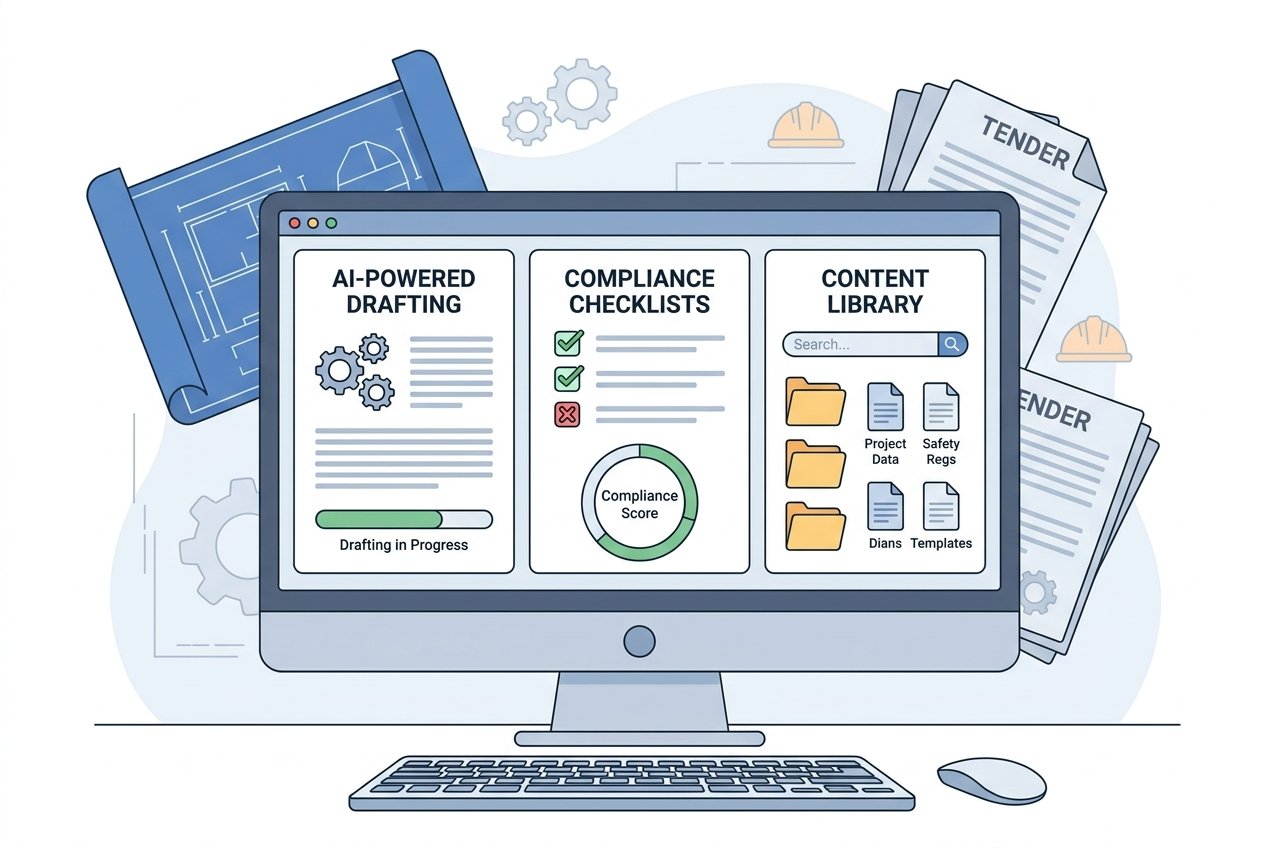
The foundation of fast bidding is reusable content. Modern proposal templates AI tools store your best answers, case studies and credentials in a searchable library, then surface the most relevant material for each new tender. Instead of rewriting your company background for the hundredth time, the system retrieves and tailors it automatically.
This matters because consistency wins contracts. Buyers expect polished, on brand and accurate responses. An intelligent content library ensures every bid reflects your strongest messaging while still allowing personalisation for each opportunity.
2. Automated Drafting and First Responses
The biggest time saving comes from AI generating first draft answers. Feed the tool a question and your supporting information, and bid writing AI produces a coherent, structured response in seconds. Your experts then refine rather than create, which is far faster and less draining.
This shift from blank page to red pen is the single largest efficiency gain in modern proposal work, and it is why so many firms are rethinking their entire bid process.
3. Compliance and Requirement Checking
Losing a tender on a technicality is heartbreaking. AI tools now automatically check responses against RFP requirements, flag missing mandatory information and ensure word counts and formatting rules are met. This directly correlates with higher win rates, particularly in highly regulated sectors.
With the Procurement Act 2023 having come into force in February 2025 and new social value requirements now mandatory for above threshold central government procurements, compliance complexity has only increased. Automated checking helps you keep pace with evolving rules.
4. Personalisation and Win Themes
Generic proposals lose. AI helps you weave in client specific language, address evaluation criteria precisely and develop persuasive win themes at scale. The result is bids that feel bespoke even when produced quickly.
Construction Tender AI: A Sector Transformed
Few industries stand to gain more than construction. Bids are document heavy, deadlines are punishing and pre qualification questionnaires demand vast amounts of supporting evidence. Construction tender AI is now widely used to automate the extraction of data from pre qualification documents, run compliance checks and assemble method statements from approved content.
For contractors juggling multiple opportunities, this means responding to more tenders without expanding the team. Given that the UK government maintains an SME procurement spend target of 33%, smaller construction firms that adopt these tools early are well placed to capture a larger share of public works.
A Practical Step by Step Workflow
Here is a streamlined process for putting AI to work on your next bid.
Step one, capture the requirements. Use AI to read and summarise the tender documents, extracting every question, deadline and mandatory requirement into a single structured brief.
Step two, build your response plan. Map each question to relevant content in your library and identify any gaps that need fresh input from your team.
Step three, generate first drafts. Let bid writing AI produce initial answers using your approved content and the specific evaluation criteria.
Step four, refine and personalise. Your subject matter experts edit for accuracy, insert win themes and tailor messaging to the buyer.
Step five, run compliance checks. Use automated review to confirm every requirement is met before submission.
Done well, this workflow can genuinely halve your bid production time while improving quality. If you would like help designing a system like this, our team at Kaizen AI Consulting specialises in building tailored automation workflows that fit how your business actually operates.
Avoiding the Common Pitfalls
AI is powerful, but it is not a set and forget solution. Three mistakes trip up the unwary.
First, over reliance on raw output. AI drafts must be reviewed by humans who understand the client and the technical detail. Buyers can spot generic, unedited content instantly.
Second, neglecting data security. Tender documents often contain sensitive commercial information. Choosing tools with robust governance and keeping your content library well managed is essential.
Third, ignoring visual impact. Winning proposals in 2026 demand more than words. Strategic Proposals reports that visual design has shifted from a nice to have to a strategic differentiator, with infographics and compelling layouts now expected as standard.
How Kaizen AI Consulting Helps You Win More
Implementing AI proposal writing well requires the right combination of technology, process and training. This is where professional guidance pays for itself. At Kaizen AI Consulting we help UK businesses design and deploy practical tender automation that delivers measurable results, from intelligent content libraries to fully automated compliance checking.
Our approach mirrors the philosophy in our wider work, much like the principles we share in our perspective on taking businesses from startup to success. We focus on continuous improvement, embedding systems your team will actually use rather than bolting on tools that gather dust. You can explore the full range of support on our AI consulting services page.
The opportunity is clear. With procurement reform increasing complexity and competition intensifying, the businesses that embrace bid writing AI now will win more contracts in less time, while their rivals struggle with spreadsheets and late nights.
Ready to Win More Tenders in Half the Time?
If you are spending too long on proposals and not enough time winning work, it is time to change your approach. Get in touch with Kaizen AI Consulting today for a friendly, no obligation conversation about how AI proposal writing and tender automation can transform your bid success. Let us help you turn tendering from a chore into a competitive advantage.