AI for Small Businesses: A Beginner’s Guide to Getting Started
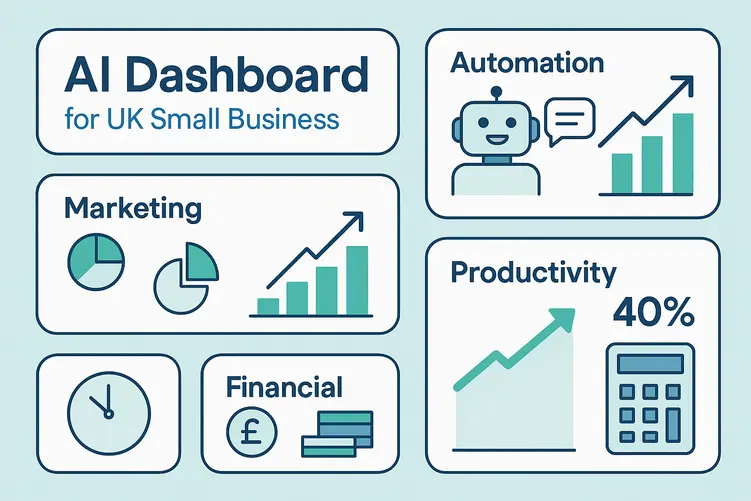
Artificial intelligence is no longer the exclusive domain of tech giants and multinational corporations. Today, AI for small business is not just accessible but essential for remaining competitive in an increasingly digital marketplace. According to UK government research, businesses that adopt AI technologies see an average productivity increase of 40%, yet only 15% of small businesses in the UK have implemented AI solutions.
If you are a small business owner wondering where to begin with AI implementation, this beginner AI guide will walk you through everything you need to know to get started, from understanding the basics to implementing your first AI solution.
What Exactly is AI for Small Business?
Artificial intelligence refers to computer systems that can perform tasks typically requiring human intelligence, such as learning, problem-solving, pattern recognition, and decision-making. For small businesses, AI basics involve understanding that you do not need complex programming knowledge or massive budgets to benefit from this technology.
Small business automation through AI can take many forms, including chatbots that handle customer enquiries, predictive analytics that forecast sales trends, automated email marketing systems, inventory management tools, and intelligent scheduling software. These solutions work by analysing data, identifying patterns, and making recommendations or taking actions based on what they learn.
Research from The Federation of Small Businesses shows that UK small businesses using AI report an average time saving of 12 hours per week on routine tasks. This freed-up time allows business owners to focus on strategic growth activities rather than administrative work.
Why Small Businesses Should Embrace AI Now
The question is no longer whether small businesses should adopt AI, but when. Here are the compelling reasons why now is the ideal time for AI implementation UK businesses should consider:
1. Cost-Effectiveness Has Improved Dramatically
Cloud-based AI solutions have made the technology affordable for businesses of all sizes. You can now access sophisticated AI tools through monthly subscriptions costing less than hiring a part-time employee. According to TechUK, the average cost of AI software for small businesses has decreased by 65% over the past five years.
2. Competitive Advantage
Your competitors are likely exploring AI, and early adopters gain significant advantages. AI enables small businesses to compete with larger organisations by automating processes, providing 24/7 customer service, and making data-driven decisions quickly.
3. Enhanced Customer Experience
Today’s customers expect instant responses and personalised experiences. AI chatbots can provide immediate customer support, whilst AI-powered recommendation engines can suggest products based on browsing behaviour and purchase history, increasing both customer satisfaction and sales.
4. Improved Decision-Making
AI systems can analyse vast amounts of data far more quickly than humans, identifying trends and insights that might otherwise go unnoticed. This capability is invaluable for small businesses looking to make informed decisions about inventory, pricing, marketing campaigns, and business expansion.
Practical AI Applications for Small Businesses
Understanding AI basics is easier when you see real-world applications. Here are the most impactful ways small businesses are currently using AI:
Customer Service Automation
AI-powered chatbots can handle routine customer enquiries 24/7, freeing your team to focus on complex issues. These systems learn from interactions and continuously improve their responses. Businesses implementing chatbots report handling 80% of routine queries automatically, according to British Chambers of Commerce data.
Marketing and Sales Optimisation
AI can analyse customer behaviour to predict which leads are most likely to convert, personalise email marketing campaigns, optimise social media posting times, and even create content. Small business automation in marketing can increase conversion rates by up to 50% whilst reducing manual work hours.
At Kaizen AI Consulting, we help small businesses implement AI-driven marketing solutions that deliver measurable results without overwhelming your team with technical complexity.
Financial Management
AI tools can automate invoicing, predict cash flow issues before they occur, categorise expenses, and identify unusual transactions that might indicate fraud. This level of financial oversight was previously only available to large enterprises with dedicated accounting departments.
Inventory and Supply Chain
Predictive AI algorithms can forecast demand, optimise stock levels, and suggest reorder times based on seasonal trends, reducing both stockouts and excess inventory costs.
A Beginner AI Guide: Your Step-by-Step Implementation Plan
Starting your AI journey does not need to be overwhelming. Follow this practical beginner AI guide to implement your first AI solution successfully:
Step 1: Identify Your Biggest Pain Points
Begin by listing the tasks that consume the most time or cause the most frustration in your business. Common areas include customer service response times, data entry, appointment scheduling, invoice processing, and social media management. These pain points are your best starting places for AI implementation.
Step 2: Research Available Solutions
Once you have identified your priority area, research AI tools designed for that specific purpose. Look for solutions that offer free trials, have good UK customer support, integrate with your existing systems, and have positive reviews from similar-sized businesses. The UK market offers numerous AI solutions specifically designed for local business needs.
Step 3: Start Small with a Pilot Project
Do not attempt to transform your entire business overnight. Choose one specific process to automate or enhance with AI. This approach allows you to learn, measure results, and build confidence before expanding. A successful pilot project also helps you secure buy-in from your team for future AI initiatives.
Step 4: Ensure Proper Data Preparation
AI systems learn from data, so the quality of your data directly impacts results. Before implementing AI, ensure your data is accurate, organised, and accessible. This might involve cleaning up customer databases, standardising file formats, or consolidating information from multiple sources.
Step 5: Train Your Team
Technology only succeeds when people know how to use it effectively. Invest time in training your team on new AI tools. Most modern AI solutions are designed to be user-friendly, but proper training ensures maximum adoption and value. Consider working with AI implementation specialists who can provide tailored training for your specific business context.
Step 6: Measure and Optimise
Establish clear metrics before implementation so you can measure success objectively. Track time saved, cost reductions, customer satisfaction improvements, or revenue increases. Use these insights to refine your AI implementation and identify additional opportunities for automation.
Overcoming Common AI Implementation Challenges
Small businesses often face specific obstacles when adopting AI. Understanding these challenges helps you prepare and overcome them:
Budget Constraints
Start with free or low-cost tools that offer significant value. Many AI platforms offer tiered pricing, allowing you to begin with basic features and upgrade as you see results. Remember that the cost of not implementing AI includes lost productivity and competitive disadvantage.
Technical Expertise Gaps
You do not need to become an AI expert to benefit from the technology. Focus on user-friendly, no-code solutions designed for non-technical users. Alternatively, partner with consultants who specialise in AI implementation UK businesses can trust. Kaizen AI Consulting offers accessible AI implementation services specifically designed for small businesses without technical teams.
Change Resistance
Team members may worry that AI will replace their jobs. Address these concerns proactively by emphasising how AI handles repetitive tasks, allowing staff to focus on more engaging, strategic work. Involve your team in selecting and implementing AI tools to build ownership and enthusiasm.
Data Privacy Concerns
Ensure any AI solution you implement complies with UK GDPR regulations. Choose vendors that prioritise data security, offer clear privacy policies, and store data within the UK or EU when possible. This is particularly important for businesses handling sensitive customer information.
The ROI of AI for Small Business
Understanding the potential return on investment helps justify AI expenditure. Small businesses implementing AI typically see results in several areas. Operational efficiency improves through reduced time spent on manual tasks, with businesses reporting average time savings of 30-40% in automated processes.
Customer experience enhancements lead to increased retention rates and positive word-of-mouth referrals. Data from the British Chambers of Commerce indicates that businesses using AI for customer service see satisfaction scores improve by an average of 25%.
Revenue growth often follows AI implementation as businesses can serve more customers, personalise offerings, and identify new opportunities more quickly. Small businesses report an average revenue increase of 15-20% within the first year of implementing AI for small business solutions.
Cost reduction occurs through decreased labour costs for routine tasks, reduced errors, and optimised resource allocation. The combination of increased efficiency and reduced costs typically means AI implementations pay for themselves within 6-12 months.
Taking Your First Steps with Confidence
The journey to AI implementation UK small businesses embark upon does not require technical expertise or enormous budgets. What it does require is a willingness to embrace change, a clear understanding of your business challenges, and a commitment to continuous improvement.
Start by identifying one area where automation could make the biggest difference. Research solutions designed for small businesses, take advantage of free trials, and do not be afraid to start small. Every major digital transformation begins with a single step.
Remember that you do not have to navigate this journey alone. Professional guidance can accelerate your success whilst avoiding costly mistakes. If you are ready to explore how AI can transform your small business but are not sure where to begin, get in touch with Kaizen AI Consulting today. Our team specialises in making AI accessible and practical for UK small businesses, providing hands-on support from strategy through implementation.
The future of small business is intelligent, automated, and customer-focused. By taking action now, you position your business not just to survive but to thrive in an increasingly competitive marketplace. AI for small business is not about replacing the human touch that makes your business special; it is about amplifying your capabilities so you can deliver even more value to your customers whilst building a more sustainable, profitable business.
The question is not whether AI is right for your small business, but rather which AI solution you will implement first. With the right approach and support, your AI journey can begin today, setting your business on a path to greater efficiency, growth, and success.