In today’s competitive digital landscape, small businesses face an uphill battle when competing against larger enterprises with substantial marketing budgets. However, artificial intelligence is levelling the playing field, making sophisticated search optimization techniques accessible to businesses of all sizes. AI SEO represents a transformative approach to improving your website’s visibility, helping small businesses compete effectively in search engine results without requiring extensive technical expertise or large teams.
This comprehensive guide explores how AI-powered tools and strategies can revolutionize your small business website’s search performance, drive organic traffic, and ultimately increase your revenue through intelligent, data-driven optimization.
Understanding AI SEO and Why It Matters for Small Businesses
AI SEO refers to the application of artificial intelligence technologies to enhance search engine optimization activities. Rather than relying solely on manual research and implementation, AI SEO leverages machine learning algorithms, natural language processing, and predictive analytics to identify opportunities, automate repetitive tasks, and deliver insights that would take humans countless hours to uncover.
According to Search Engine Journal, businesses using AI-powered SEO tools report a 40% increase in organic traffic and a 35% reduction in time spent on optimization tasks. For small businesses operating with limited resources, these efficiency gains translate directly into competitive advantages.
The traditional approach to SEO required extensive manual keyword research, content analysis, and continuous monitoring of search engine algorithm updates. AI SEO automation transforms this process by continuously analyzing vast amounts of data, identifying patterns, and providing actionable recommendations that keep your website optimized as search algorithms evolve.
The Core Components of AI SEO for Small Business Websites
AI Keyword Research: Finding the Right Opportunities
Keyword research forms the foundation of any successful SEO strategy, but traditional methods often miss valuable long-tail opportunities or fail to account for search intent variations. AI keyword research tools analyze millions of search queries, competitor strategies, and user behavior patterns to identify keywords that offer the best balance of search volume, competition level, and conversion potential.
Modern AI platforms can predict trending topics before they peak, analyze semantic relationships between keywords, and identify question-based queries that align with voice search patterns. Research from BrightEdge indicates that 70% of search queries are long-tail keywords, which AI tools excel at uncovering through natural language processing capabilities.
For small businesses, this means discovering niche opportunities that larger competitors might overlook. AI algorithms can identify local search variations, seasonal trends, and emerging customer needs specific to your industry and geographic area, ensuring your content strategy remains relevant and targeted.
Content Optimization with AI-Powered Insights
Creating content that ranks well requires more than keyword placement. Content optimization involves structuring information to match user intent, maintaining appropriate readability levels, incorporating semantic keywords, and ensuring comprehensive topic coverage. AI-powered content analysis tools evaluate these factors simultaneously, providing specific recommendations to improve each piece of content.
AI systems can analyze top-ranking pages for your target keywords, identifying common elements such as content length, header structure, image usage, and topic depth. These insights help you create content that meets or exceeds the quality standards search engines reward. According to HubSpot’s marketing research, businesses that prioritize content optimization see 67% more leads than those that don’t.
Beyond initial creation, AI tools continuously monitor content performance, alerting you when pages decline in rankings or when opportunities arise to update existing content with fresh information. This proactive approach ensures your website remains competitive without constant manual monitoring.
SEO Automation: Efficiency for Resource-Constrained Teams
Small businesses rarely have dedicated SEO specialists on staff, making SEO automation particularly valuable. AI-powered platforms can automate technical audits, identify broken links, monitor site speed, track keyword rankings, and generate performance reports without human intervention.
Automation extends to on-page optimization tasks such as meta description generation, image alt text creation, and internal linking suggestions. While human review remains important, these automated processes dramatically reduce the time required to maintain SEO best practices across your entire website.
If you’re struggling to manage the technical complexities of SEO whilst running your business, Kaizen AI Consulting specializes in implementing AI-powered SEO automation that works seamlessly in the background, continuously optimizing your website without demanding constant attention from your team.
Technical SEO Enhanced by Artificial Intelligence
Technical SEO encompasses the behind-the-scenes elements that affect how search engines crawl, index, and rank your website. These include site architecture, page speed, mobile responsiveness, structured data implementation, and security protocols. Traditionally, technical SEO required specialized knowledge and ongoing maintenance.
AI systems now monitor technical SEO factors in real-time, automatically detecting issues such as crawl errors, duplicate content, redirect chains, and indexation problems. Some advanced platforms can even implement fixes automatically or provide step-by-step guidance for resolution.
Google’s own algorithms use AI and machine learning to evaluate website quality, making it essential that your technical infrastructure meets evolving standards. Research from Google’s Search Central Blog confirms that Core Web Vitals, which measure page experience, directly influence rankings. AI tools help small businesses monitor and optimize these metrics without requiring deep technical expertise.
Leveraging AI for Local SEO Success
For small businesses serving local markets, local SEO represents the most cost-effective path to attracting customers. AI enhances local search optimization by analyzing local search patterns, monitoring competitor strategies in your geographic area, and identifying opportunities to improve your visibility in local search results and Google Maps listings.
AI-powered tools can optimize your Google Business Profile by suggesting optimal posting times, content types that generate engagement, and review response strategies that improve your local reputation. They can also identify local link-building opportunities and local directories where your business should maintain a presence.
Local search behaviour has evolved significantly, with Google research showing that 76% of people who search on their smartphones for something nearby visit a business within 24 hours. AI SEO ensures your small business appears in these high-intent local searches precisely when potential customers are ready to make purchasing decisions.
Implementing AI SEO: A Practical Roadmap for Small Businesses
Step 1: Conduct an AI-Powered SEO Audit
Begin by using AI tools to assess your website’s current SEO health. Comprehensive audits identify technical issues, content gaps, keyword opportunities, and competitive weaknesses. This baseline assessment guides your optimization priorities and helps measure future progress.
Step 2: Develop a Data-Driven Content Strategy
Utilize AI keyword research to identify topics that align with your business objectives and customer needs. Create a content calendar that addresses various stages of the customer journey, from awareness to conversion. AI tools can suggest content formats, optimal lengths, and semantic keywords to include for maximum impact.
Step 3: Optimize Existing Content
Rather than starting from scratch, AI analysis often reveals that updating existing content delivers faster results than creating new pages. Identify underperforming pages with ranking potential and enhance them with fresh information, improved structure, and better optimization.
Step 4: Implement Ongoing Monitoring and Refinement
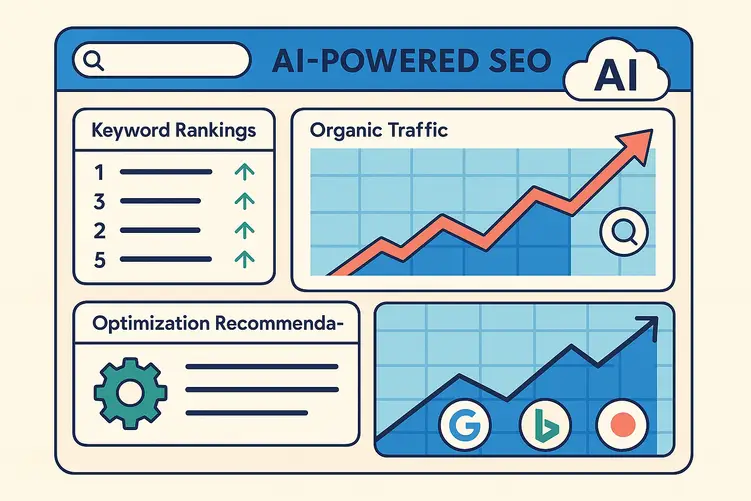
SEO requires continuous attention as algorithms evolve and competitor strategies change. Set up automated monitoring systems that track your keyword rankings, organic traffic patterns, and technical health indicators. Regular reporting helps you understand what’s working and where adjustments are needed.
Choosing the Right AI SEO Tools for Your Small Business
The AI SEO tool landscape includes options ranging from free platforms with basic features to enterprise solutions with comprehensive capabilities. For small businesses, consider tools that offer:
Comprehensive keyword research: Tools that go beyond search volume to analyze competition, search intent, and ranking difficulty provide better strategic guidance.
Content optimization features: Real-time content analysis that compares your draft against top-ranking competitors helps ensure your content meets quality standards before publication.
Technical monitoring: Automated alerts for technical issues prevent small problems from becoming major obstacles to your rankings.
Competitor analysis: Understanding what’s working for competitors in your niche reveals opportunities and helps you differentiate your approach.
Reporting and analytics: Clear, actionable reporting helps you understand ROI and make informed decisions about your SEO investments.
Many small businesses find that whilst AI tools provide valuable capabilities, achieving optimal results requires expertise in interpreting data and implementing recommendations effectively. Kaizen AI Consulting helps small businesses navigate the AI SEO landscape, selecting appropriate tools and developing customized strategies that align with your specific business objectives and budget constraints.
Measuring AI SEO Success: Key Performance Indicators
Effective measurement ensures your AI SEO investments deliver tangible business results. Focus on these key metrics:
Organic traffic growth: Monitor overall organic visitors and traffic to specific pages to understand which content resonates with your audience.
Keyword rankings: Track positions for your target keywords, paying particular attention to movements in the top 10 results where click-through rates are highest.
Conversion rates: SEO success ultimately depends on attracting visitors who become customers. Measure how organic traffic converts compared to other channels.
Page experience metrics: Monitor Core Web Vitals including loading speed, interactivity, and visual stability, as these directly influence rankings.
Domain authority improvements: While not a direct ranking factor, domain authority scores indicate your website’s overall competitiveness in search results.
Common AI SEO Mistakes Small Businesses Should Avoid
Whilst AI SEO offers tremendous advantages, certain pitfalls can undermine your success:
Over-reliance on automation: AI tools provide recommendations, but human judgment remains essential for ensuring content aligns with your brand voice and truly serves your audience’s needs.
Neglecting content quality: Search optimization should enhance quality content, not replace it. Search engines increasingly prioritize helpful, authoritative content over technically optimized but shallow pages.
Ignoring user experience: Rankings matter less if visitors immediately leave your website. Ensure your design, navigation, and content presentation create positive user experiences.
Chasing algorithm updates: Rather than constantly reacting to algorithm changes, focus on fundamental best practices that remain valuable regardless of algorithmic shifts.
Forgetting mobile optimization: With mobile searches now exceeding desktop queries, mobile-friendly design and performance are non-negotiable for SEO success.
The Future of AI SEO: Emerging Trends to Watch
AI SEO continues evolving rapidly, with several emerging trends particularly relevant for small businesses:
Voice search optimization: As voice-activated devices proliferate, optimizing for conversational queries and featured snippets becomes increasingly important.
Visual search capabilities: AI-powered image recognition enables customers to search using photos rather than text, creating new optimization opportunities for product-based businesses.
Predictive SEO: Advanced AI systems predict algorithm changes and traffic trends, enabling proactive rather than reactive optimization strategies.
Personalized search results: Search engines increasingly customize results based on individual user history and preferences, requiring more sophisticated targeting approaches.
Taking Action: Your Next Steps in AI SEO Implementation
Implementing AI SEO doesn’t require a complete website overhaul or massive investment. Start with these practical steps:
First, audit your current SEO performance using free or low-cost AI tools to identify quick wins and priority areas. Second, implement basic technical optimizations that AI audits reveal, such as improving page speed or fixing broken links. Third, develop a content optimization workflow that incorporates AI insights into your content creation process.
For small businesses without in-house SEO expertise, partnering with specialists who understand both AI technologies and small business challenges accelerates results whilst avoiding costly mistakes. The right guidance ensures you leverage AI SEO effectively without getting overwhelmed by technical complexities or investing in unnecessary tools.
Ready to transform your small business website with AI-powered search optimization? Contact Kaizen AI Consulting today for a comprehensive SEO assessment and customized strategy that leverages the latest AI technologies to drive measurable growth for your business. Our team specializes in making advanced SEO accessible and effective for small businesses throughout the UK.
AI SEO represents more than a technological advancement; it’s a fundamental shift in how small businesses can compete in digital markets. By embracing these tools and strategies, your business gains the capability to punch above its weight, attracting customers through search visibility that was previously accessible only to larger competitors with substantial resources. The question isn’t whether to adopt AI SEO, but how quickly you can implement it to gain competitive advantages in your market.