The landscape of employee training is undergoing a remarkable transformation. With research showing that learners retain 95% of information delivered via video compared to just 10% from text, businesses across the United Kingdom are rapidly embracing AI-powered video creation tools to revolutionise their learning and development programmes. At the forefront of this revolution stands Google’s VEO 3, a groundbreaking AI video generator that is changing how organisations create training content for their teams.
Understanding VEO 3: The Future of Training Video AI
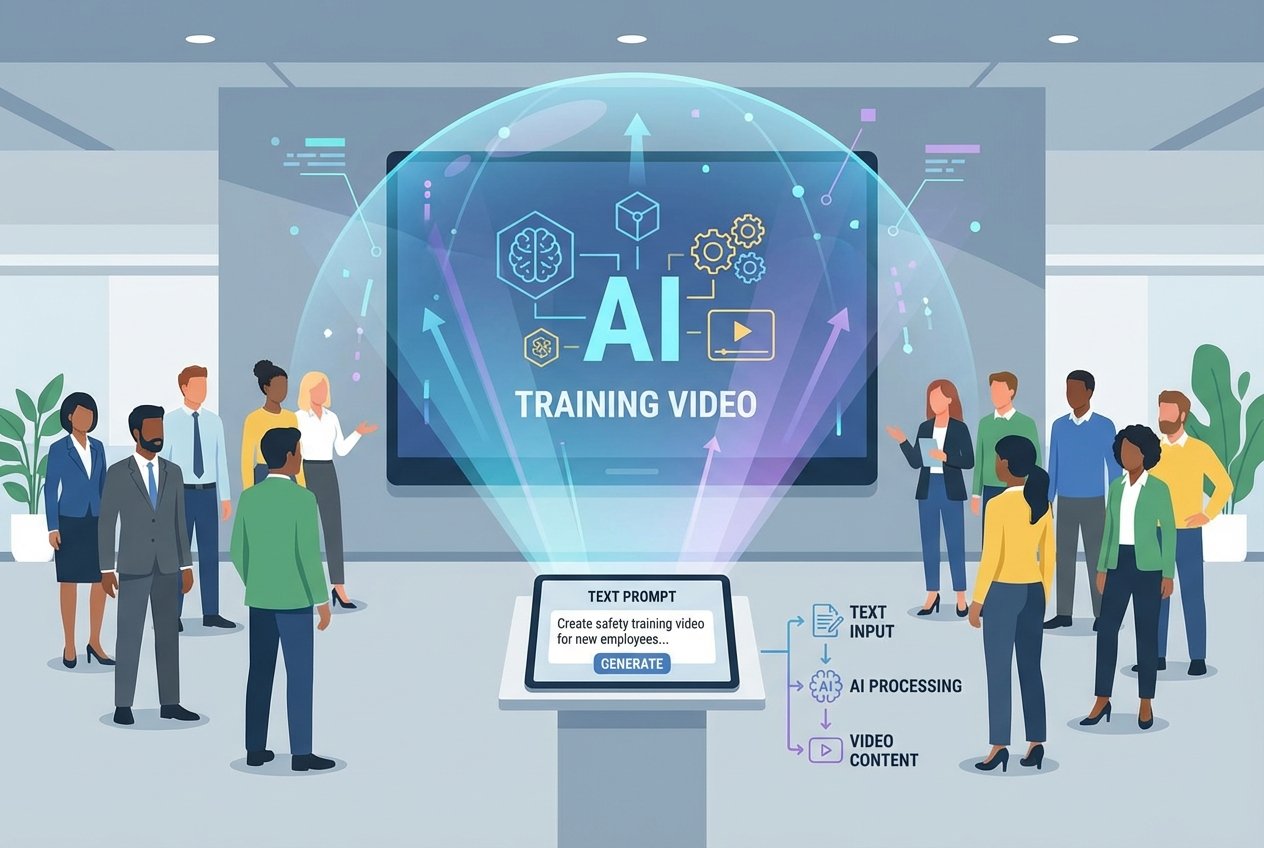
VEO 3 represents Google DeepMind’s most advanced video generation technology to date. Unlike traditional video production methods that require extensive resources, filming equipment, and post-production expertise, VEO 3 enables businesses to create professional-quality training videos from simple text prompts. The platform’s standout feature is its revolutionary V2A (Video-to-Audio) technology, which generates synchronised dialogue, sound effects, and ambient audio that perfectly matches the visual content.
For UK businesses seeking to modernise their employee training content, VEO 3 offers capabilities that were previously only available to organisations with substantial production budgets. The platform can generate videos up to 8 seconds in length at 720p or 1080p resolution, with native audio generation that includes realistic voiceovers and environmental sounds. This makes it ideal for creating modular microlearning content, which statistics show achieves 80-90% completion rates compared to roughly 30% for traditional long-form eLearning.
Why UK Businesses Are Embracing VEO Training Videos
The business case for AI-generated training videos has never been stronger. According to recent industry data, companies with comprehensive training programmes experience 218% higher income per employee than those without formalised training. However, traditional video production presents significant barriers for many organisations.
Cost and Time Efficiency
Traditional training video production can cost thousands of pounds and take weeks to complete. VEO 3 dramatically reduces both expenditure and turnaround time. Research indicates that AI-powered tools have slashed average training video production time by 62%, enabling L&D teams to produce content in days rather than months. For small and medium-sized enterprises across the UK, this democratisation of video production opens doors that were previously closed.
Consistency and Scalability
When scaling training across multiple locations or departments, maintaining consistency becomes challenging. VEO training videos ensure that every employee receives the same high-quality instruction, regardless of when or where they access the content. This is particularly valuable for UK businesses with distributed workforces or those expanding into new markets.
Engagement and Retention
The statistics speak volumes about video’s effectiveness in business education. Synthesia’s AI in Learning and Development Report 2026 reveals that 52% of organisations now use AI for video creation in their L&D programmes, with text-to-speech (63%) and video creation (52%) ranking among the heaviest AI usage areas. Furthermore, 92% of employees report that well-planned training programmes positively impact their job engagement.
Practical Applications for Employee Training Content
VEO 3’s versatility makes it suitable for numerous training scenarios. Here are the most impactful applications for UK businesses:
Onboarding and Induction
First impressions matter enormously in employee retention. Research from SHRM indicates that structured onboarding processes improve new hire retention by 82%. With VEO 3, organisations can create welcoming introduction videos featuring virtual presenters who explain company culture, policies, and expectations. These videos can be personalised for different departments or roles without requiring multiple filming sessions.
Health and Safety Training
Compliance training is essential yet often perceived as tedious. VEO training videos can transform dry safety protocols into engaging visual demonstrations. The platform’s ability to generate realistic scenarios helps employees understand proper procedures in context, leading to better retention and application. Studies show that AI-generated interactive training videos can increase employee retention of information by 48% compared to traditional methods.
Product and Service Training
For sales teams and customer service representatives, understanding products thoroughly is crucial. VEO 3 enables rapid creation of product demonstration videos that can be updated as offerings evolve. This agility ensures staff always have access to current information, supporting better customer interactions and sales outcomes.
Soft Skills Development
Leadership, communication, and conflict resolution training benefit enormously from scenario-based learning. VEO 3 can generate realistic workplace scenarios that illustrate both effective and ineffective approaches, providing employees with visual examples they can learn from and reference.
Getting Started with VEO 3 for Business Education
Implementing VEO 3 for your training programme requires thoughtful planning. Here is a practical framework for UK businesses:
Step 1: Audit Your Current Training Content
Begin by identifying which existing training materials would benefit most from video transformation. Prioritise content that is frequently accessed, has low engagement rates, or covers complex procedures that benefit from visual demonstration. This audit helps focus initial efforts where they will deliver the greatest impact.
Step 2: Develop Detailed Prompts
VEO 3’s output quality depends significantly on prompt quality. Effective prompts include specific details about setting, characters, actions, dialogue, and audio requirements. For training videos, include information about the tone (professional, approachable, authoritative), the target audience, and the key learning objectives.
For example, a prompt for safety training might read: A warehouse supervisor wearing a high-visibility vest demonstrates proper lifting technique in a well-lit industrial setting. He speaks directly to camera saying, Welcome to our manual handling training. Today, I will show you the correct technique for lifting heavy items safely. The ambient sounds include distant forklift operations and general warehouse activity.
Step 3: Create Modular Content
Given VEO 3’s optimal output length of 8 seconds per clip, structure your training into short, focused modules. This aligns perfectly with microlearning best practices, where 58% of employees prefer to learn at their own pace in short sessions that fit into their workflow. Connect multiple clips to create comprehensive training sequences whilst maintaining the engagement benefits of bite-sized content.
Step 4: Integrate with Your Learning Management System
VEO 3-generated videos can be exported and uploaded to any standard LMS. Ensure your system supports the MP4 format and plan how videos will be organised, tracked, and assessed within your existing learning infrastructure.
Overcoming Common Challenges
Whilst VEO 3 offers tremendous potential, organisations should be aware of certain considerations:
Quality Control
AI-generated content requires human oversight. Establish review processes to ensure videos accurately represent your brand, comply with regulations, and deliver intended learning outcomes. VEO 3 outputs are watermarked with SynthID to indicate AI generation, which supports transparency with learners.
Technical Limitations
Current VEO 3 capabilities include video lengths of 4, 6, or 8 seconds with supported aspect ratios of 9:16 and 16:9. For longer training content, plan to combine multiple clips or use VEO 3 for specific segments within broader training programmes.
Integration with Existing Content
VEO training videos work best as part of a blended learning approach. Combine AI-generated videos with interactive elements, assessments, and opportunities for practice to create comprehensive learning experiences.
The Role of Expert Guidance in AI Implementation
Whilst VEO 3 makes video creation accessible, maximising its potential for employee training content requires strategic planning and technical expertise. Many UK businesses find that partnering with specialists who understand both AI capabilities and learning design principles accelerates their success. Kaizen AI Consulting works with organisations across the United Kingdom to develop comprehensive AI implementation strategies, including the integration of tools like VEO 3 into existing training frameworks.
The complexity of creating effective training programmes extends beyond video production. It encompasses learning objectives alignment, content structuring, engagement optimisation, and measurement of outcomes. Professional guidance ensures that investment in AI tools translates into genuine improvements in employee capability and business performance.
Measuring Success: KPIs for VEO Training Videos
Implementing any new training approach requires clear metrics for success. Consider tracking:
Engagement Metrics
Monitor video completion rates, replay frequency, and time spent on training modules. VEO 3-generated content should demonstrate higher engagement than traditional materials if implemented effectively.
Learning Outcomes
Use assessments to measure knowledge retention before and after video-based training. The goal is demonstrable improvement in understanding and application of trained skills.
Business Impact
Connect training outcomes to operational metrics such as productivity improvements, error reduction, customer satisfaction scores, and employee retention rates. Research indicates that companies investing in training see a 24% higher profit margin, so track whether your VEO 3 implementation contributes to these outcomes.
Cost Efficiency
Compare the total cost of VEO 3-based training development against traditional methods, including time savings for L&D teams and reduced need for external production resources.
Future Developments and Opportunities
The AI video generation landscape continues to evolve rapidly. VEO 3.1, released in January 2026, introduced enhanced capabilities including improved character consistency, vertical video support for mobile-first learning, and upscaling to 4K resolution. These developments expand possibilities for creating premium business education content.
Looking ahead, integration with other AI tools will enable even more sophisticated training solutions. Combining VEO 3 with AI-powered personalisation could deliver individualised learning paths where video content adapts to each employee’s role, experience level, and learning preferences.
Taking the Next Step
The evidence is clear: AI-powered video creation represents a significant opportunity for UK businesses to enhance their training effectiveness whilst reducing costs and time-to-deployment. VEO 3 provides the technological foundation, but success depends on strategic implementation aligned with your organisation’s specific needs and objectives.
Whether you are just beginning to explore training video AI or seeking to optimise existing AI-powered learning initiatives, expert guidance can accelerate your journey. Contact Kaizen AI Consulting to discuss how we can help your organisation harness VEO 3 and other AI tools to transform your employee training programmes and drive measurable business results.
The future of workplace learning is here. The question is not whether to embrace AI-powered training content, but how quickly and effectively you can implement it to gain competitive advantage in developing your most valuable asset: your people.