The Next Evolution in Business AI: Understanding Claude Faber 5.0 and Mythos
The artificial intelligence landscape shifted dramatically in early 2026 when Anthropic unveiled its most ambitious model family to date. For UK businesses navigating digital transformation, the convergence of Claude Mythos and structured implementation frameworks represents a pivotal moment. This comprehensive guide explores what organisations need to understand about Claude Faber 5.0, the strategic methodology built around Anthropic’s latest frontier model, and how British enterprises can leverage these capabilities for competitive advantage.
What is Claude Mythos?
Claude Mythos is Anthropic’s newest generation of large language models, first disclosed in April 2026 through the company’s official system card documentation. Unlike previous Claude iterations, Mythos represents what Anthropic describes as a “step change” in AI capabilities, particularly in areas requiring extended reasoning, complex problem-solving, and advanced cybersecurity applications.
According to Fortune’s reporting from June 2026, Anthropic began rolling out its first Mythos-class model to the public after initially restricting access through invitation-only preview programmes. The model demonstrates exceptional performance across coding tasks, knowledge work, and vision capabilities, while maintaining Anthropic’s commitment to AI safety and responsible deployment.
Crucially, Anthropic’s system card notes that Claude Mythos Preview was initially withheld from general availability due to its advanced capabilities, particularly in computer security and vulnerability discovery. This cautious approach reflects the growing recognition that frontier AI models require thoughtful implementation strategies rather than rapid, uncontrolled deployment.
Technical Capabilities That Define Claude Mythos
Several technical advances distinguish Claude Mythos from earlier generations of AI models. Anthropic’s system card highlights the model’s exceptional performance in extended reasoning tasks, where it can maintain coherence and accuracy across lengthy, multi-step problem-solving scenarios. This capability proves particularly valuable for UK businesses handling complex analytical work, from financial modelling to legal document review.
The model also demonstrates significant improvements in computer security applications. Unlike previous models where cybersecurity capabilities raised safety concerns requiring restricted access, Anthropic has worked to channel these strengths toward defensive applications. For UK organisations facing increasingly sophisticated cyber threats, this defensive security expertise offers practical value in vulnerability assessment and security auditing.
Vision capabilities represent another major advancement. Claude Mythos can process and analyse visual information alongside text, enabling applications in document processing, quality control, and data visualisation. For British manufacturers and logistics companies, this multimodal capability opens new possibilities for automating visual inspection and analysis tasks.
Perhaps most importantly for business users, Claude Mythos exhibits improved reliability in specialised domains. While earlier models sometimes produced plausible-sounding but incorrect information, the Mythos generation shows greater accuracy in technical and professional contexts. This reliability improvement directly addresses one of the primary barriers to enterprise AI adoption: trust in model outputs.
Introducing the Faber 5.0 Framework
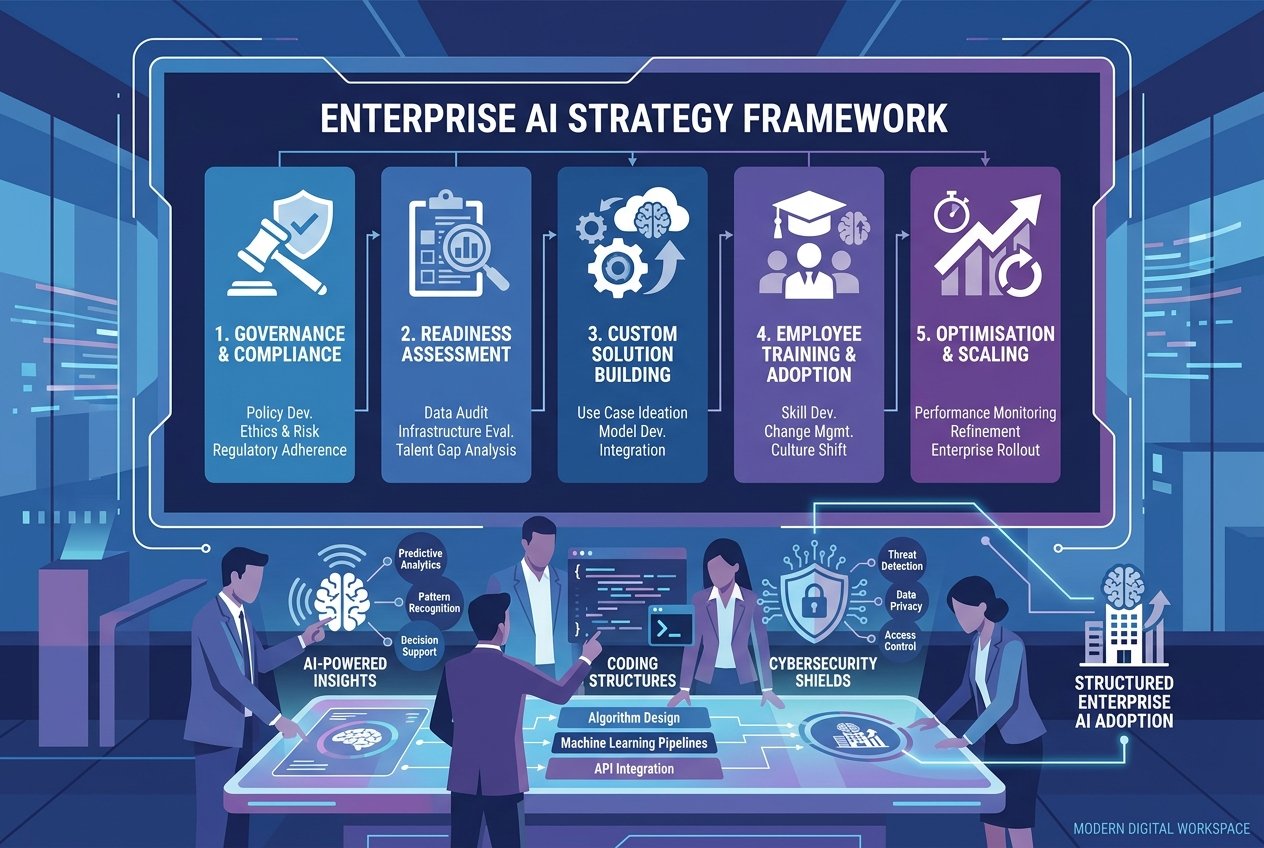
While Claude Mythos delivers unprecedented technical capabilities, raw AI power alone does not guarantee business value. The Faber 5.0 framework addresses this gap by providing a structured methodology for integrating Claude’s advanced features into enterprise workflows. Named for its five core pillars, Faber 5.0 offers UK organisations a practical roadmap for AI adoption that balances innovation with governance.
Foundation: Establishing AI Governance
The first pillar of Faber 5.0 focuses on building robust governance structures before deploying any AI system. UK businesses must navigate an increasingly complex regulatory environment, including the EU AI Act’s extraterritorial provisions and the UK’s own AI governance framework. Organisations should establish clear policies regarding data handling, model usage, and human oversight before integrating Claude Mythos into critical processes.
Research from the UK government indicates that around 16% of UK businesses are currently using at least one AI technology, with adoption concentrated in information and communication (43%), finance (21%), and professional services (23%). However, the same research highlights that many organisations lack the governance frameworks necessary for responsible AI deployment at scale.
Assessment: Evaluating Business Readiness
The second pillar requires honest assessment of organisational readiness. Not every business process benefits equally from frontier AI integration. The Faber 5.0 methodology emphasises conducting thorough audits of existing workflows, identifying high-value use cases, and evaluating technical infrastructure before committing to Claude Mythos implementation.
According to 2026 benchmark data, only 31% of UK organisations report positive ROI on their AI investments, despite 85-91% increasing AI budgets. This disconnect often stems from implementing AI without proper readiness assessment. The assessment phase helps organisations avoid costly missteps by matching Claude’s capabilities to genuine business needs.
Build: Developing Custom AI Solutions
The third pillar focuses on building tailored solutions rather than deploying generic AI tools. Claude Mythos excels at complex, domain-specific tasks when properly configured. This phase involves prompt engineering, workflow integration, and custom knowledge base development to ensure the model delivers relevant, accurate outputs for specific industry contexts.
For UK professional services firms, this might involve training Claude Mythos on regulatory frameworks and case law. For manufacturing businesses, the focus might shift to supply chain optimisation and predictive maintenance. The build phase transforms Claude from a general-purpose assistant into a specialised business tool.
Execution: Managed Rollout and Training
The fourth pillar addresses the human element of AI adoption. Even the most sophisticated AI model delivers limited value if employees resist using it or apply it incorrectly. Faber 5.0 emphasises phased rollouts, comprehensive training programmes, and change management strategies that help teams embrace AI augmentation rather than fear replacement.
ONS data from late December 2025 reveals that 25% of UK businesses were using AI, with large firms (250+ employees) reaching 44% adoption. However, effective execution requires more than statistical adoption rates; it demands cultural transformation and skills development throughout the organisation.
Refinement: Continuous Optimisation
The fifth and final pillar recognises that AI implementation is not a one-time project but an ongoing journey. Claude Mythos, like all frontier models, continues evolving. Regular performance monitoring, feedback loops, and model updates ensure that AI investments maintain their value over time. This refinement phase includes benchmarking against competitors, exploring new use cases, and staying current with Anthropic’s model releases.
Business Applications for UK Enterprises
The combination of Claude Mythos capabilities and the Faber 5.0 framework opens numerous possibilities for UK businesses across sectors:
Professional Services: Law firms, consultancies, and accounting practices can leverage Claude’s extended reasoning capabilities for document analysis, regulatory compliance checking, and client research. The model’s ability to process lengthy documents and identify subtle patterns makes it particularly valuable for knowledge-intensive industries.
Financial Services: Banks, insurers, and investment firms benefit from Claude Mythos’s analytical strengths in risk assessment, fraud detection, and market analysis. The framework’s governance pillar ensures these applications meet stringent regulatory requirements.
Technology and Software: With demonstrated excellence in coding and cybersecurity, Claude Mythos supports software development, code review, and security auditing. Tech companies can accelerate development cycles while maintaining quality standards.
Public Sector: Government agencies and healthcare providers can apply Claude’s capabilities to citizen services, administrative automation, and research analysis, provided implementation follows appropriate ethical guidelines.
Implementation Challenges and How to Overcome Them
Despite its potential, integrating Claude Mythos through the Faber 5.0 framework presents several challenges that UK organisations must address:
Data Privacy and Security: Feeding sensitive business data into AI systems raises legitimate concerns about confidentiality and compliance with UK GDPR. Organisations must implement appropriate data handling protocols and consider whether on-premise or private cloud deployments better suit their security requirements.
Skills Shortages: The UK faces a significant AI skills gap, with demand for AI specialists outpacing supply. Businesses may struggle to find internal talent capable of managing Claude Mythos implementations effectively.
Integration Complexity: Connecting frontier AI models with legacy systems and existing software stacks requires significant technical expertise. Many organisations underestimate the integration challenges involved.
Cost Management: While AI budgets are increasing, the total cost of ownership includes not just licensing fees but also infrastructure, training, and ongoing maintenance. The Faber 5.0 assessment phase helps organisations develop realistic budgets.
How Kaizen AI Consulting Supports Your AI Journey
Navigating the complexities of Claude Mythos implementation requires specialised expertise that many UK organisations lack internally. Kaizen AI Consulting provides comprehensive support for businesses seeking to leverage frontier AI models through structured implementation frameworks like Faber 5.0.
Our team of AI specialists works with organisations across the UK to assess readiness, develop custom solutions, and manage the full implementation lifecycle. From initial governance framework design through to employee training and ongoing optimisation, we ensure that AI investments deliver measurable business outcomes rather than technological novelty.
Kaizen AI Consulting has particular expertise in helping professional services firms, financial institutions, and technology companies integrate Claude’s capabilities into their existing workflows. We understand the unique regulatory, cultural, and technical challenges facing UK businesses and tailor our approach accordingly.
For organisations beginning their AI journey or seeking to upgrade from earlier Claude versions to Mythos, our business automation services provide a structured pathway to success. We combine technical implementation expertise with change management support, ensuring that AI adoption delivers sustainable competitive advantages.
The Future of Business AI in the UK
As Anthropic continues developing the Mythos model family and UK AI adoption accelerates, organisations that establish strong implementation frameworks today will be best positioned for tomorrow’s opportunities. The ONS reports that 15% of UK businesses planned to adopt AI within three months as of late 2025, suggesting continued growth throughout 2026.
However, the organisations that thrive will not be those that simply adopt AI fastest, but those that adopt it most thoughtfully. The Faber 5.0 framework, combined with Claude Mythos’s advanced capabilities, offers a blueprint for responsible, effective AI integration that delivers genuine business value.
Whether your organisation is exploring initial AI pilots or scaling existing implementations, success requires balancing technological capability with strategic vision. The UK businesses that master this balance will define the next era of competitive advantage.
Ready to Explore Claude Mythos for Your Business?
The convergence of frontier AI models and structured implementation methodologies represents a transformative opportunity for UK enterprises. If your organisation is considering Claude Mythos adoption or seeking to optimise existing AI investments, contact Kaizen AI Consulting today to discuss how our expertise can accelerate your AI journey. Our team is ready to help you navigate the complexities of AI implementation and unlock the full potential of these powerful technologies for your business.