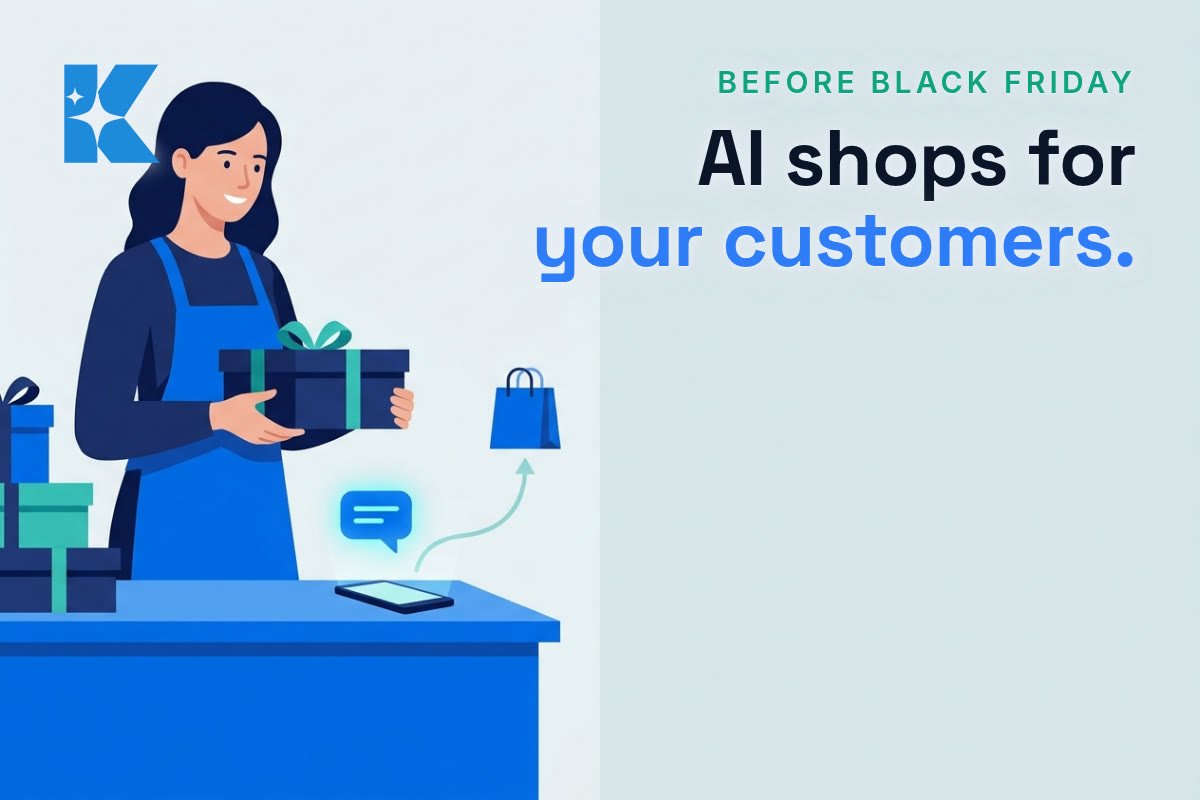
AI is already shopping for your customers
If you sell anything, online or on the high street, you need to see this before Christmas trading starts. AI assistants have stopped being a novelty for shoppers and started being a habit. New research from payments company Adyen puts UK use of AI shopping assistants at 28%, more than double the 12% recorded a year earlier. Gen Z leads at 43%, with millennials close behind at 42%. This is not a niche group of early adopters any more. It is a quarter of the UK’s shopping public, typing what they want into ChatGPT, Gemini or Google’s AI Mode before they ever land on a website.
They’re not just browsing, they’re buying
We used to reassure clients that AI chat was just another research step before a normal purchase. That reassurance is running out. Adyen’s survey found 44% of UK shoppers are now open to letting AI handle the entire purchase, from comparing options against a budget through to checkout, once they’ve set their criteria. Retailers are moving to meet them: 84% say they are open to enabling AI to complete a purchase on a customer’s behalf, and John Lewis has already begun a £800m push to get its products showing up inside Google Gemini and ChatGPT. When a business the size of John Lewis rewires itself for this, it is worth asking what a much smaller business is meant to do about it.
The traffic is already real, and it converts
This is not a future problem. Analytics firm Similarweb reports that ChatGPT and other chat platforms already send 50.2 million shopping-intent visits a month to UK retail sites, with AI-referred traffic to UK retail up 180% year on year. The uncomfortable part for anyone still treating this as a gimmick: that traffic converts. AI-referred shoppers converted 42% better than average traffic in March 2026, a sharp turnaround from AI traffic actually converting worse than normal search as recently as last year. People arriving via an AI assistant have usually already done their comparison shopping inside the chat. By the time they reach your site, they are close to a decision, not browsing.
The uncomfortable number
Here’s the part we’d rather not have to write. Most small businesses have done nothing to make themselves visible to any of this. AI assistants build their answers from clear, structured, factual information: what you sell, what it costs, where you operate, and how it compares to the alternatives. A homepage built to look good to a human browsing on a phone is not the same thing as a page an AI model can read, extract facts from, and confidently recommend. While large retailers are wiring themselves directly into ChatGPT and Gemini’s shopping tools, most small businesses haven’t touched the settings, or the content, that decide whether an AI mentions them at all.
What being visible to AI actually means
This is not about buying an advert. It is about making the facts an AI needs easy to find and hard to get wrong.
Write your product and service pages the way you’d answer a direct question, because that is exactly how an AI assistant will use them. “Do you deliver to Manchester by Friday?” needs an answer on the page, not buried in a PDF. Keep prices, stock levels and service areas current everywhere they appear, because an AI system checking your site against a competitor’s will simply skip you if the facts look stale or contradictory between pages. Add an FAQ section that mirrors the actual questions customers type into a chat box, not the questions marketing usually assumes they ask. And make sure your Google Business Profile is complete and accurate, since it feeds directly into the AI Mode results a growing share of shoppers now see before a normal search result.
None of this needs a developer or a new subscription. It is largely rewriting, tidying and keeping current, the same discipline good SEO always rewarded, just aimed at a reader that happens to be a model rather than a person.
The gap between what you sell and what you’ve written down
We see the same mismatch on almost every audit we run. A business will tell us, in conversation, exactly what makes them different: they fit same-day, they carry a part a competitor doesn’t, they cover three postcodes the big chains skip. None of that is written anywhere an AI assistant can read it. It lives in the owner’s head, in a sales call, in a WhatsApp thread with a regular customer. An AI shopping assistant cannot recommend a fact it cannot find. If the only place “same-day fitting available” exists is a conversation you had on the phone last Tuesday, it does not exist for the purposes of an AI answer, however true it is.
This also means one badly worded page can cost you a sale you would otherwise have won. If your delivery page says “delivery times vary” while a competitor’s says “next-day delivery to Manchester before 6pm,” an AI assistant comparing the two on a customer’s behalf has an easy decision to make, and it isn’t close.
Do this before Black Friday
UK Black Friday campaigns are already starting earlier each year, and Small Business Saturday lands on 5 December. Whatever AI visibility work you do needs to be live well before then, because AI assistants recommend from what is indexed and current today, not from a page you’re planning to fix in November. We’d rather you spend an afternoon on this now than lose a converting customer to a competitor that ChatGPT actually knows how to describe.
The businesses that move first here have a real advantage, because AI models do not automatically favour the biggest name. They favour the clearest, most current, most directly useful answer. For a small business, that is a fairer fight than search engine rankings have offered in years.