In today’s digital landscape, UK businesses are generating more data than ever before. From customer interactions to sales figures, every aspect of your business leaves a digital footprint. Yet many small and medium-sized enterprises struggle to transform this raw information into actionable insights. This is where AI analytics basics come into play, offering a practical solution for businesses looking to make data-driven decisions without requiring a team of data scientists.
What Are AI Analytics and Why Do They Matter?
AI analytics refers to the use of artificial intelligence and machine learning algorithms to analyse business data, identify patterns, and generate insights automatically. Unlike traditional data analysis tools that require manual interpretation, AI-powered systems can process vast amounts of information and highlight the findings that matter most to your business.
According to McKinsey research from 2023, organisations using AI analytics have seen productivity increases of up to 40% in their data analysis processes. For UK small businesses operating in competitive markets, this efficiency gain can translate directly into better decision-making and improved profitability.
Understanding Small Business Analytics: Getting Started
Many business owners assume that sophisticated data analysis is only for large corporations with substantial IT budgets. This misconception prevents countless UK businesses from accessing insights that could transform their operations. The reality is that modern business intelligence AI tools have become increasingly accessible and affordable.
Identifying Your Key Data Sources
Before implementing any analytics solution, you need to understand where your valuable data resides. Most businesses collect information across multiple platforms including customer relationship management systems, e-commerce platforms, social media channels, email marketing tools, and accounting software. Each source contains pieces of the puzzle that, when combined, reveal the complete picture of your business performance.
The challenge lies in bringing these disparate data sources together. Traditional methods require manual data extraction and spreadsheet manipulation, a time-consuming process prone to errors. Modern data analysis tools can automatically integrate these sources, creating a unified view of your business operations.
Choosing the Right Metrics for Your Business
Not all data deserves equal attention. The key to effective small business analytics is focusing on metrics that directly impact your strategic objectives. For retail businesses, this might include customer lifetime value, inventory turnover rates, and conversion metrics. Service-based companies might prioritise client retention rates, project profitability, and resource utilisation.
Gartner research indicates that businesses focusing on 5-7 key performance indicators consistently outperform those attempting to track dozens of metrics simultaneously. This focused approach prevents analysis paralysis and ensures your team acts on insights rather than drowning in data.
How AI Analytics Transform Raw Data into Business Insights
The true power of AI analytics basics lies in their ability to move beyond simple reporting. While traditional business intelligence tools tell you what happened, AI-powered solutions help you understand why it happened and what might happen next.
Pattern Recognition and Anomaly Detection
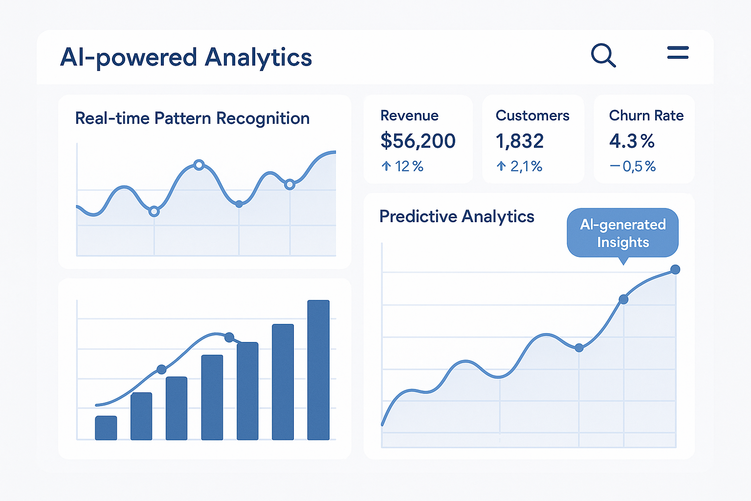
AI algorithms excel at identifying patterns humans might miss. These systems can analyse thousands of variables simultaneously, spotting correlations between seemingly unrelated factors. For example, an AI analytics tool might discover that your sales spike on rainy Tuesdays when customers receive email newsletters, a pattern virtually impossible to detect through manual analysis.
Equally valuable is anomaly detection. AI systems continuously monitor your data streams, alerting you immediately when something unusual occurs. Whether it is a sudden drop in website traffic, an unexpected surge in product returns, or unusual spending patterns, these early warnings allow you to address issues before they escalate into serious problems.
Predictive Analytics for Forward Planning
Perhaps the most valuable capability of business intelligence AI is prediction. By analysing historical patterns and current trends, AI systems can forecast future outcomes with remarkable accuracy. UK retailers use these capabilities to optimise inventory levels ahead of seasonal demand. Service businesses predict staffing requirements based on projected workload. Marketing teams forecast campaign performance before spending their entire budget.
According to research by IBM, businesses using predictive analytics are 2.9 times more likely to report revenue growth above their industry average. This competitive advantage becomes increasingly important in the challenging UK economic environment.
Implementing Data Analysis Tools in Your Organisation
Understanding the benefits of AI analytics is one thing; successfully implementing these tools is another challenge entirely. Many businesses invest in sophisticated platforms only to find their teams struggling with adoption or drowning in features they never use.
Starting with User-Friendly Platforms
The best data analysis tools for small businesses prioritise usability over complexity. Look for platforms offering intuitive dashboards, natural language queries, and automated insights that require minimal technical expertise. Your team should be able to ask questions in plain English and receive clear, actionable answers.
Modern AI analytics platforms like Microsoft Power BI, Tableau, and Google Analytics 4 offer AI-powered features at various price points. The UK market also includes specialised solutions designed specifically for different industries, from retail analytics to professional services management.
This is where expert guidance becomes invaluable. Kaizen AI Consulting specialises in helping UK businesses select and implement the right analytics solutions for their specific needs, ensuring you invest in tools that deliver genuine value rather than unused licenses gathering digital dust.
Building a Data-Driven Culture
Technology alone does not create data insights. The most successful implementations combine powerful tools with organisational change. Your team needs to understand not just how to use analytics platforms, but why data-driven decision-making matters and how it impacts their daily work.
Start by identifying data champions within your organisation, individuals who understand both the technology and your business operations. These champions can help translate technical capabilities into practical applications, demonstrating value to sceptical colleagues and driving adoption across departments.
Common Challenges and How to Overcome Them
Even with the best intentions, businesses encounter obstacles when implementing AI analytics. Understanding these challenges in advance helps you prepare effective solutions.
Data Quality and Integration Issues
The accuracy of your insights depends entirely on the quality of your data. Incomplete records, duplicate entries, and inconsistent formatting can all undermine even the most sophisticated AI algorithms. Before investing heavily in analytics tools, audit your existing data quality and implement processes to maintain standards going forward.
Integration challenges frequently arise when connecting multiple systems. Legacy software may lack modern APIs, requiring custom integration work. Cloud-based solutions generally offer easier integration options, but may raise data security concerns that need addressing.
Skills Gaps and Training Requirements
While modern AI analytics platforms have become more user-friendly, they still require some learning investment. Your team needs training not just on specific tools, but on fundamental concepts like data interpretation, statistical significance, and critical thinking about automated insights.
Professional AI consultancies can provide this training alongside implementation support, accelerating your time to value and reducing the frustration of learning curves. Rather than struggling through trial and error, businesses benefit from structured guidance that builds confidence and competence simultaneously.
Real-World Applications Across UK Industries
AI analytics basics apply across virtually every sector of the UK economy. Consider these practical examples:
Retail and E-Commerce
Online retailers use AI analytics to optimise pricing dynamically, personalise product recommendations, and predict inventory requirements. Brick-and-mortar stores analyse foot traffic patterns, optimise store layouts, and improve staff scheduling. The combination of online and offline data provides a complete view of customer behaviour.
Professional Services
Law firms, accountancies, and consultancies use data analysis tools to track project profitability, identify their most valuable clients, and optimise resource allocation. These insights help partners make strategic decisions about which practice areas to expand and which clients represent the best opportunities for growth.
Manufacturing and Distribution
UK manufacturers implement AI analytics to predict equipment maintenance requirements, optimise production schedules, and reduce waste. Distribution companies use these tools to improve route planning, reduce fuel costs, and enhance delivery reliability. According to industry research, manufacturers using AI analytics report efficiency improvements averaging 20-30%.
The Future of Business Intelligence AI
AI analytics continues to evolve rapidly. Natural language processing allows business owners to have conversational interactions with their data, asking follow-up questions and exploring insights without technical knowledge. Automated insight generation proactively alerts you to important changes without requiring you to build complex dashboards.
The democratisation of AI analytics means that competitive advantages once reserved for large corporations are now accessible to UK small businesses. The question is no longer whether to adopt these tools, but how quickly you can implement them effectively.
Taking the Next Step with Your Analytics Journey
Understanding AI analytics basics is just the beginning. The real value comes from implementing these capabilities in your specific business context, connecting your unique data sources, and building processes that turn insights into action.
For UK businesses ready to embrace data-driven decision-making, Kaizen AI Consulting offers comprehensive support from initial strategy through implementation and ongoing optimisation. Our team understands both the technical capabilities of modern analytics platforms and the practical realities of running a UK business.
Whether you are taking your first steps into small business analytics or looking to optimise existing tools, expert guidance ensures you avoid common pitfalls, maximise your technology investment, and achieve meaningful results faster. The data insights that will transform your business are already there, waiting to be discovered. The only question is whether you will find them before your competitors do.
Ready to unlock the power of your business data? Contact Kaizen AI Consulting today to discuss how AI analytics can drive growth, efficiency, and profitability in your organisation. Your journey towards better business intelligence starts with a single conversation.