
Financial Planning Trends: How UK SMEs Are Managing Money in 2025
The landscape of SME finance in the United Kingdom has undergone remarkable transformation as we navigate through 2025. With inflation pressures easing, technological innovations accelerating, and the UK economy adapting to post-Brexit realities, small and medium-sized enterprises are revolutionising their approach to money management. Understanding these emerging financial trends UK businesses are adopting is critical for staying competitive and ensuring long-term sustainability.
According to recent data from the Federation of Small Businesses, over 68% of UK SMEs have fundamentally restructured their financial planning strategies in the past 18 months. This shift reflects not just changing economic conditions, but a fundamental reimagining of how businesses approach cash flow, investment, and growth financing.
The Rise of AI-Powered Financial Forecasting
One of the most significant business finance trends reshaping SME operations is the integration of artificial intelligence into financial planning processes. Traditional spreadsheet-based forecasting is rapidly giving way to sophisticated AI algorithms that can predict cash flow patterns, identify spending anomalies, and recommend optimal investment timing with unprecedented accuracy.
Research from PwC UK indicates that SMEs utilising AI-driven financial tools have improved their forecasting accuracy by up to 43% compared to conventional methods. These systems analyse historical data, market trends, and even external factors like weather patterns or political events to provide comprehensive financial projections.
For businesses looking to harness these technologies effectively, partnering with specialists like Kaizen AI Consulting can accelerate implementation and ensure these tools are configured to deliver maximum value. The right expertise helps SMEs avoid costly mistakes and rapidly achieve ROI from their AI investments.
Dynamic Cash Flow Management Strategies
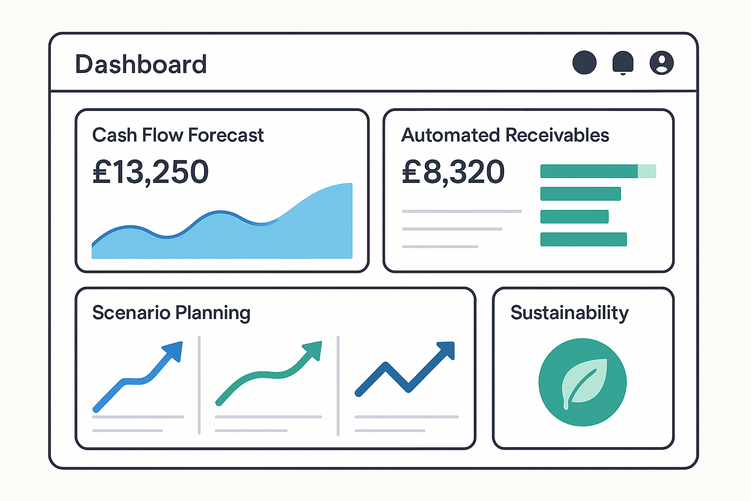
Cash flow remains the lifeblood of any SME, and money management practices in 2025 reflect a far more dynamic approach than previous years. Rather than relying on static monthly reviews, forward-thinking UK businesses are implementing real-time cash flow monitoring systems that provide instant visibility into financial positions.
Real-Time Financial Dashboards
The adoption of cloud-based accounting platforms with integrated dashboard capabilities has surged, with Sage reporting a 56% increase in SME uptake of their real-time reporting features. These dashboards consolidate data from multiple sources including bank accounts, payment processors, and invoicing systems to provide a comprehensive financial snapshot at any moment.
This shift towards transparency enables business owners to make informed decisions quickly, whether that involves delaying a major purchase, accelerating invoice collection, or capitalising on unexpected opportunities. The ability to respond dynamically to financial conditions has become a competitive advantage in today’s fast-paced marketplace.
Automated Receivables Management
Late payments have historically plagued UK SMEs, with the average invoice paid 23 days beyond terms according to Experian. However, 2025 has seen widespread adoption of automated receivables management systems that send strategic payment reminders, offer flexible payment options, and even predict which customers are likely to pay late based on historical patterns.
These systems not only improve cash flow but free up valuable time previously spent chasing payments, allowing business owners to focus on growth and strategy rather than administration.
Sustainable and Ethical Investment Priorities
A striking trend in SME finance this year is the growing emphasis on sustainable and ethical investment decisions. UK businesses are increasingly factoring environmental, social, and governance (ESG) criteria into their financial planning, recognising that sustainability is not just morally sound but financially prudent.
Data from British Chambers of Commerce shows that 72% of SMEs now consider environmental impact when making capital investment decisions, up from just 41% in 2022. This shift is partly driven by customer expectations, with consumers demonstrating clear preference for businesses that prioritise sustainability.
Furthermore, sustainable investments often qualify for government incentives, grants, and preferential lending terms. The UK government’s commitment to achieving net-zero emissions by 2050 has created numerous funding opportunities for SMEs willing to invest in green technologies, energy efficiency improvements, and sustainable supply chains.
Flexible Financing Models Gaining Traction
Traditional bank loans, whilst still relevant, are no longer the default choice for UK SMEs seeking capital. The financial trends UK businesses are embracing include a diverse array of alternative financing options that offer greater flexibility and faster access to funds.
Revenue-Based Financing
Revenue-based financing, where repayments fluctuate based on monthly revenue, has gained significant popularity among SMEs with variable income streams. This model provides breathing room during slower months whilst allowing faster repayment when business is strong. According to the British Business Bank, revenue-based financing grew by 87% in 2024, a trend continuing into 2025.
Peer-to-Peer Lending
Peer-to-peer lending platforms have matured considerably, offering SMEs competitive rates and streamlined application processes. These platforms connect businesses directly with investors, cutting out traditional banking intermediaries and often resulting in faster approval times and more personalised terms.
Invoice Financing and Factoring
With cash flow challenges remaining a primary concern, invoice financing has become increasingly sophisticated. Modern platforms now offer selective invoice financing, allowing businesses to choose specific invoices to finance rather than committing entire receivables books, providing unprecedented flexibility in managing working capital.
Cost Optimisation Through Smart Technology
As the UK economy continues to stabilise following recent turbulent years, SMEs are leveraging technology not just for growth but for intelligent cost reduction. This represents a mature approach to business finance trends, recognising that sustainable profitability requires both revenue growth and expense management.
Subscription management tools have become essential for controlling the proliferation of SaaS products many businesses inadvertently accumulate. These tools audit existing subscriptions, identify redundancies, and negotiate better terms, with SMEs typically saving between 15-30% on software costs according to spend management research.
Energy cost management has also become more sophisticated, with AI-powered systems optimising usage patterns and automatically switching between tariffs to minimise expenses. Given that energy costs spiked dramatically in recent years, these optimisations can deliver substantial savings.
Strategic Tax Planning and Compliance
The complexity of UK tax regulations continues to increase, making proactive tax planning an essential component of SME finance strategy. Making Tax Digital (MTD) requirements have pushed businesses towards more rigorous record-keeping, but forward-thinking SMEs are going beyond mere compliance to optimise their tax positions.
Recent changes to capital allowances, particularly the super-deduction scheme’s evolution and the Annual Investment Allowance adjustments, create opportunities for significant tax savings when properly leveraged. However, navigating these opportunities requires expertise and strategic planning.
Research and Development (R&D) tax credits remain underutilised, with HMRC estimating that many eligible SMEs fail to claim. In 2025, greater awareness combined with improved claiming processes has increased uptake, but substantial unclaimed credits still exist across UK businesses.
Building Financial Resilience
Perhaps the most significant shift in money management practices is the emphasis on financial resilience rather than purely growth-focused metrics. The economic disruptions of recent years have taught UK SMEs valuable lessons about the importance of robust financial foundations.
Emergency cash reserves have become standard practice, with financial advisors recommending SMEs maintain 3-6 months of operating expenses in accessible accounts. Whilst this was once considered overly cautious, it is now viewed as prudent risk management that enables businesses to weather unexpected challenges without resorting to expensive emergency financing.
Scenario planning has also become more sophisticated, with businesses modelling multiple potential futures and developing contingency plans for each. This approach, enhanced by AI-powered forecasting tools, allows SMEs to respond swiftly to changing conditions rather than being caught unprepared.
The Human Element in Financial Decision-Making
Despite the technological advances transforming SME finance, the human element remains irreplaceable. The most successful UK businesses in 2025 are those that combine cutting-edge tools with expert guidance, ensuring technology serves strategic objectives rather than driving them.
This is where professional consulting becomes invaluable. Organisations like Kaizen AI Consulting bridge the gap between technological capability and strategic implementation, helping SMEs not only adopt advanced financial tools but integrate them into coherent, goal-driven financial strategies. Their expertise in both AI applications and business strategy ensures that technology investments deliver measurable results aligned with broader business objectives.
Looking Ahead: Preparing for Future Financial Trends
As we progress through 2025, the pace of change in SME finance shows no signs of slowing. Emerging technologies like blockchain-based smart contracts for automated payments, quantum computing applications in risk assessment, and increasingly sophisticated AI advisors point towards an even more transformed financial landscape ahead.
UK SMEs that embrace these changes whilst maintaining sound financial fundamentals will be best positioned to thrive. This requires staying informed about emerging trends, investing in appropriate technologies, and cultivating the expertise needed to leverage them effectively.
The regulatory environment will also continue evolving, with sustainability reporting requirements likely to expand and digital taxation frameworks becoming more complex. Proactive businesses are already preparing for these changes rather than waiting to react.
Taking Action on Your Financial Planning
Understanding these financial trends UK businesses are embracing is only valuable if translated into action. Whether you are looking to implement AI-powered forecasting, optimise your cash flow management, explore alternative financing options, or develop a comprehensive financial resilience strategy, the time to act is now.
The competitive advantages available to early adopters of these financial planning innovations are substantial, but they require thoughtful implementation and strategic alignment with your specific business context and goals.
Ready to transform your financial planning approach and position your SME for sustainable success? Contact Kaizen AI Consulting today to discover how our expertise in AI implementation and business strategy can help you navigate these trends and build a robust, future-ready financial foundation. Our team specialises in helping UK SMEs harness cutting-edge technologies whilst maintaining the human insight that drives truly strategic decision-making.
The financial landscape of 2025 offers unprecedented opportunities for UK SMEs willing to evolve their money management practices. By embracing technological innovation, prioritising resilience alongside growth, and seeking expert guidance when needed, your business can not only survive but thrive in this dynamic environment.