Sales Optimization Fundamentals: Small Changes, Big Results
In today’s competitive UK business landscape, sales optimization isn’t just a buzzword – it’s a necessity for survival and growth. Whether you’re running a startup in Manchester or an established enterprise in London, the ability to fine-tune your sales processes can mean the difference between stagnation and substantial revenue growth. The good news? You don’t need a complete overhaul to see impressive results. Small, strategic changes to your sales strategy can deliver outsized returns.
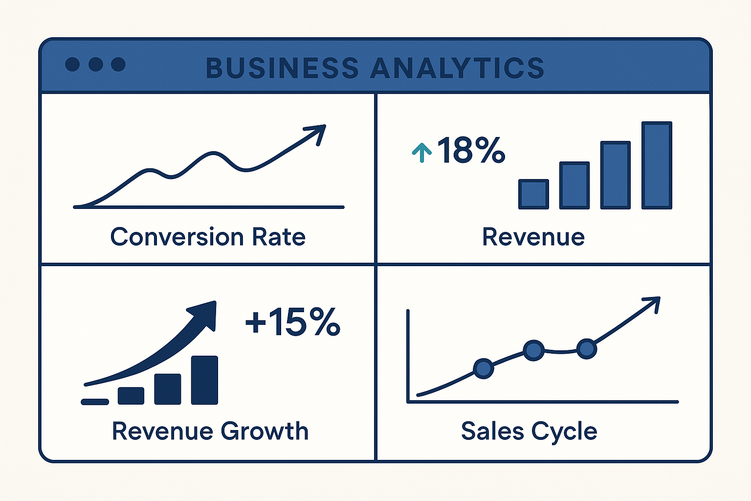
According to McKinsey research, companies that implement systematic sales optimization see an average revenue increase of 15-20% within the first year. Yet many UK businesses overlook the fundamentals, chasing complex solutions whilst missing easy wins right under their noses.
Understanding Sales Optimization: The Basics
Sales optimization is the continuous process of improving your sales operations to increase efficiency, close rates, and ultimately, revenue. It encompasses everything from lead qualification and pipeline management to pricing strategies and customer relationship building. The beauty of focusing on sales basics lies in their accessibility – you don’t need expensive technology or massive teams to get started.
Research from Salesforce reveals that sales professionals spend only 28% of their week actually selling. The remaining 72% is consumed by administrative tasks, meetings, and data entry. This statistic alone highlights the enormous potential for sales improvement through better process optimization.
Seven Small Changes That Drive Big Results
1. Refine Your Ideal Customer Profile
One of the most impactful yet overlooked aspects of sales strategy is having a crystal-clear understanding of your ideal customer. Many businesses cast too wide a net, wasting resources on prospects who will never convert. By narrowing your focus, you can allocate resources more effectively and improve conversion rates dramatically.
Start by analysing your existing customer base. Who are your most profitable customers? What industries do they operate in? What challenges do they face? This data-driven approach to defining your ideal customer profile can increase sales efficiency by up to 40%, according to Harvard Business Review.
2. Implement Lead Scoring
Not all leads are created equal. A simple lead scoring system helps your team prioritise prospects most likely to convert, ensuring your best salespeople spend time on your best opportunities. Assign points based on criteria like company size, budget authority, engagement level, and pain points that match your solution.
Companies using lead scoring see a 77% increase in lead generation ROI, according to research from DemandGen. For many UK SMEs, this is one of the quickest wins in sales optimization – requiring minimal investment but delivering substantial returns.
3. Streamline Your Sales Process
Map out your current sales process from initial contact to closed deal. Where are the bottlenecks? Which stages take longest? Where do most prospects drop off? This analysis often reveals surprising inefficiencies.
Consider automating repetitive tasks like follow-up emails, meeting scheduling, and data entry. This is where Kaizen AI Consulting can provide invaluable support, helping UK businesses implement intelligent automation that frees up your sales team to focus on relationship-building and closing deals.
4. Perfect Your Value Proposition
Can your sales team articulate your value proposition in 30 seconds or less? If not, you’re leaving money on the table. A compelling, concise value proposition speaks directly to your customer’s pain points and clearly differentiates you from competitors.
Test different versions of your value proposition and measure response rates. A/B testing isn’t just for marketing – it’s a powerful sales improvement tool. Track which messages resonate most with different customer segments and refine accordingly.
5. Leverage Social Proof
British buyers are inherently cautious, particularly when making significant purchasing decisions. Social proof in the form of case studies, testimonials, and client success stories can dramatically reduce buying hesitation. According to BrightLocal research, 87% of UK consumers read online reviews for local businesses, and this behaviour extends to B2B purchasing.
Incorporate specific, quantifiable results into your sales conversations. Instead of saying “we help companies improve efficiency,” say “we helped a Birmingham-based manufacturer reduce processing time by 35%, saving £120,000 annually.”
6. Optimize Follow-Up Timing and Frequency
The fortune is in the follow-up, yet most salespeople give up too early. Research shows that 80% of sales require five follow-up calls after the initial meeting, but 44% of salespeople give up after just one follow-up attempt.
However, there’s a fine line between persistent and pestering. Use a structured follow-up schedule: 24 hours after initial contact, 3 days later, 7 days later, then every two weeks. Each follow-up should provide value – share a relevant article, offer a case study, or provide market insights rather than simply asking “have you made a decision yet?”
7. Implement Regular Sales Training and Coaching
Sales skills deteriorate without regular practice and refinement. Companies that provide ongoing sales training see 50% higher net sales per employee, according to Association for Talent Development research.
This doesn’t require expensive external programmes. Regular role-playing sessions, peer reviews of sales calls, and sharing wins and losses as a team can drive significant sales improvement. Focus on one skill per month – objection handling, discovery questions, closing techniques – and watch competency levels rise.
Measuring Your Sales Optimization Efforts
You can’t improve what you don’t measure. Establish clear metrics to track the impact of your sales optimization initiatives. Key performance indicators should include:
- Conversion rate at each stage of your sales funnel
- Average deal size
- Sales cycle length
- Win rate
- Customer acquisition cost
- Revenue per sales representative
Monitor these metrics monthly and look for trends. Small improvements compound over time. A 5% increase in conversion rate combined with a 5% increase in average deal size and a 5% reduction in sales cycle length can nearly double your revenue growth trajectory.
The Technology Question: Tools That Actually Help
Whilst sales optimization starts with fundamentals, the right technology can accelerate your results. The UK CRM market is projected to reach £2.3 billion by 2025, but many businesses invest in sophisticated tools they never fully utilise.
Start simple. A basic CRM that tracks customer interactions, manages your pipeline, and sends automated reminders delivers immediate value. As your processes mature, you can layer in more advanced capabilities like predictive analytics, AI-powered lead scoring, and intelligent forecasting.
This is another area where Kaizen AI Consulting excels – helping UK businesses select and implement the right sales technology stack for their specific needs and maturity level, ensuring maximum ROI without overwhelming your team.
Common Sales Optimization Mistakes to Avoid
In our work with UK businesses, we’ve observed several common pitfalls that undermine sales optimization efforts:
Changing too much, too fast: Whilst enthusiasm is admirable, overwhelming your sales team with simultaneous changes creates confusion and resistance. Implement changes incrementally, allowing time for adoption and measurement before moving to the next initiative.
Ignoring sales team input: Your salespeople are on the front lines daily. They understand customer objections, competitive challenges, and process inefficiencies better than anyone. Involve them in identifying optimization opportunities and designing solutions.
Focusing solely on new customer acquisition: Existing customers are typically 60-70% easier to sell to than new prospects. A balanced sales strategy includes upselling, cross-selling, and customer retention programmes alongside new business development.
Neglecting the human element: Sales remains fundamentally about human relationships. Technology and process optimization should enhance, not replace, the personal connections that drive purchasing decisions, particularly in the relationship-focused UK market.
Building a Culture of Continuous Improvement
The most successful companies treat sales optimization not as a one-time project but as an ongoing commitment. This aligns perfectly with the Kaizen philosophy of continuous improvement – making small, incremental enhancements that compound into substantial competitive advantages.
Create regular opportunities for your team to review performance, share learnings, and identify improvement opportunities. Monthly sales reviews should focus not just on numbers but on process refinement. What worked well this month? What didn’t? What should we test next month?
Celebrate small wins publicly. When a team member implements a new technique that improves their close rate, share it with the entire team. This creates a positive feedback loop where improvement becomes part of your company culture.
Taking the Next Step in Your Sales Optimization Journey
The fundamentals outlined in this article provide a solid foundation for driving revenue growth through sales improvement. However, implementation requires commitment, expertise, and often, an objective outside perspective to identify blind spots and opportunities.
If you’re ready to unlock your sales team’s full potential, Kaizen AI Consulting can help. Our team specialises in helping UK businesses develop and implement customized sales optimization strategies that deliver measurable results. We combine proven sales methodologies with cutting-edge AI and automation tools to create sustainable competitive advantages.
From conducting comprehensive sales audits to implementing advanced CRM systems and developing bespoke training programmes, we provide end-to-end support tailored to your specific challenges and growth objectives. We understand the UK market intimately and have helped businesses across sectors – from professional services to manufacturing – achieve remarkable sales transformations.
Don’t leave revenue on the table. Contact Kaizen AI Consulting today to schedule a complimentary sales optimization assessment and discover how small changes in your sales approach can deliver the big results your business deserves.
Remember, sales optimization isn’t about working harder – it’s about working smarter. Start with the fundamentals, measure your progress, and continuously refine your approach. The compound effect of small improvements will surprise you, and your bottom line will thank you.