Scaling a business is one of the most exciting yet challenging phases in any entrepreneurial journey. While ambition and innovation drive growth, it’s the financial foundations that ultimately determine whether expansion efforts succeed or falter. A robust financial growth strategy is essential for businesses looking to scale sustainably, ensuring that rapid expansion doesn’t compromise cash flow, profitability, or long-term stability.
In this comprehensive guide, we’ll explore the critical financial strategies that UK businesses need to implement when planning for scale, from forecasting and funding to operational efficiency and risk management.
Understanding the Financial Challenges of Scaling
Before diving into specific strategies, it’s important to recognise why business expansion creates unique financial pressures. According to research by the Office for National Statistics, approximately 60% of UK businesses fail within their first five years, often due to poor financial planning during growth phases.
Scaling introduces several financial challenges:
- Increased working capital requirements: More inventory, larger premises, and extended payment terms for bigger clients all demand additional capital.
- Cash flow timing issues: Revenue growth often lags behind expense increases, creating dangerous cash flow gaps.
- Operational complexity: Larger teams, multiple locations, and sophisticated systems require more robust financial management.
- Investment in infrastructure: Technology, equipment, and facilities need upgrading to support increased capacity.
Recognising these challenges early allows businesses to build appropriate financial safeguards into their scaling strategy.
Developing a Comprehensive Financial Growth Strategy
A well-constructed financial growth strategy serves as your roadmap through the scaling journey. It should align with your business objectives whilst maintaining financial discipline.
1. Create Detailed Financial Forecasts
Financial forecasting is the cornerstone of successful scaling finance. Your forecasts should include:
- Revenue projections: Base these on realistic market assumptions, historical data, and confirmed pipeline opportunities rather than optimistic guesswork.
- Cash flow forecasts: Model multiple scenarios (conservative, realistic, optimistic) to understand your cash position under various conditions.
- Profit and loss projections: Factor in the cost of scaling, including recruitment, marketing, technology, and operational expenses.
- Balance sheet projections: Understand how scaling will impact your asset base and liabilities.
According to a British Business Bank report, businesses with formal financial forecasts are 30% more likely to secure growth funding and 50% more likely to achieve their growth targets.
2. Establish Key Performance Indicators (KPIs)
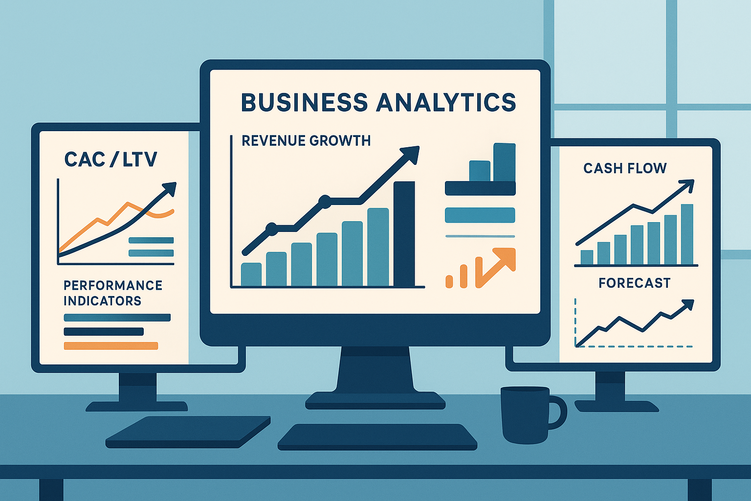
Financial KPIs provide early warning signals and help you track whether your scaling efforts are financially sustainable. Essential metrics include:
- Customer Acquisition Cost (CAC): Ensure this remains economical as you scale marketing efforts.
- Lifetime Value (LTV): Monitor whether the LTV to CAC ratio remains healthy (ideally 3:1 or better).
- Gross margin: Track whether economies of scale are materialising or if margins are being eroded.
- Operating cash flow: The ultimate measure of financial health during growth.
- Burn rate: Critical if you’re running at a planned loss whilst scaling.
At Kaizen AI Consulting, we help businesses implement intelligent financial dashboards that track these metrics in real-time, enabling data-driven decisions during critical growth phases.
Securing Growth Funding: Choosing the Right Financial Instruments
Most businesses require external capital to scale effectively. The UK market offers diverse growth funding options, each with distinct advantages and considerations.
Traditional Funding Routes
Bank loans and overdrafts: These remain popular for established businesses with strong credit histories. UK banks provided over £5 billion in business loans during 2023, with competitive rates for well-prepared applicants. The key advantage is that you retain full ownership, though you’ll need solid financial projections and often personal guarantees.
Asset finance: If your expansion requires equipment, vehicles, or machinery, asset finance spreads the cost whilst preserving working capital. This approach is particularly effective for manufacturing, logistics, and technology businesses.
Equity Investment
For high-growth potential businesses, equity investment offers substantial capital without immediate repayment obligations. Options include:
- Angel investors: Typically invest £10,000 to £750,000, often bringing valuable expertise and networks.
- Venture capital: Suitable for businesses targeting rapid, substantial growth, with investments typically starting from £2 million.
- Crowdfunding: Platforms like Crowdcube and Seedrs have helped UK businesses raise over £1.8 billion since 2015.
The trade-off is dilution of ownership and potentially increased governance requirements, so ensure alignment on growth strategy and exit expectations.
Alternative Finance Solutions
The alternative finance sector has grown significantly, offering flexible options for modern businesses:
- Invoice finance: Unlock up to 90% of invoice value immediately, improving cash flow whilst waiting for customer payments.
- Revenue-based finance: Repayments flex with revenue, making this ideal for seasonal or rapidly growing businesses.
- Peer-to-peer lending: Often faster and more flexible than traditional banks, though typically at higher interest rates.
Optimising Financial Planning for Scalability
Effective financial planning during growth requires both strategic thinking and operational discipline.
Build Financial Resilience
Scaling creates vulnerability. Build resilience through:
- Cash reserves: Maintain a buffer equivalent to at least three to six months of operating expenses.
- Diversified revenue streams: Reduce dependency on single customers or markets.
- Flexible cost structures: Where possible, favour variable over fixed costs to maintain agility.
- Credit facilities: Arrange funding before you need it, when you’re in the strongest negotiating position.
Invest in Financial Infrastructure
Your financial systems must scale with your business. Invest in:
- Cloud accounting software: Solutions like Xero or QuickBooks provide real-time visibility and scale effortlessly.
- Financial expertise: Consider appointing a Finance Director or CFO earlier than you might think necessary.
- Integrated systems: Connect your CRM, inventory, and accounting systems to eliminate data silos and improve forecasting accuracy.
Many growing businesses find that partnering with specialists like Kaizen AI Consulting provides access to sophisticated financial modelling and planning capabilities without the overhead of full-time senior finance staff.
Managing Working Capital During Expansion
Working capital management often determines whether scaling succeeds or creates financial crisis. Research from the Institute of Chartered Accountants shows that working capital issues cause 82% of business failures.
Optimise Your Cash Conversion Cycle
The cash conversion cycle measures how long cash is tied up in operations. Reduce it by:
- Accelerating receivables: Offer early payment discounts, implement efficient invoicing processes, and follow up on overdue accounts promptly.
- Managing inventory efficiently: Use just-in-time principles where possible and negotiate consignment arrangements with suppliers.
- Extending payables strategically: Take full advantage of payment terms without damaging supplier relationships.
Implement Robust Credit Management
As you scale and acquire larger clients, payment terms often extend. Protect yourself through:
- Comprehensive credit checks on new customers
- Clear payment terms in contracts
- Staged payments for large projects
- Credit insurance for significant exposures
Tax Efficiency and Compliance
Scaling creates both opportunities and obligations regarding taxation. Ensure your business expansion remains tax-efficient whilst fully compliant.
Leverage Available Tax Reliefs
UK businesses can access numerous tax incentives to support growth:
- Research and Development (R&D) tax credits: Claim up to 33% of qualifying R&D expenditure back, with over £7.4 billion claimed by UK businesses in 2022.
- Capital allowances: Claim tax relief on equipment and machinery purchases, with the Annual Investment Allowance currently set at £1 million.
- Employment allowance: Reduce your employer National Insurance contributions by up to £5,000 annually.
Maintain Compliance as Complexity Grows
Expansion often triggers additional compliance requirements. Stay ahead by:
- Understanding VAT thresholds and schemes
- Implementing Making Tax Digital (MTD) compliant systems
- Ensuring proper payroll management as your team grows
- Considering corporate structure optimisation (though always seek professional advice)
Risk Management in Your Financial Strategy
Every growth strategy carries risks. Effective scaling finance incorporates comprehensive risk management.
Identify and Quantify Risks
Common financial risks during scaling include:
- Overtrading – growing faster than your capital base can support
- Customer concentration – excessive reliance on key accounts
- Market changes – economic downturns affecting demand
- Operational failures – systems unable to cope with increased volume
- Currency fluctuations – if expanding internationally
Implement Risk Mitigation Strategies
Address identified risks through:
- Scenario planning and stress testing financial models
- Appropriate insurance coverage
- Contractual protections
- Diversification strategies
- Regular financial reviews and course corrections
Taking Action: Your Financial Growth Roadmap
Successful business expansion requires treating financial planning as an ongoing strategic process, not a one-time exercise. Start by assessing your current financial position honestly, identifying gaps in forecasting, funding, or infrastructure.
Develop a comprehensive financial model that projects at least 18-24 months ahead, with regular review points. Ensure you have the right team and systems in place – whether internal resources, external advisors, or a combination of both.
Most importantly, maintain financial discipline even as excitement about growth builds. The businesses that scale successfully are those that balance ambition with robust financial foundations.
Get Expert Support for Your Growth Journey
Navigating the financial complexities of scaling doesn’t have to be a solo endeavour. Whether you need help developing financial forecasts, securing growth funding, or implementing systems to support expansion, expert guidance can accelerate your journey whilst reducing risk.
Kaizen AI Consulting specialises in helping UK businesses develop and implement financial growth strategies that deliver sustainable results. Our team combines financial expertise with practical business experience to provide tailored support through every stage of your scaling journey.
From financial modelling and funding strategy to operational improvements and AI-powered analytics, we help ambitious businesses build the financial foundations for successful growth.
Ready to develop a financial strategy that supports your growth ambitions? Contact Kaizen AI Consulting today for a confidential discussion about your scaling plans and how we can help you achieve them.