
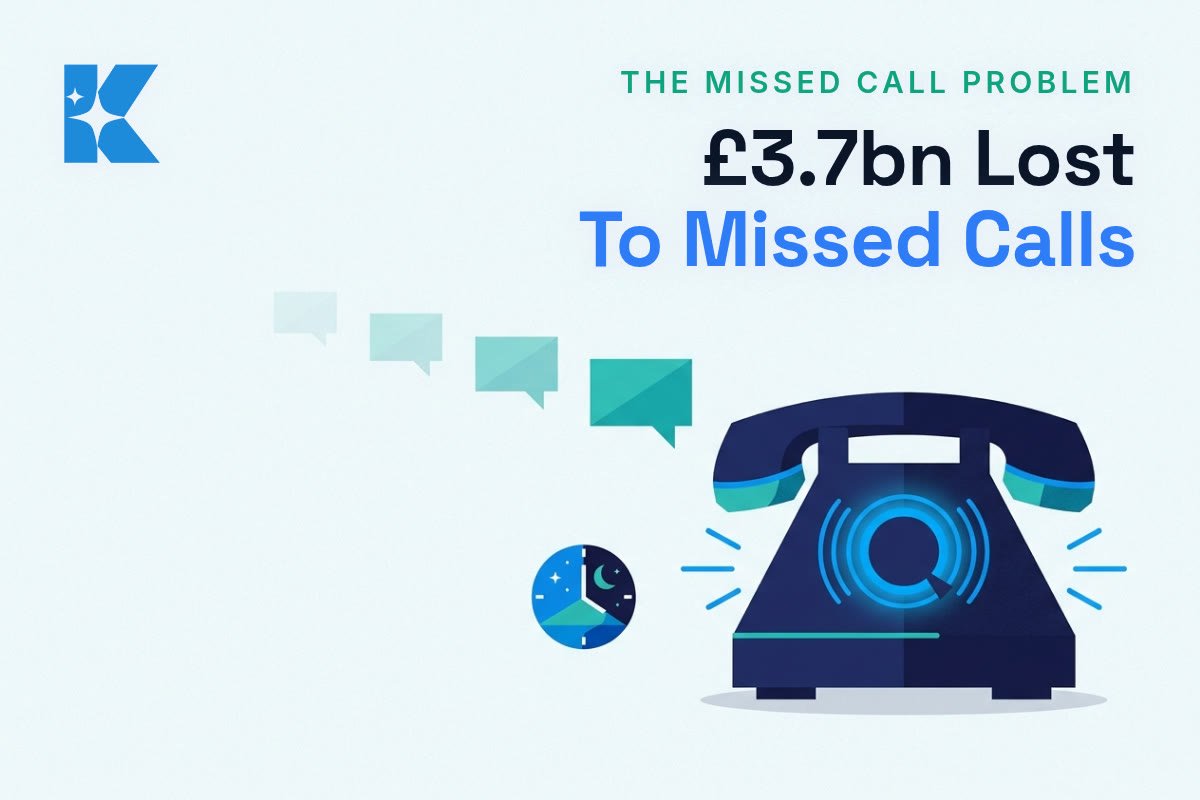
£3.7 billion. That is what BT says UK small businesses lose in revenue every year because nobody picked up the phone. Whether or not you accept the exact figure (we will come back to that), the habit behind it is one we see in almost every small firm we talk to: the owner is on a roof, in a van, with a client or at the school gate, and the call goes to voicemail. This week BT Business launched a product aimed squarely at that problem, and it is worth knowing what it does, what it does not, and how to test any AI receptionist before you let it speak for your business.
What BT actually launched
This week BT Business announced “AI from BT”, a bundle of tools for small and medium-sized firms. The headline item is an AI Receptionist that answers calls around the clock, handles routine questions, transcribes the conversation and links to Outlook and Google Calendar. According to TechRadar it comes alongside a free AI Adoption Hub of practical guides and prompt packs. ISPreview reports that it works on any UK fixed or mobile network, runs on flexible contracts and is set up through a self-service portal. BT also says customer data is not used to train AI models.
One thing is missing from every report we read: the price. BT has not published a monthly cost in the launch coverage, so anyone telling you it is cheap or expensive is guessing.
The numbers behind the pitch
BT’s own research puts the damage like this:
- £3.7 billion in lost revenue a year across UK small businesses.
- 67% of small firms miss at least one call a day that could have cost them work.
- 75% of potential customers will try three times before giving up on you.
- 58% would tell friends and family to avoid a business that did not pick up.
Read that last line again, because it is the uncomfortable one. A missed call is not only a lost job. More than half of callers say they would pass the warning on.
Now the caution. This is research published by a company that has just started selling a fix, so treat the £3.7 billion as a size-of-the-problem estimate rather than an audited loss. The sensible move is to measure your own version of it, which takes ten minutes and is free.
What an AI receptionist is good at
For a small firm, the useful jobs are narrow and repeatable. Answering straight away at 7pm or on a Sunday. Taking a name, number and the reason for the call. Answering the same five questions you answer forty times a month: opening hours, service area, whether you do a particular job, how to get a quote. Booking a slot into a calendar. Sending you a written summary so you can call back the ones that matter first.
What we would tell a client is that the value is not cleverness. It is that the caller gets a response in seconds instead of a voicemail beep, and you get a transcript instead of a vague memory of a missed call.
Where it can go wrong
This is the part that product launches skip, so we will not.
- It can be confidently wrong. If it quotes a price, promises a date or says you cover a postcode you do not, you own that mistake. Keep it to facts you have written down for it, and have it take a message rather than commit you to anything.
- Some callers want a human. An urgent leak, a complaint, a long-standing customer. You need a clear route to hand over to you or a team member, and a rule for what counts as urgent.
- Calls involve personal data. Under UK GDPR you need to tell callers they are speaking to an automated system and that the call may be recorded or transcribed, and you need to know where that data is stored and for how long. Check the supplier’s terms, not just the headline promise.
- The price is unknown. Usage-based pricing can behave very differently from a flat monthly fee. Ask how a busy month is charged before you sign anything, and look at the contract length.
Measure your own missed calls first
Before you buy anything from anyone, put a number on the problem. It is the same move whether you choose BT, another provider or a simple answering service.
- Count for two weeks. Your phone provider or mobile call log shows missed and unanswered calls. Note how many came from numbers you do not recognise.
- Call back a sample. Ring ten of the unknown numbers. How many were genuine enquiries? That is your rough conversion of missed calls into missed work.
- Put a value on one job. Use your average job or order value, not your best one. Multiply it by the genuine enquiries you missed. That is your own version of BT’s headline figure.
- Write the five questions. List what callers ask most, with the exact answers you are happy for a machine to give. If you cannot write the answers down, no tool will get them right.
- Trial it as a test, not a switch. Run it on after-hours calls only for a fortnight. Read every transcript. Ring it yourself, pretend to be an awkward customer, and see where it breaks.
How we would decide
If your own count shows a handful of missed calls a month, you probably need nothing more than a better voicemail greeting and a text-back message. If it shows several a week, and a typical job is worth hundreds of pounds, an AI receptionist stops being a gimmick and becomes a cheap way to stop leaking work. In both cases the answer comes from your call log, not from a vendor’s research.
The bigger shift is that call answering is now a product you can switch on through a portal in an afternoon, from a name small businesses already trust. That lowers the barrier. It does not lower the need to write down what you want it to say, and to read what it actually said.
If you want a second pair of eyes on which calls to automate and which to keep human, that is exactly what our free 30 minute AI audit covers.