In today’s competitive digital landscape, basic SEO simply isn’t enough. While content optimisation and link building remain important, technical SEO has become the foundation upon which successful organic search strategies are built. For UK businesses looking to dominate search results, understanding and implementing advanced technical optimisation is no longer optional – it’s essential.
Technical SEO refers to the process of optimising your website’s infrastructure to help search engines crawl, index, and understand your content more effectively. According to recent research by Search Engine Journal, 53% of all website traffic comes from organic search, yet many businesses fail to capitalise on this opportunity due to technical issues holding back their site performance.
Understanding the Foundation of Technical SEO
Technical SEO forms the backbone of your entire digital presence. Without a solid technical foundation, even the most brilliant content strategy will struggle to achieve visibility. The core elements include site architecture, crawlability, indexability, page speed, mobile optimisation, and structured data implementation.
Google’s algorithms have evolved significantly, with the search engine now prioritising websites that deliver exceptional user experiences. The introduction of Core Web Vitals as ranking factors in 2021 confirmed what many SEO professionals already knew: site performance directly impacts your search rankings. Research from Google’s Web.dev shows that sites meeting Core Web Vitals thresholds see 24% less page abandonment.
Site Architecture and Crawlability
A well-structured website architecture ensures search engines can discover and index your content efficiently. This involves creating a logical hierarchy that allows both users and search engine bots to navigate your site seamlessly. Your site structure should follow a pyramid model, with your homepage at the top, category pages in the middle, and individual content pages at the bottom.
Implementing a comprehensive XML sitemap is crucial for technical implementation. Your sitemap should be regularly updated and submitted to Google Search Console, helping search engines understand your site’s structure and prioritise important pages. Additionally, your robots.txt file must be properly configured to guide crawlers while preventing them from accessing sensitive or duplicate content.
Internal linking strategies play a vital role in distributing page authority throughout your site. Strategic internal links help search engines understand content relationships and pass link equity to important pages. For businesses looking to enhance their digital marketing services, proper internal linking can significantly improve overall site performance.
Advanced Optimization Through Page Speed Enhancement
Page speed has become a critical ranking factor, particularly for mobile searches. Data from Google’s Think with Google reveals that 53% of mobile users abandon sites that take longer than three seconds to load. For UK e-commerce businesses, this translates directly to lost revenue and reduced conversions.
Core Web Vitals Optimization
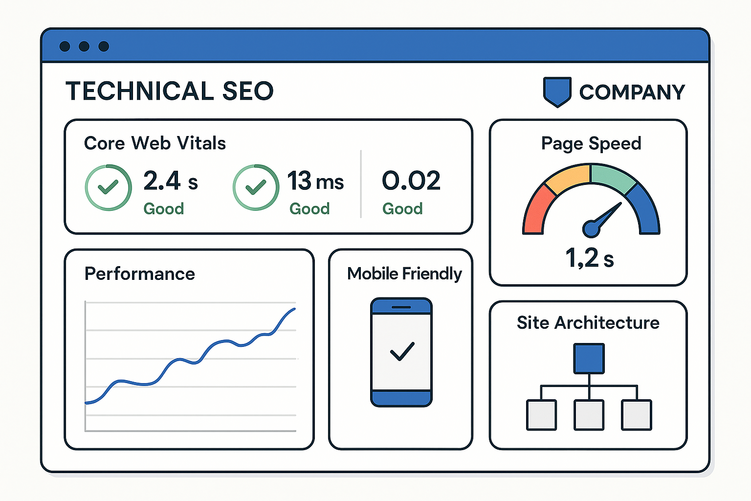
Core Web Vitals consist of three specific metrics: Largest Contentful Paint (LCP), First Input Delay (FID), and Cumulative Layout Shift (CLS). LCP measures loading performance and should occur within 2.5 seconds. FID evaluates interactivity and should be less than 100 milliseconds. CLS assesses visual stability, with a score below 0.1 being ideal.
Optimising these metrics requires technical expertise and careful implementation. Image optimisation through modern formats like WebP, implementing lazy loading, minimising JavaScript execution time, and leveraging browser caching all contribute to improved Core Web Vitals scores. At Kaizen AI Consulting, our SEO services include comprehensive technical audits that identify and rectify Core Web Vitals issues, ensuring your site meets Google’s performance standards.
Server Response Time and Hosting Infrastructure
Your hosting environment significantly impacts site performance. Server response time, measured as Time to First Byte (TTFB), should be under 200 milliseconds for optimal performance. UK businesses serving primarily domestic audiences should consider hosting with UK-based servers or utilising Content Delivery Networks (CDNs) to reduce latency.
Implementing HTTP/2 or HTTP/3 protocols provides performance benefits through multiplexing, header compression, and server push capabilities. These protocols allow browsers to load multiple resources simultaneously, dramatically reducing page load times.
Mobile Optimization and Responsive Design
With mobile-first indexing now standard across Google’s algorithm, mobile optimisation has transitioned from nice-to-have to absolutely essential. Statistics from Statista show that mobile devices account for approximately 59% of global website traffic, making mobile performance critical for SEO success.
Responsive design ensures your website adapts seamlessly across all device types. However, true mobile optimisation goes beyond responsive layouts. It requires optimising touch elements, ensuring adequate spacing between clickable elements, optimising viewport configuration, and ensuring text remains readable without zooming.
Progressive Web App (PWA) technology offers advanced capabilities that bridge the gap between websites and native applications. PWAs provide offline functionality, push notifications, and app-like experiences while maintaining the accessibility of web content. For businesses seeking competitive advantages, PWA implementation represents a significant opportunity for differentiation.
Structured Data and Schema Markup
Structured data implementation through schema markup helps search engines understand your content’s context and meaning. This semantic markup enables rich snippets, knowledge panels, and other enhanced search features that increase visibility and click-through rates.
Research by Search Engine Journal indicates that pages with structured data can achieve 30% higher click-through rates compared to pages without markup. For UK businesses, implementing local business schema, product schema, review schema, and FAQ schema can significantly enhance search visibility.
JSON-LD Implementation
JSON-LD (JavaScript Object Notation for Linked Data) is Google’s preferred format for structured data. Unlike microdata or RDFa, JSON-LD doesn’t require marking up visible page content, making it easier to implement and maintain. Proper JSON-LD implementation helps search engines understand your content type, organisation details, product information, and business relationships.
Security and HTTPS Implementation
Website security has become a confirmed ranking factor. HTTPS encryption protects user data and builds trust with visitors. Google has explicitly stated that HTTPS provides a ranking boost, with research showing that over 95% of first-page Google results now use HTTPS.
Implementing SSL certificates, enforcing HTTPS across all pages, updating internal links to use HTTPS, and implementing HSTS (HTTP Strict Transport Security) headers are essential security measures. Mixed content issues, where HTTPS pages load HTTP resources, must be resolved to maintain security integrity.
Technical SEO Auditing and Monitoring
Regular technical SEO audits identify issues before they impact rankings. Comprehensive audits should examine crawl errors, broken links, duplicate content, redirect chains, canonical tag implementation, and XML sitemap accuracy. Tools like Google Search Console, Screaming Frog, and Ahrefs provide invaluable data for technical analysis.
Monitoring site performance requires establishing baseline metrics and tracking changes over time. Key performance indicators include organic traffic, crawl rate, indexation status, Core Web Vitals performance, and technical error frequency. Setting up automated alerts ensures technical issues are identified and addressed promptly.
Advanced Technical Implementation Strategies
Log file analysis provides insights into how search engines crawl your website. Examining server logs reveals crawl patterns, identifies wasted crawl budget, and uncovers technical issues that may not be apparent through other analysis methods. Understanding how Googlebot interacts with your site enables strategic optimisation of crawl efficiency.
JavaScript SEO and Dynamic Rendering
Modern websites increasingly rely on JavaScript frameworks like React, Vue, and Angular. While Google has improved its ability to render JavaScript, challenges remain. Ensuring critical content renders quickly, implementing proper prerendering or server-side rendering, and using dynamic rendering for search engines when necessary are crucial considerations for JavaScript-heavy sites.
International SEO and Hreflang Implementation
For UK businesses operating internationally, proper hreflang implementation ensures search engines serve the correct language and regional versions of content. Hreflang tags signal to search engines which version of a page should appear for users in different locations and speaking different languages. Incorrect implementation can result in duplicate content issues and poor user experiences.
The Business Impact of Technical Excellence
The commercial benefits of advanced technical optimisation extend far beyond improved rankings. Faster page speeds increase conversion rates, with data from Cloudflare showing that a one-second improvement in page load time can increase conversions by 7%. Better mobile experiences reduce bounce rates and increase engagement metrics, while enhanced security builds customer trust and confidence.
For UK businesses competing in crowded markets, technical SEO provides a sustainable competitive advantage. While competitors focus on content and links, organisations that invest in technical excellence create foundations that support all other marketing efforts. The compound effects of technical optimisation deliver increasing returns over time as site authority grows and search engines reward consistent performance.
Implementing Technical SEO: The Professional Approach
While understanding technical SEO principles is valuable, implementation requires specialised expertise and ongoing commitment. Technical issues can be complex, requiring knowledge of web development, server configuration, and SEO best practices. Many businesses lack the internal resources or technical capabilities to implement advanced optimisation effectively.
Partnering with experienced professionals ensures technical SEO is implemented correctly from the start. Kaizen AI Consulting specialises in technical SEO engineering, providing comprehensive audits, strategic implementation, and ongoing monitoring for UK businesses. Our team combines technical expertise with marketing knowledge, ensuring optimisation efforts align with broader business objectives.
Whether you’re launching a new website, redesigning an existing site, or looking to improve current performance, professional technical SEO implementation delivers measurable results. From initial audits identifying critical issues to ongoing optimisation and performance monitoring, expert guidance accelerates results while avoiding costly mistakes.
Future-Proofing Your Technical SEO Strategy
Search engine algorithms continue evolving, with technical requirements becoming increasingly sophisticated. Artificial intelligence and machine learning now play significant roles in how search engines evaluate websites. Preparing for these changes requires staying current with industry developments, implementing best practices proactively, and building flexible technical foundations that adapt to algorithm updates.
Voice search optimisation, video SEO, and AI-driven content discovery represent emerging areas where technical implementation will become increasingly important. Businesses that establish strong technical foundations now position themselves to capitalise on these opportunities as they mature.
Taking Action on Technical SEO
Technical SEO represents one of the highest-return investments in digital marketing. Unlike paid advertising that stops delivering results when budgets end, technical optimisation provides lasting benefits that compound over time. The initial investment in proper technical implementation pays dividends through improved rankings, increased traffic, and higher conversion rates.
If your website isn’t performing as well as expected, technical issues may be holding you back. Even well-designed sites with excellent content can struggle if technical foundations are weak. Conducting a comprehensive technical audit is the first step toward understanding your site’s current state and identifying improvement opportunities.
Ready to transform your website’s technical performance? Contact Kaizen AI Consulting today for a comprehensive technical SEO audit. Our team will identify critical issues, provide actionable recommendations, and implement solutions that drive measurable results. Don’t let technical limitations hold your business back – invest in technical excellence and unlock your website’s full potential.
Technical SEO isn’t just about pleasing search engines; it’s about creating exceptional user experiences that convert visitors into customers. By prioritising site performance, mobile optimisation, and technical implementation, you create competitive advantages that drive sustainable business growth. The question isn’t whether you can afford to invest in technical SEO – it’s whether you can afford not to.