In today’s fast-paced digital landscape, small businesses face mounting pressure to deliver exceptional customer service around the clock. With the global chatbot market expected to reach £2.4 billion by 2028, AI customer service is no longer reserved for enterprise corporations. Small businesses across the UK are discovering that automated support solutions can level the playing field, allowing them to compete with larger competitors whilst managing limited resources.
This comprehensive guide will walk you through everything you need to know about implementing AI customer service in your small business, from understanding the basics to choosing the right solution for your unique needs.
Understanding AI Customer Service: What It Actually Means
AI customer service refers to the use of artificial intelligence technologies to handle customer enquiries, provide support, and enhance the overall customer experience. At its core, customer service AI uses machine learning algorithms, natural language processing, and automated workflows to understand customer questions and provide relevant responses without human intervention.
For small businesses, this typically manifests in three primary forms:
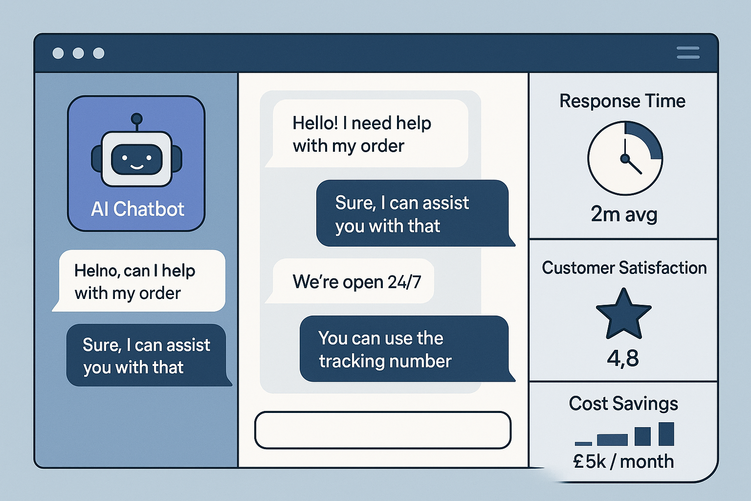
Chatbots: Conversational interfaces that interact with customers through text-based messaging on your website, social media platforms, or messaging apps. These chatbot basics include responding to frequently asked questions, guiding customers through processes, and escalating complex issues to human agents when necessary.
Virtual Assistants: More sophisticated AI systems that can handle voice interactions, perform tasks, and integrate with multiple business systems to provide comprehensive support.
Support Automation Tools: Backend systems that categorise tickets, route enquiries to appropriate departments, and provide suggested responses to human agents, significantly improving efficiency.
According to IBM research, businesses can reduce customer service costs by up to 30% by implementing conversational AI solutions, making this technology particularly attractive for small businesses operating on tight margins.
The Benefits of AI Customer Service for Small Businesses
24/7 Availability Without Additional Staff Costs
One of the most compelling advantages of automated support is the ability to provide round-the-clock service without hiring night shift staff. Your AI-powered chatbot doesn’t sleep, take breaks, or call in sick. This means customers in different time zones or those browsing your website at midnight can receive immediate assistance, dramatically improving customer satisfaction and potentially increasing conversions.
A Salesforce study found that 64% of customers expect real-time assistance regardless of the channel they use, and 69% want the ability to solve most issues independently. AI customer service delivers on both expectations.
Consistent and Scalable Customer Experience
Human agents, no matter how well-trained, can have off days or provide inconsistent information. Customer service AI ensures every customer receives the same quality of information and service. As your business grows, your chatbot can handle hundreds of simultaneous conversations without degradation in service quality, something impossible for human teams without substantial investment in additional staff.
Cost Efficiency and Resource Optimisation
For small businesses, every pound counts. Implementing support automation allows you to handle a significantly higher volume of enquiries with the same team size, or even reduce headcount whilst improving service levels. This frees up your human agents to focus on complex issues that require empathy, creativity, and advanced problem-solving skills where they add the most value.
Valuable Data and Insights
AI systems collect and analyse every interaction, providing invaluable insights into customer behaviour, common pain points, and frequently asked questions. This data helps you refine your products, services, and communication strategies based on actual customer needs rather than assumptions.
Getting Started: Chatbot Basics for Implementation
Assess Your Customer Service Needs
Before diving into AI customer service, conduct a thorough analysis of your current customer service operation. Review your most common customer enquiries over the past six months. What percentage could be answered with straightforward, consistent information? Which channels do customers prefer to contact you through? What are your peak service hours?
This assessment will help you identify where automated support can make the biggest impact. Most small businesses find that 60-80% of enquiries are routine and perfectly suited for AI handling.
Define Clear Objectives
Establish specific, measurable goals for your AI implementation. Are you aiming to reduce response times, decrease support costs, improve customer satisfaction scores, or extend service hours? Having clear objectives helps you choose the right solution and measure success effectively.
Choose the Right Platform
The UK market offers numerous customer service AI platforms designed specifically for small businesses. Consider these factors when selecting yours:
Integration Capabilities: Does the solution integrate with your existing CRM, e-commerce platform, and communication channels?
Ease of Use: Can you set up and manage the system without extensive technical knowledge, or will you need developer support?
Customisation Options: Can you tailor responses, personality, and workflows to match your brand voice?
Scalability: Will the solution grow with your business without requiring a complete overhaul?
UK-Specific Features: Does it handle UK spelling, terminology, and comply with UK data protection regulations including GDPR?
Popular options for UK small businesses include Intercom, Tidio, ManyChat, and Zendesk, though the landscape is constantly evolving with new specialised solutions emerging regularly.
Start Small and Strategic
Don’t try to automate everything at once. Begin with your most common, straightforward enquiries. This might include order status checks, business hours, return policies, or account management basics. As you gain confidence and refine your system, gradually expand to more complex interactions.
This is where partnering with experts like Kaizen AI Consulting can accelerate your success. Their team specialises in helping small businesses identify the optimal starting point for AI implementation and can guide you through a strategic, phased approach that delivers quick wins whilst building toward comprehensive automation.
Best Practices for Effective Support Automation
Maintain the Human Touch
The most successful AI customer service implementations balance automation with human accessibility. Always provide clear pathways for customers to reach a human agent when needed. Use friendly, conversational language in your chatbot responses that reflects your brand personality. Avoid overly robotic or corporate-sounding interactions.
Be Transparent About AI
UK consumers generally appreciate honesty. Let customers know they’re interacting with an AI assistant at the beginning of the conversation. This manages expectations appropriately and reduces frustration if the system cannot handle complex requests.
Continuously Train and Improve
AI customer service requires ongoing refinement. Regularly review conversation logs to identify where customers become frustrated, questions the system cannot answer, and opportunities for improvement. Update your knowledge base and conversation flows based on these insights.
Most platforms use machine learning that improves with use, but human oversight ensures the AI learns correctly and maintains brand standards. Dedicate time weekly to review performance metrics and make adjustments.
Create Comprehensive FAQs and Knowledge Bases
Your chatbot is only as good as the information you provide it. Develop detailed, well-organised FAQ content that addresses customer questions comprehensively. Use clear, simple language and include examples where helpful. Structure information logically so the AI can retrieve and present relevant answers efficiently.
Integrate Across Channels
Today’s customers expect seamless experiences across multiple touchpoints. Your automated support should work consistently whether customers contact you through your website, Facebook Messenger, WhatsApp, or email. This omnichannel approach ensures customers receive the same quality service regardless of their preferred communication method.
Common Pitfalls to Avoid
Even with the best intentions, small businesses often encounter challenges when implementing customer service AI. Avoid these common mistakes:
Over-Automation: Not every interaction should be automated. Complex complaints, sensitive issues, and situations requiring empathy still need human handling. Configure your system to recognise and escalate these appropriately.
Neglecting Mobile Experience: With Ofcom reporting that 71% of UK adults use smartphones as their primary internet device, your AI customer service must work flawlessly on mobile platforms.
Ignoring Data Privacy: Ensure your solution complies fully with UK GDPR requirements. Be transparent about data collection and usage, and implement appropriate security measures to protect customer information.
Setting and Forgetting: AI customer service is not a one-time implementation project. It requires ongoing monitoring, updating, and optimisation to remain effective and relevant.
Insufficient Testing: Before launching to all customers, thoroughly test your chatbot with team members and a small group of trusted customers. Identify and fix issues in a controlled environment rather than learning through frustrated customer experiences.
Measuring Success: Key Metrics to Track
To ensure your AI customer service investment delivers returns, monitor these essential metrics:
Resolution Rate: The percentage of enquiries your AI resolves without human intervention. Aim for 60-70% initially, with improvement over time.
Average Response Time: AI should reduce this dramatically, ideally to under 30 seconds for initial responses.
Customer Satisfaction Score (CSAT): Survey customers after AI interactions to ensure they’re satisfied with the experience.
Containment Rate: How many conversations start and finish with the AI without escalation to human agents.
Cost Per Interaction: Calculate the cost savings compared to human-only support.
Conversion Rate: For sales-related enquiries, track how AI interactions influence purchasing decisions.
The Future of AI Customer Service for Small Businesses
The technology continues evolving rapidly. Emerging trends that will benefit UK small businesses include:
Hyper-Personalisation: AI systems that remember individual customer preferences and history to deliver increasingly personalised experiences.
Predictive Support: AI that anticipates customer needs and proactively offers assistance before problems arise.
Voice-First Interactions: As voice assistants become ubiquitous, voice-enabled customer service AI will become standard.
Enhanced Emotional Intelligence: AI systems that better recognise and respond to customer emotions, providing more empathetic interactions.
Seamless Human-AI Collaboration: Rather than separate channels, future systems will enable smooth handoffs between AI and human agents mid-conversation with full context transfer.
Taking the Next Step with Professional Guidance
Implementing AI customer service represents a significant opportunity for small businesses to compete more effectively, reduce costs, and improve customer satisfaction. However, the journey from concept to successful implementation involves numerous decisions and potential pitfalls.
Working with experienced AI consultants like Kaizen AI Consulting can help you navigate this landscape more effectively. Their expertise in AI strategy and implementation means you avoid common mistakes, select the optimal solutions for your specific needs, and achieve positive ROI more quickly than going it alone.
Whether you’re just beginning to explore automated support options or ready to implement a comprehensive customer service AI solution, the key is starting with a clear strategy aligned to your business objectives. The UK small business landscape is increasingly competitive, and those who embrace AI customer service strategically position themselves for sustainable growth and customer loyalty.
Ready to transform your customer service with AI? Contact Kaizen AI Consulting today for a free consultation on how AI customer service can benefit your specific business. Their team will assess your current operations, identify opportunities for automation, and create a customised implementation roadmap that fits your budget and goals. Don’t let your competitors gain the AI advantage whilst you wait.