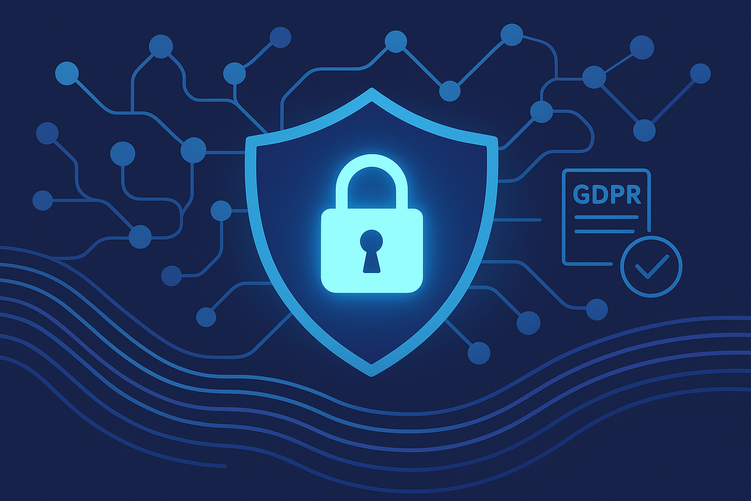
Artificial intelligence is transforming how UK small businesses operate, offering unprecedented opportunities for growth and efficiency. However, with these technological advances come significant responsibilities around data privacy and compliance. As AI systems process vast amounts of personal data, understanding the intersection of AI data privacy UK regulations and your business obligations has never been more critical.
For small businesses across the United Kingdom, navigating the complex landscape of GDPR AI compliance can feel overwhelming. Yet, getting it right is essential not only for avoiding hefty fines but also for building customer trust and maintaining your reputation in an increasingly privacy-conscious marketplace.
Understanding the UK’s AI Data Privacy Landscape
The United Kingdom maintains one of the world’s most robust data protection frameworks. Following Brexit, the UK GDPR works alongside the Data Protection Act 2018 to govern how organisations collect, process, and store personal data. When AI enters the equation, these regulations take on new dimensions of complexity.
According to the Information Commissioner’s Office (ICO), data protection complaints increased by 11% in 2023, with many cases involving automated decision-making systems. This statistic underscores the growing scrutiny on AI-powered tools and the importance of proper data protection measures.
Key AI Privacy Laws Affecting UK Small Businesses
The regulatory environment encompasses several critical frameworks that small businesses must navigate. The UK GDPR provides the foundation, establishing six lawful bases for processing personal data and requiring explicit consent for certain AI applications. When your business uses AI tools for marketing automation, customer service chatbots, or predictive analytics, you’re processing personal data that falls under these regulations.
The Data Protection Act 2018 supplements UK GDPR with additional provisions, particularly around automated decision-making. If your AI system makes decisions that significantly affect individuals without human intervention, you must provide specific safeguards and inform those affected of their rights.
Looking ahead, the UK government’s pro-innovation approach to AI regulation aims to balance innovation with safety. Proposed frameworks emphasise transparency, accountability, and fairness in AI systems, principles that small businesses should embed into their operations now rather than waiting for formal legislation.
The Five Pillars of GDPR AI Compliance for Small Businesses
1. Lawfulness, Fairness, and Transparency
Every AI system you deploy must have a lawful basis for processing personal data. For most small businesses, this means obtaining clear consent, fulfilling contractual obligations, or demonstrating legitimate interests. Transparency requires explaining to customers how their data feeds your AI systems and what decisions these systems make.
Consider a retail business using AI for personalised product recommendations. You must clearly communicate this practice in your privacy policy, explain what data the algorithm uses, and provide customers with meaningful choices about their participation. At Kaizen AI Consulting, we help small businesses develop transparent AI policies that satisfy regulators whilst maintaining user-friendly communication.
2. Data Minimisation and Purpose Limitation
The principle of data minimisation means collecting only the information necessary for your specific purpose. If your AI-powered customer service chatbot only needs names and order numbers to function effectively, don’t collect postal addresses or phone numbers. Similarly, purpose limitation prevents you from using data collected for one purpose in unrelated AI applications without fresh consent.
Research by PwC UK found that 78% of consumers are more likely to trust businesses that clearly limit their data collection. This principle isn’t just about compliance; it’s good business practice that strengthens customer relationships.
3. Accuracy and Storage Limitation
AI systems are only as reliable as the data they process. Inaccurate data leads to flawed decisions, potentially discriminating against customers or producing unfair outcomes. You must implement processes to keep personal data accurate and up-to-date, deleting information when it’s no longer necessary for your stated purposes.
For small businesses, this might mean regular data audits, customer self-service portals for updating information, and automated deletion protocols. When implementing AI solutions, ensure your systems can identify and flag potentially outdated or inaccurate data.
4. Integrity and Confidentiality
Security sits at the heart of UK business compliance. AI systems often represent attractive targets for cybercriminals due to the valuable data they contain. The ICO expects organisations to implement appropriate technical and organisational measures, including encryption, access controls, and regular security testing.
Small businesses should conduct Data Protection Impact Assessments (DPIAs) before deploying AI systems that process personal data at scale or make significant automated decisions. These assessments identify risks and help you implement mitigating controls before problems arise.
5. Accountability and Governance
Accountability means demonstrating compliance through documentation, policies, and training. Maintain records of your AI processing activities, including what data you collect, how your algorithms work, who has access, and how long you retain information. If the ICO investigates, these records prove your compliance efforts.
Practical Steps for AI Data Privacy Compliance
Conduct an AI Data Audit
Begin by mapping every AI tool your business uses, from marketing automation platforms to customer relationship management systems with predictive features. Document what personal data each system accesses, how it processes that information, and what decisions or outputs it generates. This audit provides visibility into your compliance obligations and identifies potential risks.
Update Your Privacy Policies and Notices
Your privacy documentation must specifically address AI processing. Explain in plain English how automated systems use customer data, what decisions they make, and how individuals can exercise their rights. The ICO provides guidance on individual rights that should inform your policies.
Implement Human Oversight
Avoid fully automated decision-making for significant decisions affecting customers. Build human review points into your AI workflows, particularly for decisions around credit, employment, or service denial. This oversight not only satisfies regulatory requirements but also catches AI errors before they impact customers.
Choose Compliant AI Vendors
When selecting AI software or services, rigorously assess vendor compliance. Request information about data processing locations, security certifications, and GDPR compliance measures. Ensure contracts include appropriate data processing agreements that clearly define responsibilities and liabilities.
Many small businesses struggle with the technical aspects of vendor due diligence. Kaizen AI Consulting offers vendor assessment services that evaluate AI solutions against UK data protection standards, helping you make informed decisions without requiring in-house legal expertise.
Train Your Team
Staff members who interact with AI systems need training on data privacy principles and your specific policies. They should understand what constitutes personal data, how to handle data subject requests, and when to escalate privacy concerns. Regular training reinforces good practices and reduces the risk of inadvertent breaches.
Common AI Privacy Pitfalls for Small Businesses
One frequent mistake involves assuming that third-party AI tools handle all compliance requirements. Even when using external platforms, your business remains the data controller with ultimate responsibility for lawful processing. You cannot outsource accountability.
Another common error is failing to honour data subject rights in AI contexts. Customers have the right to access their data, request corrections, object to processing, and obtain explanations of automated decisions. Your systems must facilitate these rights, including providing meaningful information about AI logic.
Small businesses also sometimes neglect international data transfers. If your AI vendor processes data outside the UK, you need appropriate safeguards such as adequacy decisions, standard contractual clauses, or other approved transfer mechanisms. Post-Brexit, these requirements apply even for transfers to EU countries.
The Business Case for Getting AI Privacy Right
Beyond avoiding penalties (which can reach up to £17.5 million or 4% of global turnover under UK GDPR), strong data protection practices deliver competitive advantages. Research by Cisco found that organisations with mature privacy practices experience shorter sales cycles and greater customer loyalty.
In today’s market, data privacy serves as a differentiator. When customers choose between similar products or services, many favour businesses that demonstrate responsible AI use and transparent data practices. Your compliance efforts become marketing assets that build brand value.
Furthermore, proper governance reduces operational risks. Data breaches damage reputations, trigger regulatory investigations, and incur remediation costs that can devastate small businesses. Investing in AI privacy laws compliance upfront costs far less than addressing breaches after they occur.
Looking Ahead: Preparing for Evolving Regulations
The regulatory landscape continues to evolve. The UK government has indicated intentions to develop sector-specific AI guidance whilst maintaining a principles-based approach. The ICO regularly updates its guidance on AI and data protection, with recent focus on generative AI and large language models.
Small businesses should monitor these developments and adapt their practices accordingly. Subscribe to ICO updates, participate in industry forums, and consider joining trade associations that provide regulatory guidance. Staying informed helps you anticipate changes rather than scrambling to react.
How Professional Guidance Can Help
Navigating GDPR AI compliance whilst running a small business presents significant challenges. The technical complexity of AI systems, combined with nuanced legal requirements, often exceeds the expertise available in-house. This is where specialist support becomes invaluable.
Working with experts who understand both AI technology and UK data protection law helps you implement compliant systems efficiently. Rather than learning through costly mistakes, you benefit from proven frameworks and best practices. Professional guidance also provides peace of mind, allowing you to focus on growing your business whilst knowing your AI operations meet regulatory standards.
Ready to ensure your AI initiatives comply with UK data privacy regulations? Contact Kaizen AI Consulting today for a comprehensive compliance assessment. Our team specialises in helping UK small businesses harness AI’s benefits whilst maintaining robust data protection practices that satisfy regulators and build customer trust.
Conclusion
AI offers tremendous opportunities for UK small businesses to compete more effectively, serve customers better, and operate more efficiently. However, these benefits come with clear responsibilities around data privacy and regulatory compliance. Understanding AI data privacy UK requirements, implementing appropriate safeguards, and maintaining transparent practices are no longer optional; they’re essential elements of responsible business operation.
By taking proactive steps to address GDPR AI compliance, you protect your business from regulatory risks whilst building competitive advantages through customer trust. The investment in getting data privacy right pays dividends through stronger customer relationships, reduced operational risks, and sustainable growth in an increasingly AI-driven marketplace.
The journey to full compliance may seem daunting, but breaking it into manageable steps makes it achievable for businesses of any size. Start with an audit, update your policies, implement oversight mechanisms, and seek expert guidance where needed. Your future success in leveraging AI depends on building it on a foundation of robust, compliant data privacy practices.