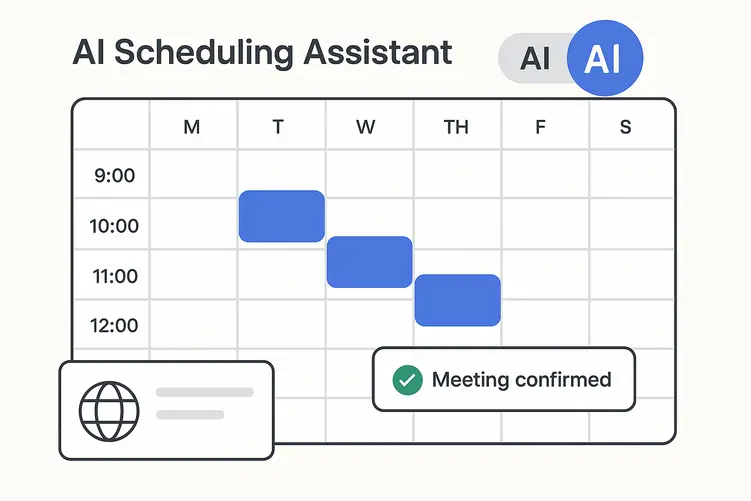
AI Scheduling Assistants: Never Miss a Meeting Again
In today’s fast-paced business environment, managing calendars and coordinating meetings has become one of the most time-consuming yet essential tasks for professionals across the UK. Research from Atlassian reveals that the average professional spends approximately 16 hours per week in meetings, with an additional 4 hours spent scheduling them. That’s nearly a full working week every month devoted to calendar management alone.
Enter AI scheduling assistants – intelligent automation tools that are revolutionising how businesses manage appointments, coordinate team meetings, and optimise their time. These sophisticated systems leverage artificial intelligence to eliminate the back-and-forth emails, double bookings, and missed opportunities that plague traditional scheduling methods.
Understanding AI Scheduling Technology
AI scheduling assistants use machine learning algorithms and natural language processing to automate the entire appointment booking process. Unlike basic calendar tools, these intelligent systems can read emails, understand context, suggest optimal meeting times, and even negotiate schedules with multiple participants automatically.
The technology analyses various factors including time zones, participant availability, meeting priorities, and individual preferences to propose the best possible meeting slots. According to Gartner research, by 2025, 70% of white-collar workers will interact with conversational AI platforms daily, with scheduling being one of the primary use cases.
Key Benefits of Meeting Automation
The implementation of calendar AI delivers measurable benefits that extend far beyond simple time savings. UK businesses are discovering that scheduling tools powered by artificial intelligence can transform their operational efficiency in several critical ways.
Time Savings: Studies from McKinsey indicate that AI scheduling can reduce time spent on administrative tasks by up to 30%. For a mid-sized business, this translates to hundreds of hours reclaimed annually.
Reduced No-Shows: Automated reminders and confirmations can decrease missed appointments by up to 45%, directly impacting revenue and productivity.
Improved Customer Experience: Clients and prospects can book appointments 24/7 without waiting for business hours, significantly improving satisfaction and conversion rates.
Elimination of Double Bookings: AI scheduling assistants sync across multiple calendars in real-time, preventing the embarrassing and costly mistakes that occur with manual coordination.
Essential Features of Modern AI Scheduling Solutions
When evaluating appointment booking systems for your organisation, understanding the key features that distinguish advanced AI solutions from basic calendar tools is crucial.
Natural Language Processing
Top-tier AI scheduling assistants can interpret conversational requests like “Schedule a meeting with John sometime next week in the afternoon” and automatically find suitable times. This natural language capability eliminates the need for rigid booking interfaces and makes the technology accessible to everyone in your organisation.
Multi-Calendar Integration
The best scheduling tools seamlessly integrate with Google Calendar, Microsoft Outlook, Apple Calendar, and other platforms simultaneously. This ensures that your AI assistant has complete visibility of your availability across all platforms, preventing conflicts and optimising your schedule holistically.
Smart Availability Management
Advanced calendar AI learns your preferences over time – whether you prefer morning meetings, need buffer time between appointments, or have specific days for focused work. The system automatically applies these preferences when suggesting meeting times.
Time Zone Intelligence
For UK businesses working with international clients or remote teams, automatic time zone conversion is invaluable. AI scheduling assistants handle these complexities seamlessly, displaying times in each participant’s local time zone and preventing costly misunderstandings.
Automated Follow-Ups and Reminders
Meeting automation includes intelligent reminder systems that can be customised based on meeting type, participant preferences, and historical engagement patterns. This reduces no-shows whilst maintaining professional communication.
Implementing AI Scheduling in Your Business
Successfully deploying scheduling tools requires more than simply purchasing software. UK businesses need a strategic approach that considers their unique workflows, team structures, and customer touchpoints.
Assess Your Current Scheduling Challenges
Begin by documenting how much time your team currently spends on appointment booking and calendar management. Identify pain points such as scheduling conflicts, missed meetings, or delays in confirming appointments. This baseline assessment will help you measure ROI after implementation.
Choose the Right AI Scheduling Platform
The UK market offers numerous options including Calendly, Clara, x.ai, Microsoft Bookings, and Google Calendar’s appointment schedules. Each platform has different strengths depending on business size, industry, and specific requirements. Consider factors like GDPR compliance, integration capabilities, and scalability.
This is where Kaizen AI Consulting can provide invaluable guidance. Our team helps UK businesses evaluate their specific needs and select the optimal AI scheduling solution that aligns with their operational requirements and growth objectives.
Integration with Existing Systems
Your AI scheduling assistant should integrate seamlessly with your CRM, video conferencing platforms, email systems, and other business tools. This creates a unified workflow where meeting data flows automatically between systems, enhancing both efficiency and data quality.
Team Training and Adoption
Even the most sophisticated meeting automation system will fail without proper adoption. Develop clear guidelines for when and how to use the AI scheduling assistant, and provide training that addresses common concerns. Encourage feedback during the initial implementation period to refine processes.
Real-World Applications Across Industries
AI scheduling technology delivers value across virtually every sector of the UK economy, though the specific applications vary by industry.
Professional Services
Law firms, accountancies, and consultancies use calendar AI to manage client consultations, internal reviews, and partner meetings. The technology ensures that billable time is maximised whilst administrative burden is minimised.
Healthcare
Medical practices and private clinics leverage appointment booking systems to reduce no-shows, manage complex schedules across multiple practitioners, and provide patients with convenient self-service booking options that comply with NHS Digital guidelines.
Sales and Business Development
Sales teams use AI scheduling assistants to eliminate the back-and-forth of booking discovery calls and demonstrations. According to Salesforce data, sales professionals who use scheduling automation close 28% more deals by accelerating the sales cycle.
Education and Training
Universities, training providers, and coaching businesses utilise meeting automation to coordinate student appointments, tutorial sessions, and assessment meetings across diverse schedules and locations.
Measuring the Impact of AI Scheduling
To justify investment in scheduling tools and demonstrate value to stakeholders, UK businesses should track specific metrics that reflect both efficiency gains and business outcomes.
Time Saved: Calculate hours previously spent on manual scheduling versus time required after AI implementation. Multiply this by relevant labour costs to determine direct savings.
Meeting Completion Rate: Track the percentage of scheduled meetings that actually occur. Effective appointment booking systems with automated reminders typically increase this rate significantly.
Response Time: Measure how quickly prospects and clients can get scheduled appointments. Faster scheduling often correlates with higher conversion rates.
Calendar Utilisation: Analyse whether your calendar AI is optimising time by reducing gaps, clustering meetings appropriately, and protecting focused work time.
Customer Satisfaction: Survey clients and prospects about their scheduling experience. Many organisations see measurable improvements in satisfaction scores after implementing self-service booking.
Overcoming Common Implementation Challenges
Whilst the benefits of meeting automation are substantial, UK businesses often encounter predictable challenges during implementation. Understanding these in advance enables proactive mitigation.
Privacy and Data Protection Concerns
Under GDPR, businesses must carefully consider how AI scheduling assistants access, store, and process calendar data. Ensure your chosen solution offers appropriate data protection, maintains UK-based servers where relevant, and provides clear privacy policies for all participants.
Integration Complexity
Connecting calendar AI with legacy systems or specialised industry software can present technical challenges. Working with experienced implementation partners can significantly smooth this process and reduce time to value.
Resistance to Change
Some team members may prefer traditional scheduling methods or feel uncomfortable with AI handling their communications. Address these concerns through clear communication about benefits, transparent policies about AI usage, and demonstrating early wins.
The Future of AI Scheduling Technology
The evolution of appointment booking and calendar management continues to accelerate. Emerging trends suggest even more sophisticated capabilities on the horizon.
Predictive scheduling will leverage historical data to proactively suggest meetings before they’re requested. For example, your AI assistant might recommend scheduling a quarterly review based on previous patterns and upcoming deadlines.
Emotion and engagement AI will analyse meeting outcomes and participant feedback to optimise not just when meetings occur, but how they’re structured, who attends, and what format they take.
Voice-activated scheduling will become more sophisticated, allowing professionals to manage their calendars entirely through conversation with AI assistants whilst driving, walking between meetings, or working on other tasks.
Taking the Next Step
AI scheduling assistants represent a proven technology that delivers immediate, measurable benefits for UK businesses of all sizes. From sole traders managing client consultations to enterprises coordinating complex multi-stakeholder meetings, meeting automation reduces administrative burden whilst improving both internal efficiency and customer experience.
The key to success lies not just in selecting the right scheduling tools, but in implementing them strategically as part of a broader digital transformation initiative that considers your unique business processes, culture, and objectives.
Ready to eliminate scheduling chaos and reclaim valuable time for your team? Contact Kaizen AI Consulting today for a complimentary consultation. Our experts will assess your current scheduling challenges, recommend the optimal AI solutions for your specific needs, and guide you through a smooth implementation that delivers rapid ROI. Never miss another meeting or waste hours on calendar coordination again.