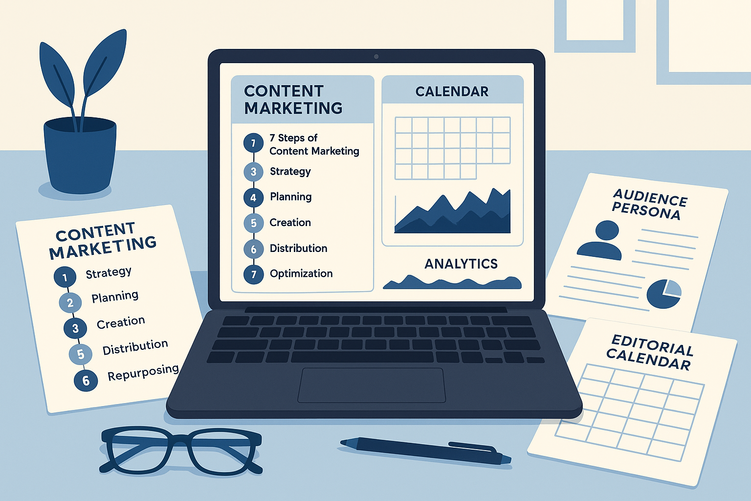
Creating a Winning Content Marketing Strategy for Small Businesses
In today’s digital landscape, small and medium-sized enterprises (SMEs) across the UK face an increasingly competitive marketplace. With over 91% of UK businesses now using content marketing in some form, having a robust content marketing strategy is no longer optional – it’s essential for survival and growth.
Yet, many small businesses struggle to develop a coherent approach to content creation and distribution. Without a clear content marketing plan, you risk wasting valuable time and resources on content that doesn’t resonate with your audience or drive meaningful business results. This comprehensive guide will walk you through the essential steps to creating a winning content marketing strategy tailored specifically for UK SMEs.
Understanding the Value of Strategic Content Planning
Before diving into the tactical elements, it’s crucial to understand why strategic content planning UK businesses need goes beyond simply posting on social media or updating your blog occasionally. A well-crafted editorial strategy serves multiple purposes: it builds brand awareness, establishes thought leadership, nurtures customer relationships, and ultimately drives conversions.
According to the Content Marketing Institute, businesses with a documented content marketing strategy are 313% more likely to report success than those without one. This statistic alone underscores the importance of taking a structured, strategic approach to your content efforts.
For UK SME marketing efforts, content marketing offers a particularly cost-effective alternative to traditional advertising. Small businesses typically operate with limited budgets, and content marketing delivers an impressive return on investment – generating three times as many leads as traditional marketing while costing 62% less, according to DemandMetric research.
Step 1: Define Your Business Objectives and Audience
Every successful content marketing plan begins with clarity about what you want to achieve. Are you looking to increase brand awareness, generate qualified leads, nurture existing customers, or establish industry authority? Your objectives will shape every subsequent decision in your content strategy.
Setting SMART Goals
Ensure your content marketing objectives are Specific, Measurable, Achievable, Relevant, and Time-bound. Rather than a vague goal like “increase website traffic,” aim for something more concrete: “Increase organic website traffic by 40% within six months through SEO-optimised blog content.”
Creating Detailed Buyer Personas
Understanding your target audience is fundamental to creating content that resonates. Develop detailed buyer personas that include demographic information, pain points, challenges, goals, and preferred content formats. For UK businesses, consider regional variations, local concerns, and British cultural nuances that might influence your audience’s preferences.
Research from HubSpot shows that personalised content delivers 5-8 times the ROI on marketing spend. The better you understand your audience, the more effectively you can tailor your content to their needs.
Step 2: Conduct a Content Audit and Competitive Analysis
Before creating new content, assess what you already have. A content audit reveals which existing pieces perform well, which need updating, and where gaps exist in your current content library.
Performing Your Content Audit
Catalogue all existing content across your website, blog, social media channels, and other platforms. Evaluate each piece based on performance metrics such as page views, engagement rates, time on page, and conversions. Identify your top-performing content to understand what resonates with your audience.
Analysing Your Competition
Examine what your competitors are doing with their content marketing efforts. What topics do they cover? Which content formats do they use? What engagement do they receive? This competitive intelligence helps you identify opportunities to differentiate your content and fill gaps in the market.
If you’re finding this process overwhelming or lack the tools to conduct a thorough analysis, Kaizen AI Consulting offers comprehensive content audits and competitive analysis services that leverage advanced AI tools to uncover insights you might otherwise miss.
Step 3: Develop Your Editorial Strategy and Content Pillars
An effective editorial strategy provides the framework for consistent, purposeful content creation. This involves identifying your core content themes (or pillars) that align with both your business expertise and your audience’s interests.
Identifying Content Pillars
Content pillars are the 3-5 main themes that your content will consistently address. For a small business marketing consultancy, pillars might include digital marketing trends, social media strategy, SEO best practices, and marketing automation. These pillars ensure your content remains focused and helps establish your authority in specific areas.
Creating a Content Mix
Diversify your content formats to appeal to different learning preferences and consumption habits. Your content marketing strategy should include a balanced mix of blog posts, videos, infographics, case studies, whitepapers, podcasts, and social media content. Research from Wyzowl indicates that 86% of businesses now use video as a marketing tool, recognising its powerful engagement potential.
Establishing Your Brand Voice
Consistency in tone and style helps build brand recognition and trust. Define your brand voice – whether it’s professional and authoritative, friendly and conversational, or innovative and bold – and ensure all content creators follow these guidelines.
Step 4: Build Your Content Calendar
A content calendar transforms your strategy from theory into action. This tactical tool schedules what content you’ll create, when you’ll publish it, on which channels you’ll distribute it, and who’s responsible for each task.
Planning Your Publishing Frequency
Consistency matters more than volume. It’s better to publish one high-quality blog post weekly than to post daily for a week and then go silent for a month. Determine a sustainable publishing schedule based on your resources and stick to it.
Aligning Content with the Buyer’s Journey
Map your content to different stages of the customer journey. Create awareness-stage content (educational blog posts, infographics) for people just discovering their problem, consideration-stage content (comparison guides, webinars) for those evaluating solutions, and decision-stage content (case studies, product demos) for those ready to purchase.
Incorporating Seasonal and Timely Content
For content planning UK businesses undertake, factor in British holidays, seasonal events, industry conferences, and relevant awareness days. This timely content can capture increased search interest and demonstrate your brand’s relevance and responsiveness.
Step 5: Optimise for Search Engines and Users
Creating great content is only half the battle – people need to find it. Search engine optimisation (SEO) ensures your content reaches your target audience through organic search.
Keyword Research and Integration
Identify the search terms your audience uses when looking for information related to your business. Tools like Google Keyword Planner, SEMrush, or Ahrefs can help you discover relevant keywords with good search volume and manageable competition. Integrate these keywords naturally throughout your content, including in titles, headers, meta descriptions, and body text.
Technical SEO Fundamentals
Ensure your website is technically sound with fast loading speeds, mobile responsiveness, secure HTTPS protocol, and proper site structure. Google’s SEO Starter Guide provides excellent foundational guidance.
Creating Link-Worthy Content
Develop comprehensive, authoritative content that naturally attracts backlinks from other websites. Original research, detailed guides, and unique insights are particularly effective at earning quality links that boost your search rankings.
Step 6: Establish Distribution Channels
Even the most brilliant content will fail without effective distribution. Your content marketing plan must include a multi-channel distribution strategy that reaches your audience where they already spend time.
Owned Media Channels
Your website and blog serve as your content hub. Email marketing remains highly effective, with an average ROI of £42 for every £1 spent according to the DMA. Build your email list and nurture subscribers with valuable content delivered directly to their inbox.
Social Media Platforms
Choose social platforms based on where your audience is most active. For B2B UK SME marketing, LinkedIn often delivers the best results, while B2C businesses might focus on Instagram, Facebook, or TikTok. Don’t spread yourself too thin – it’s better to excel on two platforms than to maintain a mediocre presence on five.
Earned and Paid Media
Pursue guest posting opportunities on industry publications, engage with journalists for media coverage, and consider strategic paid promotion to amplify your best-performing content. A small advertising budget can significantly extend your content’s reach when used wisely.
Step 7: Implement Measurement and Analytics
You cannot improve what you don’t measure. Establish key performance indicators (KPIs) aligned with your business objectives and track them consistently.
Essential Metrics to Track
Monitor a combination of consumption metrics (page views, time on page, bounce rate), engagement metrics (social shares, comments, email click-through rates), and conversion metrics (leads generated, sales influenced, customer acquisition cost). Google Analytics, social media insights, and marketing automation platforms provide the data you need.
Regular Reporting and Optimisation
Review your content performance monthly and quarterly. Identify trends, recognise what’s working, and adjust your strategy accordingly. Content marketing is iterative – continuous testing and refinement lead to better results over time.
For businesses lacking in-house analytics expertise, partnering with specialists can accelerate your learning curve. Kaizen AI Consulting helps UK SMEs implement sophisticated tracking systems and interpret data to make informed strategic decisions about content marketing investments.
Overcoming Common Content Marketing Challenges for Small Businesses
Small businesses face unique obstacles when implementing a content marketing strategy, but these challenges are surmountable with the right approach.
Limited Resources and Budget
Focus on quality over quantity, repurpose content across multiple formats, and consider outsourcing specialised tasks. User-generated content and employee advocacy can also extend your reach without significant investment.
Maintaining Consistency
Batch your content creation, maintain a buffer of pre-written content, and use scheduling tools to automate publication. Building systems and processes prevents the feast-or-famine cycle that plagues many small business content efforts.
Staying Current with Trends
The digital marketing landscape evolves rapidly. Dedicate time to professional development, follow industry leaders, and remain adaptable in your approach. Emerging technologies like AI and automation are transforming content marketing, offering small businesses powerful new capabilities previously available only to large enterprises.
Taking Action on Your Content Marketing Strategy
Creating a winning content marketing strategy requires thoughtful planning, consistent execution, and ongoing optimisation. While the process may seem daunting initially, breaking it down into these manageable steps makes it achievable for even the smallest businesses.
The businesses that succeed with content marketing are those that view it as a long-term investment rather than a quick win. Results compound over time as your content library grows, your authority strengthens, and your audience expands.
Remember that you don’t have to navigate this journey alone. Whether you need help developing your initial strategy, implementing the right tools and systems, or managing ongoing content creation, professional guidance can accelerate your results and help you avoid costly mistakes.
Ready to transform your small business with a strategic approach to content marketing? Contact Kaizen AI Consulting today for a consultation on how we can help you develop and execute a content marketing plan that drives real business growth. Our team specialises in helping UK SMEs leverage AI-powered tools and proven strategies to compete effectively in the digital marketplace.
The time to start building your content marketing strategy is now. Your future customers are searching for solutions – make sure they find you.