How a London Boutique Used AI to Double Their Online Engagement
In the heart of London’s competitive retail landscape, a small independent boutique achieved what many thought impossible: they doubled their online engagement in just six months using artificial intelligence. This retail AI success story demonstrates how even small businesses can leverage cutting-edge technology to compete with larger chains and transform their digital presence.
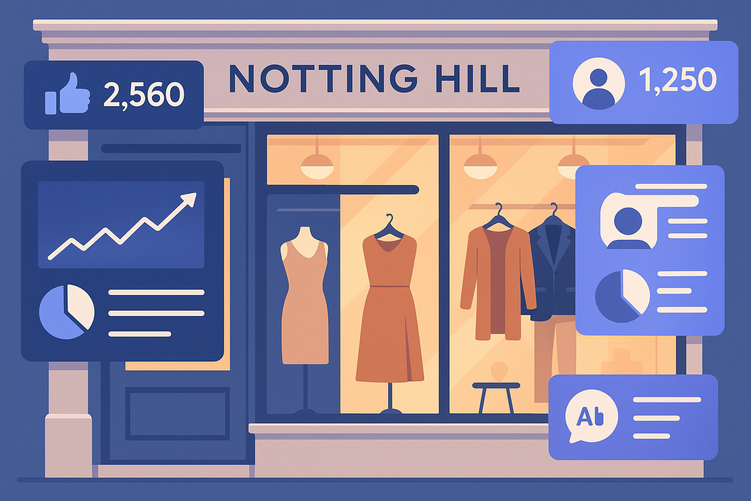
The fashion boutique, located in Notting Hill, had been struggling with declining foot traffic and lacklustre social media performance. Their Instagram account had stagnated at 2,500 followers, and their website conversion rate hovered at a disappointing 0.8%. The owner knew something had to change, but with a limited marketing budget and a small team, traditional marketing agencies seemed out of reach.
This London business case study reveals how strategic implementation of AI tools can revolutionise retail operations, from customer service to content creation, and the tangible results that follow.
The Challenge: Standing Out in London’s Crowded Retail Market
London’s retail sector is notoriously competitive. According to Office for National Statistics data, independent retailers face mounting pressure from both online giants and high-street chains. The boutique in question faced several key challenges:
First, their social media content wasn’t resonating with their target audience. Posts received minimal engagement, with average likes hovering around 15-20 per post and virtually no comments or shares. Their content calendar was sporadic, and the owner often struggled to find time to create posts between managing inventory, serving customers, and handling administrative tasks.
Second, their customer service was stretched thin. With only two staff members, responding to Instagram messages, emails, and website enquiries often took 24-48 hours, leading to lost sales opportunities. Research from Salesforce shows that 64% of consumers expect real-time responses, regardless of when they reach out.
Third, they lacked data insights. The owner made inventory and marketing decisions based on gut feeling rather than customer behaviour data, leading to overstocking some items whilst popular pieces sold out quickly.
The AI Solution: Strategic Boutique Automation
Rather than attempting to implement every AI tool available, the boutique took a focused approach, starting with three key areas where boutique automation could deliver immediate impact:
1. AI-Powered Content Creation and Scheduling
The boutique implemented AI content tools to streamline their social media presence. Using platforms that analyse trending topics and competitor content, they generated post ideas tailored to their audience’s interests. The AI tools suggested optimal posting times based on when their followers were most active, which turned out to be quite different from when they’d been posting.
More importantly, they used AI image enhancement tools to make their product photography more appealing. These tools automatically adjusted lighting, removed backgrounds, and created consistent aesthetics across their feed. The result was a professional, cohesive Instagram presence that looked far more polished than before.
Within two months, their average post engagement increased from 15-20 likes to 150-200 likes, with comments and shares growing proportionally. Their follower count began climbing steadily, adding 200-300 genuine followers per month.
2. Intelligent Customer Service Chatbots
The boutique implemented an AI chatbot on their website and connected it to their Instagram Direct Messages. This wasn’t a simple FAQ bot; it was trained on their product catalogue, brand voice, and common customer queries to provide genuinely helpful responses.
The chatbot could answer questions about sizing, availability, delivery times, and styling suggestions. It could even help customers find products based on descriptions like “something blue for a summer wedding” or “casual workwear for someone in their 30s.”
Crucially, the AI knew when to escalate conversations to human staff, ensuring complex queries or dissatisfied customers received personal attention. Response time dropped from 24-48 hours to under 2 minutes, dramatically improving customer satisfaction. According to IBM research, businesses using AI chatbots can reduce customer service costs by up to 30% whilst improving satisfaction scores.
3. Predictive Analytics for Inventory and Marketing
The boutique began using AI-powered analytics to understand customer behaviour patterns. The system tracked which products customers viewed together, which items were abandoned in baskets, and which colours and styles generated the most interest during different seasons.
This data transformed their buying decisions. Instead of ordering what they personally liked or what seemed popular, they ordered based on predicted demand. The AI system also identified cross-selling opportunities, suggesting which products to feature together in social media posts and on their website.
Their inventory turnover improved by 40%, reducing wasted capital on slow-moving stock whilst ensuring popular items stayed in stock longer.
The Role of Expert Guidance: Why Professional Support Matters
Whilst AI tools are increasingly accessible, implementing them effectively requires expertise. The boutique initially attempted to navigate the AI landscape alone but quickly became overwhelmed by the options and technical complexity. This is where professional guidance becomes invaluable.
Kaizen AI Consulting specialises in helping UK businesses, particularly in retail and hospitality sectors, identify and implement AI solutions that deliver measurable results. Rather than recommending expensive enterprise software, we focus on practical, scalable solutions that fit your budget and business model.
For small retailers looking to achieve similar results, working with AI consultants who understand the UK market can accelerate implementation and avoid costly mistakes. The right guidance ensures you’re investing in tools that integrate with your existing systems and genuinely address your specific challenges.
Measurable Results: The Engagement Increase
Six months after implementing their AI strategy, the boutique’s results were remarkable:
Social Media Growth: Instagram followers increased from 2,500 to 7,800, with engagement rate jumping from 0.6% to 3.2%. This placed them well above the fashion retail industry average of 1.5%.
Website Performance: Monthly website visitors increased by 156%, from 1,200 to 3,072. More importantly, conversion rate improved from 0.8% to 2.4%, tripling online sales revenue.
Customer Service Efficiency: The AI chatbot handled 73% of initial customer enquiries, freeing staff to focus on complex requests and in-store customers. Customer satisfaction scores improved from 3.2 to 4.6 out of 5.
Operational Efficiency: Time spent on social media management decreased by 65%, whilst output quality and consistency improved dramatically. The owner estimated saving 15 hours per week on tasks now handled by AI.
Revenue Impact: Overall revenue increased by 47%, with online sales growing from 15% to 38% of total revenue. The return on investment for their AI tools was achieved within the first four months.
Key Lessons from This London Business Case Study
Start Small and Scale
The boutique didn’t implement everything at once. They started with social media automation, proved its value, then expanded to customer service and analytics. This phased approach allowed them to learn and adapt whilst managing costs.
Focus on Customer Experience
Every AI implementation was evaluated based on whether it improved customer experience. Technology for technology’s sake was avoided. The guiding question was always: “Does this make shopping with us easier or more enjoyable?”
Maintain the Human Touch
AI handled routine tasks, but human creativity and relationship-building remained central to the brand. The owner’s personal styling advice and the warm, welcoming in-store experience weren’t replaced; they were enhanced by having more time to focus on what humans do best.
Use Data to Drive Decisions
Moving from intuition-based to data-driven decision-making was transformative. The analytics didn’t replace business instinct; they informed and validated it, leading to more confident, successful choices.
Invest in Proper Implementation
The initial investment in proper setup and integration, including professional guidance, paid dividends. Rushing implementation or choosing the cheapest tools without strategic planning would have likely led to disappointing results and wasted resources.
Replicating This Success in Your Retail Business
This retail AI success isn’t unique to fashion boutiques or London businesses. The principles apply across retail sectors and locations throughout the UK. Whether you operate a gift shop in Edinburgh, a homewares store in Manchester, or a specialty food retailer in Bristol, AI can transform your engagement and sales.
The key is approaching AI implementation strategically. Consider these steps:
Audit Your Current Challenges: Identify where you’re losing time, money, or customers. Which repetitive tasks consume your day? Where are customers dropping off? What data are you missing?
Research Appropriate Tools: Not all AI tools suit all businesses. Look for solutions designed for retail operations of your size. Read reviews from similar businesses and request demonstrations.
Calculate Potential ROI: Estimate time savings, efficiency gains, and potential revenue increases. Compare these against implementation costs to ensure the investment makes financial sense.
Plan Integration Carefully: Consider how new AI tools will work with your existing website, point-of-sale system, and inventory management. Poor integration creates more problems than it solves.
Train Your Team: Staff need to understand how to work alongside AI tools, when to trust them, and when to override them. Comprehensive training ensures smooth adoption.
Monitor and Optimise: Track metrics from day one. What’s improving? What isn’t working as expected? Be prepared to adjust your approach based on real results.
The Future of Retail AI in London and Beyond
This London boutique’s success represents the beginning, not the end, of their AI journey. They’re now exploring augmented reality for virtual try-ons, voice commerce integration, and personalised email marketing powered by AI.
According to McKinsey research, retailers who embrace AI technologies early are seeing 3-15% increases in revenue and 10-20% improvements in operational efficiency. As these technologies become more sophisticated and accessible, the competitive advantage will shift from simply using AI to using it strategically and creatively.
For UK retailers, particularly independent businesses competing against well-funded chains and online giants, AI levels the playing field. It provides enterprise-level capabilities at small-business prices, enabling personalisation, efficiency, and customer experience that were previously out of reach.
Taking Your First Step Towards Retail AI Success
The boutique owner in this case study started with one simple question: “How can I serve my customers better with the resources I have?” That question led to exploring AI solutions, which led to transformative results.
If you’re a UK retailer looking to replicate this success, you don’t need a large budget or technical expertise. You need a clear understanding of your challenges, a willingness to embrace new approaches, and ideally, expert guidance to navigate the options.
Kaizen AI Consulting offers free initial consultations to UK businesses exploring AI implementation. We’ll assess your specific situation, identify opportunities for engagement increase and operational improvement, and create a realistic roadmap that fits your budget and timeline. Our approach focuses on practical solutions that deliver measurable ROI, not theoretical possibilities or unnecessary complexity.
Whether you’re running a boutique, a restaurant, a professional services firm, or any other UK business, AI can transform your online engagement and operational efficiency. The question isn’t whether AI can help your business; it’s how quickly you’ll implement it compared to your competitors.
Ready to write your own retail AI success story? Contact Kaizen AI Consulting today to discover how we can help you double your engagement, streamline your operations, and grow your revenue through strategic AI implementation tailored to your unique business needs.