
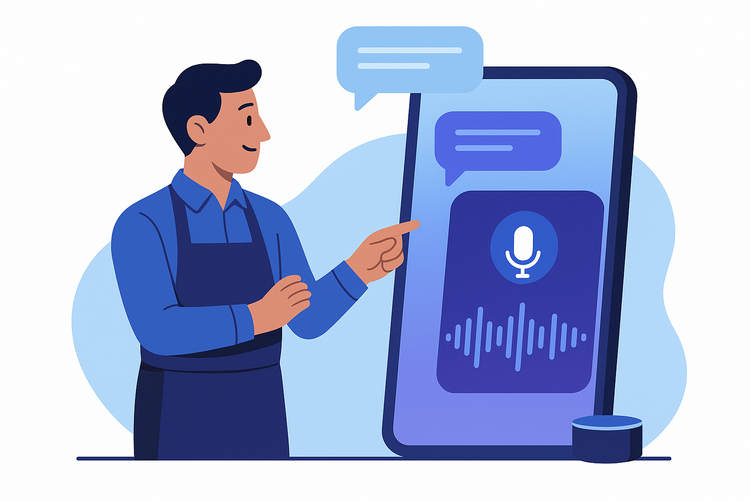
Voice technology has rapidly evolved from a novelty to an essential business tool. For small businesses across the UK, voice AI represents both an opportunity and a question mark. Should you invest time and resources into voice assistants and conversational AI, or is this just another tech trend that will pass? The short answer: you should absolutely care about voice AI, and here’s why.
Understanding Voice AI Technology
Voice AI, also known as conversational AI, refers to technology that enables machines to understand, process, and respond to human speech. Unlike simple voice recognition systems of the past, modern AI voice tools leverage natural language processing (NLP) to comprehend context, intent, and even emotional nuances in spoken language.
According to Statista research, over 8.4 billion voice assistants are in use globally as of 2024, with projections suggesting this number will continue to grow exponentially. In the UK specifically, approximately 44% of adults use voice assistants regularly, making this technology far from a passing fad.
The voice technology business landscape encompasses several key components: voice recognition, natural language understanding, dialogue management, and speech synthesis. Together, these elements create seamless interactions that feel increasingly human-like.
Why Small Businesses Can’t Ignore Voice AI
The Changing Customer Behaviour Landscape
Your customers are already using voice technology daily. From asking Alexa to add items to shopping lists to using Siri for local business searches, voice has become second nature. BrightLocal’s research shows that 58% of consumers have used voice search to find local business information in the past year.
If your business isn’t optimised for voice search and doesn’t consider voice-enabled customer interactions, you’re potentially invisible to a significant portion of your target market. This shift in behaviour isn’t temporary; it’s foundational.
Cost-Effective Customer Service Solutions
Small businesses often struggle with the cost of maintaining round-the-clock customer service. Voice AI offers an elegant solution. Conversational AI systems can handle routine enquiries, appointment bookings, and frequently asked questions without human intervention, allowing your team to focus on complex issues that require personal attention.
Research from Juniper Research indicates that businesses can save up to 2.5 billion customer service hours annually through conversational AI implementations, translating to substantial cost savings even for smaller operations.
Competitive Advantage in Your Market
Here’s the opportunity: most small businesses haven’t yet embraced voice AI. By implementing voice technology now, you position yourself ahead of competitors. Whether it’s offering voice-activated ordering, providing voice-enabled customer support, or simply ensuring your business appears in voice search results, early adoption creates differentiation.
Practical Applications of Voice AI for Small Businesses
Voice-Enabled Customer Support
Imagine customers calling your business after hours and receiving immediate assistance through an intelligent voice assistant. These AI voice tools can answer common questions, provide business hours, take messages, or even schedule appointments. This isn’t science fiction; it’s readily available technology that small businesses can implement today.
At Kaizen AI Consulting, we’ve helped numerous UK small businesses implement voice AI solutions that have dramatically improved customer satisfaction whilst reducing operational costs. The key is selecting the right approach for your specific business needs.
Voice Commerce and Ordering Systems
Voice commerce is experiencing remarkable growth. Industry data suggests that voice shopping is projected to reach £40 billion globally by 2025. For small businesses, this means opportunities to enable customers to place orders, check product availability, or track deliveries using voice commands.
Restaurants can accept takeaway orders through voice assistants. Retail shops can provide product information via voice queries. Service businesses can allow appointment booking through conversational AI. The applications are limited only by imagination.
Internal Operations and Productivity
Voice AI isn’t just customer-facing. Many small businesses use voice assistants for internal operations: scheduling, reminders, quick data retrieval, and hands-free task management. For businesses where employees need hands-free operation, such as warehouses, workshops, or kitchens, voice technology can significantly enhance productivity and safety.
Voice Search Optimisation
Perhaps the most immediate application for small businesses is optimising for voice search. When customers ask their voice assistants for business recommendations, you want to appear in those results. This requires adjusting your SEO strategy to accommodate natural language queries and conversational search patterns.
Voice searches tend to be longer and more conversational than typed searches. Instead of “best plumber Manchester,” users ask “Who is the best plumber near me?” Your content strategy needs to reflect this shift.
Implementation Considerations for Small Businesses
Budget-Friendly Entry Points
One common misconception is that voice AI requires substantial investment. While enterprise-level solutions can be costly, small businesses have access to affordable options. Many platforms offer subscription-based pricing that scales with usage, making entry costs manageable.
Starting points include: optimising your website for voice search (often requiring minimal investment), implementing chatbots with voice capabilities, or using off-the-shelf voice assistant integrations for common platforms.
Technical Requirements and Integration
The technical barrier to entry has dropped considerably. Many voice AI solutions integrate seamlessly with existing systems through APIs. You don’t necessarily need in-house technical expertise, though partnering with consultants who understand both voice technology and small business needs can accelerate implementation and ensure optimal results.
Kaizen AI Consulting specialises in making AI technologies accessible for small and medium-sized businesses. We understand that you need solutions that work within real-world constraints of budget, time, and technical resources. Our approach focuses on practical implementations that deliver measurable returns.
Data Privacy and Security
With voice technology comes responsibility for customer data. Voice interactions often contain sensitive information, requiring robust security measures. Under UK GDPR regulations, businesses must ensure voice data is collected, stored, and processed appropriately.
Fortunately, reputable voice AI platforms build compliance into their services. However, you must still ensure your implementation meets legal requirements and customer expectations around privacy.
User Experience Design
Implementing voice AI isn’t just about technology; it’s about designing positive user experiences. Poorly designed voice interactions can frustrate customers rather than help them. Consider the conversation flow, fallback options when the AI doesn’t understand, and seamless handoffs to human support when needed.
Measuring Success and ROI
Like any business investment, voice AI should deliver measurable returns. Key metrics to track include:
Customer satisfaction scores for voice interactions, reduction in customer service response times, cost savings from automated enquiry handling, conversion rates from voice commerce channels, and improvements in voice search rankings and organic traffic.
Small businesses should start with clear objectives. Are you primarily trying to reduce customer service costs? Increase sales channels? Improve customer convenience? Your goals will determine both implementation approach and success metrics.
Future-Proofing Your Small Business
Emerging Voice AI Trends
Voice technology continues evolving rapidly. Emerging trends include: emotion detection capabilities allowing AI to respond to customer sentiment, multilingual support becoming standard, integration with augmented reality for enhanced experiences, and voice biometrics for secure authentication.
For small businesses, staying informed about these developments helps ensure your voice AI strategy remains current. However, you don’t need to implement every new feature immediately. Focus on capabilities that serve your specific business objectives.
The Role of Voice in Omnichannel Strategy
Voice AI shouldn’t exist in isolation. The most effective implementations integrate voice with your overall digital marketing and customer engagement strategy. Customers might start interactions via voice, continue on your website, and complete through traditional channels, or vice versa.
Creating seamless omnichannel experiences where voice plays its appropriate role maximises the value of your investment.
Getting Started with Voice AI
If you’re convinced that voice AI matters for your small business, where do you begin? Here’s a practical roadmap:
First, audit your current customer interactions. Where do voice capabilities make sense? What questions do customers frequently ask that voice AI could address? Second, optimise for voice search immediately. This requires minimal investment and can deliver quick wins. Third, explore voice assistant skills for platforms your customers already use. Fourth, consider pilot projects with specific use cases before full deployment. Fifth, measure, learn, and iterate based on real performance data.
You don’t need to transform your entire operation overnight. Start small, prove value, and expand strategically.
The Verdict: Should You Care About Voice AI?
Absolutely, yes. Voice AI isn’t just for tech giants or enterprises with unlimited budgets. It’s a practical, accessible technology that offers small businesses genuine competitive advantages: improved customer service, cost efficiencies, enhanced accessibility, and alignment with changing customer behaviours.
The question isn’t whether voice technology matters, but rather how quickly you’ll embrace it compared to your competitors. Early adopters will establish customer expectations and capture market share whilst latecomers play catch-up.
However, implementation matters enormously. Random adoption of voice technology without strategy rarely delivers results. You need thoughtful planning, appropriate tool selection, and ongoing optimisation.
Ready to Explore Voice AI for Your Business?
Understanding voice AI’s potential is one thing; successfully implementing it is another. That’s where expert guidance makes the difference between costly experimentation and profitable innovation.
At Kaizen AI Consulting, we help UK small businesses navigate the voice AI landscape, identifying opportunities specific to your industry, customers, and objectives. We don’t believe in one-size-fits-all solutions. Instead, we develop customised strategies that fit your budget, technical capabilities, and business goals.
Whether you’re just beginning to explore voice technology or ready to implement comprehensive voice AI solutions, we’re here to help. Contact us today to discuss how voice AI can transform your small business and give you the competitive edge you need in an increasingly voice-enabled marketplace.
The voice revolution is here. The only question is whether you’ll lead it or follow it.