The pace of artificial intelligence development in 2026 has been nothing short of extraordinary. For small business owners across the United Kingdom, the flurry of AI model updates 2026 can feel overwhelming. With major releases from Google, OpenAI, Anthropic, and Microsoft landing within weeks of each other, understanding what these frontier AI models actually mean for your operations has never been more important.
According to the UK government’s Department for Science, Innovation and Technology, just 16% of UK businesses are currently using at least one AI technology, though a further 5% plan to adopt in the near future. However, chamber-led research suggests the figure among SMEs actively using AI-powered tools may be closer to 35% to 39%, up from approximately 25% in 2024. Whichever benchmark you accept, one thing is clear: the AI landscape business environment is shifting rapidly, and those who understand the terrain will gain a significant competitive edge.
Understanding the 2026 AI Model Arms Race
February 2026 marked a pivotal moment when seven major model releases landed in a single month. Google, Anthropic, OpenAI, xAI, and Alibaba all shipped significant updates within weeks of each other, creating what industry observers have dubbed the “AI model wars.” The Stanford AI Index notes that US and Chinese models have traded the benchmark lead multiple times since early 2025, with Anthropic’s top model leading by just 2.7% as of March 2026.
This competition is not merely academic. For SMEs, it translates into better tools, lower costs, and more specialised capabilities than ever before. The latest wave of releases has moved decisively beyond simple text generation into agentic workflows, multimodal reasoning, and business automation.
Google Gemini 3.5 and the Rise of Agentic AI
Google’s May 2026 announcements centred on what the company calls the “agentic era”. The flagship Gemini 3.5 model is specifically built for agents and coding, while Gemini Omni introduces advanced multimodal capabilities that can process image, audio, video, and text inputs simultaneously. For small businesses, this means AI systems that can handle complex, multi-step tasks rather than simple one-off queries.
Google also released Gemini 3.5 Flash, a lighter variant designed for lower-cost, high-throughput applications, alongside managed agent tooling in the Gemini API. This is particularly relevant for SMEs looking to automate customer support, document processing, or marketing workflows without enterprise-level budgets.
Additionally, Google’s Gemma 4, released in April, was described as “the most capable open model” to date. Open models matter for businesses that want greater control over their data and deployment options, particularly in sectors with strict data governance requirements.
OpenAI’s GPT-5.5 and Expanded Business Features
OpenAI has maintained momentum through early 2026 with a steady cadence of releases. The GPT-5.5 family, including Instant, standard, and Pro variants, arrived in June, offering tiered options for different business needs. Earlier in the year, GPT-5.3 Codex focused specifically on coding and software development tasks, while smaller variants such as GPT-5.4 mini and nano provided cost-effective solutions for high-volume applications.
June also saw OpenAI expand Codex with business plugins and deeper ChatGPT integration, making the platform more useful for sales, analytics, and design workflows. For small businesses with development needs or those using AI to automate repetitive digital tasks, these coding-focused models represent a significant leap forward.
Anthropic Claude and the Pursuit of Reliability
Anthropic’s Claude family received substantial upgrades in February 2026, with Claude Opus 4.6 and Claude Sonnet 4.6 both launching within weeks. The Sonnet variant is particularly noteworthy for SMEs because it delivers near-Opus performance at a significantly lower price point, making frontier-grade AI accessible to businesses with tighter budgets.
Anthropic has consistently positioned Claude as the most reliable option for businesses concerned about accuracy and safety. For industries such as financial services, legal, and healthcare, where erroneous AI outputs can have serious consequences, this emphasis on trustworthiness is a compelling differentiator.
Microsoft and the Enterprise Ecosystem
At its Build conference in late May 2026, Microsoft unveiled several proprietary models, including MAI-Code-1-Flash for code generation and MAI-Thinking-1 for advanced reasoning. The introduction of “Scout,” an autonomous agent for Microsoft 365 workflows, signals Microsoft’s strategy to embed AI directly within the productivity tools many small businesses already use daily.
For UK SMEs already operating within the Microsoft ecosystem, these integrations reduce friction and lower the barrier to AI adoption, as staff can leverage new capabilities within familiar interfaces.
A Practical Model Selection Guide for Small Businesses
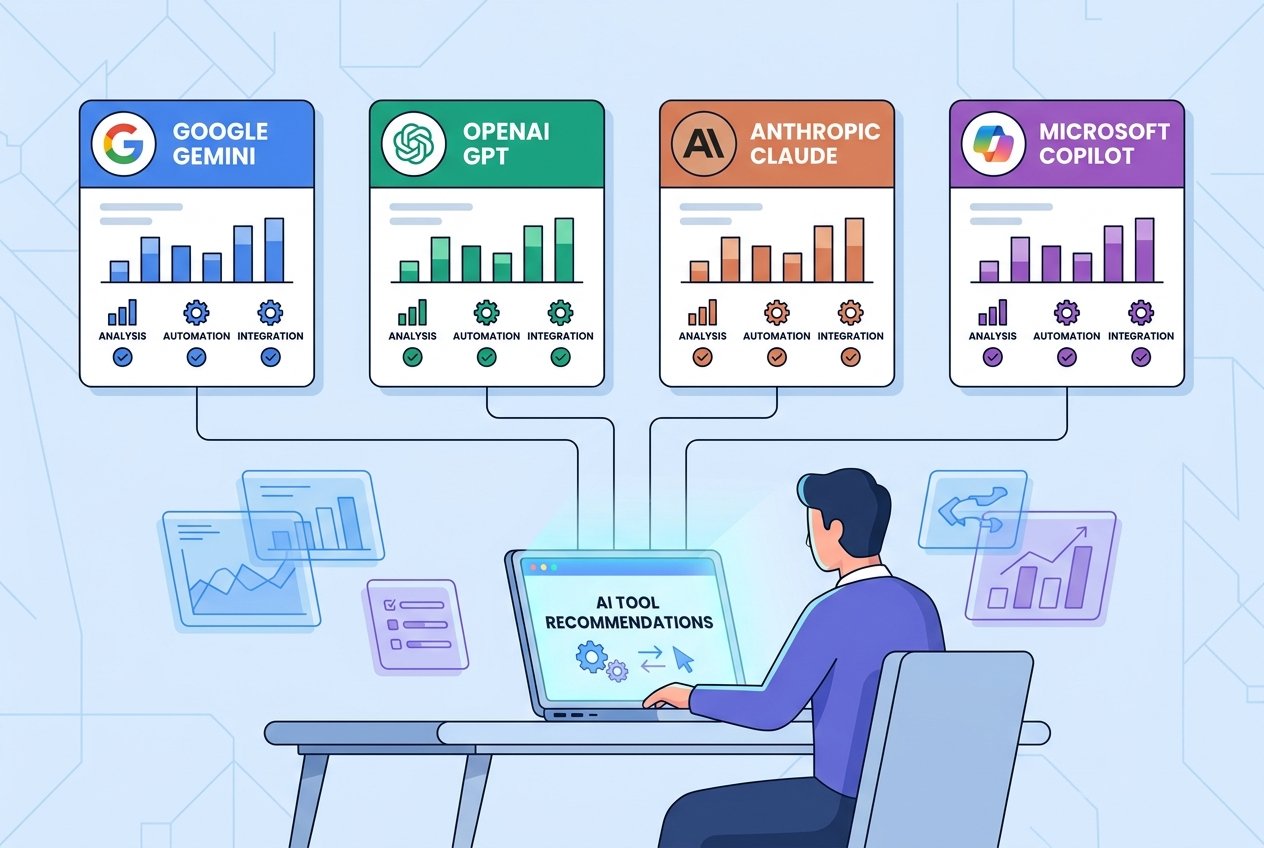
With so many options now available, how should a small business owner choose? The truth is that no single model wins every task. The most effective approach is to match the tool to your specific use case. Here is a practical model selection guide based on the latest AI news SME owners need to know:
For customer support and communication: Claude Sonnet 4.6 offers excellent reliability and natural language quality at a reasonable cost. Gemini 3.5 Flash is also well-suited for high-volume, real-time interactions.
For content creation and marketing: Gemini Omni’s multimodal capabilities make it ideal for generating varied content types, from blog posts to social media visuals. GPT-5.5 provides strong creative writing and marketing copy generation.
For software development and technical tasks: GPT-5.3 Codex and Gemini 3.5 lead the coding category. Microsoft’s MAI-Code-1-Flash is worth evaluating if your team already uses Azure or GitHub.
For cost-conscious, high-volume usage: Smaller variants such as GPT-5.4 mini, Gemini 3.5 Flash, or open models like Gemma 4 provide substantial capability at a fraction of the cost of flagship models.
Overcoming the Barriers to AI Adoption
Despite the promise of these tools, UK government research indicates that 54% of businesses using or considering AI cite limited skills and expertise as a significant hindrance. A further 35% point to skills gaps, whilst 25% express uncertainty about return on investment.
These barriers are understandable but not insurmountable. The key is to start with well-defined use cases where AI can deliver measurable efficiency gains, rather than attempting organisation-wide transformation overnight. Many successful SME adopters begin with a single department or workflow, prove value, and then expand.
This is where expert guidance can prove invaluable. Kaizen AI Consulting specialises in helping small businesses navigate the complex AI landscape business owners face today. From selecting the right frontier models to building custom automation workflows, their team focuses on practical implementation that delivers tangible ROI.
Key Takeaways for UK Small Businesses
First, the “best” AI model depends entirely on what you need it to do. The days of one model dominating every category are over. Second, agentic AI, multimodal capabilities, and workflow automation are now mainstream, not experimental. Third, cost-effective options exist for businesses of every size, particularly with the proliferation of smaller and open-weight models.
Finally, staying informed matters. The AI model updates 2026 cycle shows no signs of slowing, and the competitive pressure among providers continues to drive innovation and affordability.
If you are unsure where to begin or how to evaluate which frontier AI models suit your specific business needs, contact Kaizen AI Consulting for a discovery call. Their expertise in AI strategy and implementation can help you cut through the noise and deploy solutions that genuinely move your business forward. You can also explore their AI consulting services to learn more about how tailored guidance can accelerate your digital transformation.
The AI model wars are ultimately good news for small businesses. Greater choice, lower prices, and more specialised capabilities mean that enterprise-grade artificial intelligence is now within reach of the corner shop as well as the corporate boardroom. The question is no longer whether AI can help your business, but which model will help it best.