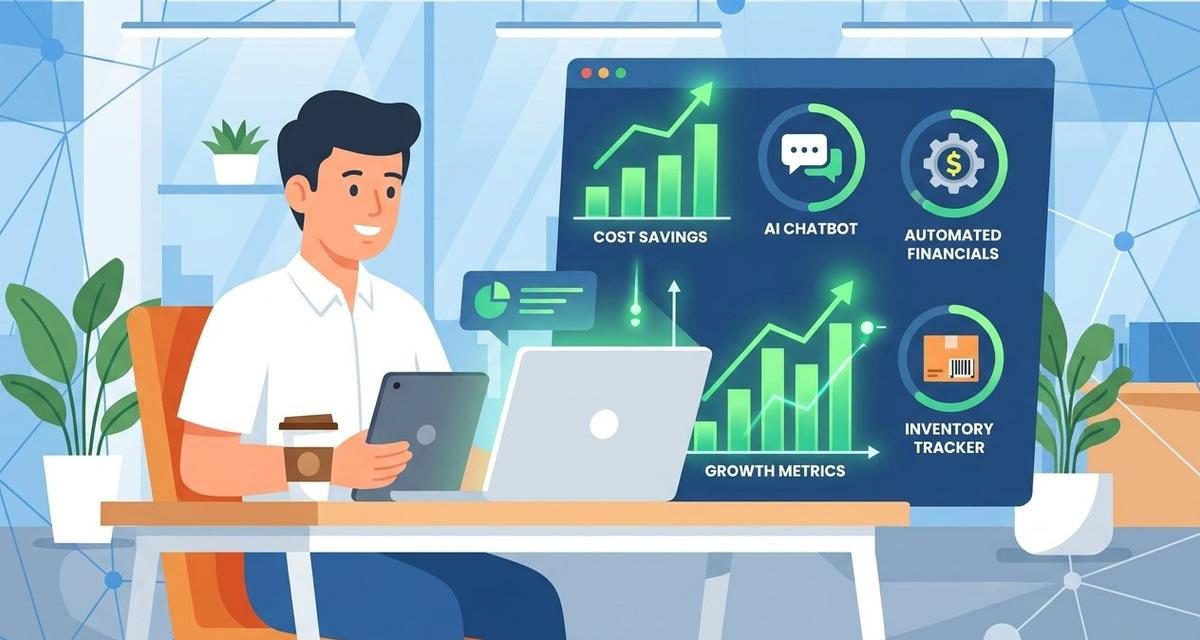
If you run a small business in the UK, you already know the story: costs keep climbing. From energy bills and raw materials to wages and business rates, the financial squeeze has not let up. But there is a growing counter-narrative in 2026, and it centres on artificial intelligence. AI cost management tools are giving small business owners new ways to trim expenses, automate repetitive work, and protect their margins without sacrificing quality or headcount.
In this guide, we explore exactly how rising costs are affecting UK small businesses right now, the AI-powered tools that are making a measurable difference, and practical steps you can take to start saving today.
The Cost Crisis Facing UK Small Businesses in 2026
While headline inflation has eased compared to the peaks of recent years, the pressure on small firms remains intense. UK CPI fell to 2.8% in April 2026, yet services inflation continues to run higher at 3.2%, and the costs that matter most to business owners remain stubbornly elevated.
The numbers paint a stark picture. According to research from Savanta, 77% of UK businesses report that rising inflation has negatively impacted their operations, with micro-businesses (those with fewer than 10 employees) hit hardest at 84%. Almost two-thirds (63%) of small businesses say inflation has directly reduced their turnover, and 71% of micro-businesses have seen a decline in weekly income.
A report from BTG found that the number of UK businesses experiencing critical financial distress rose by 36.9% in Q1 2026 alone. This is not a theoretical problem; it is an existential one for thousands of firms across the country.
Where the Costs Are Rising Fastest
Data from the Office for National Statistics (March 2026) reveals the key cost drivers pushing UK businesses to raise their own prices:
- Labour costs: The top factor at 29%, driven by National Living Wage increases and expanded Statutory Sick Pay eligibility from April 2026.
- Energy prices: Cited by 25% of businesses, the highest proportion since July 2023. Restaurants, workshops, and production facilities face utility bills significantly above pre-pandemic levels.
- Raw materials: Affecting 22% of firms, with supply chain disruptions and global market fluctuations keeping input costs high.
- Food prices: Forecast to rise by up to 9% in 2026, placing enormous pressure on hospitality and food retail businesses.
- Business rates: Rates rose again from April 2026, and while eligible pubs and live music venues received a 15% discount, many firms in hospitality and retail are questioning their viability.
More than one in five (22%) trading businesses expected to raise their prices in April 2026, up four percentage points from the previous month. When margins are already thin, even modest cost increases can tip the balance from survival to closure.
How AI Cost Management Is Changing the Game
Against this challenging backdrop, a growing number of UK small businesses are turning to inflation AI tools and automation to fight back. The shift is not about replacing people; it is about removing waste, speeding up processes, and making better decisions with limited resources.
According to SBE Council’s March 2026 survey, the average small business now uses a median of five AI tools, building integrated technology stacks rather than relying on a single solution. Marketing and content creation is the most common use case, followed by customer service and financial management.
1. Automating Customer Service to Reduce Staffing Pressure
With labour costs as the top driver of rising prices, reducing the time staff spend on repetitive enquiries delivers immediate savings. AI-powered chatbots and customer engagement platforms can handle routine questions around the clock, freeing your team to focus on complex, revenue-generating tasks.
Tools such as Intercom Fin 2.0 and Tidio AI combine live chat with automated response suggestions, allowing small e-commerce businesses to maintain excellent service standards without hiring additional support staff. For many firms, a single AI chatbot can handle the equivalent workload of a part-time employee, delivering cost reduction automation that pays for itself within weeks.
2. Smarter Pricing with AI-Powered Dynamic Tools
One of the most impactful areas of business savings AI is dynamic pricing. Rather than guessing at price points or reacting slowly to market shifts, AI pricing tools like Prisync and Competera analyse competitor data, demand patterns, and margin targets in real time.
The results speak for themselves: 97% of small business users report positive revenue impacts from AI-supported pricing tools. With 35% of small businesses already using these platforms and another 30% planning to adopt them, algorithmic pricing is rapidly becoming standard practice rather than a competitive edge.
3. Streamlining Marketing and Content Creation
Marketing is essential for growth, but it is also expensive when handled manually. AI tools like ChatGPT, Jasper, and Canva Magic Studio enable small businesses to produce professional-quality copy, social media content, and visual assets in a fraction of the time.
Rather than hiring a full-time marketing coordinator or outsourcing to an agency, a sole trader can now draft blog posts, create email campaigns, and schedule social media content using AI-assisted workflows. When paired with scheduling tools like Buffer, these platforms can cut marketing labour costs by 50% or more while maintaining output quality.
At Kaizen AI Consulting, we help small businesses identify exactly which AI marketing tools will deliver the greatest return for their specific industry and budget, ensuring you invest in solutions that genuinely reduce costs rather than adding complexity.
4. Reducing Waste Through Intelligent Inventory Management
For product-based businesses, overstocking and waste are silent profit killers. AI-driven inventory management systems analyse sales patterns, seasonal trends, and supplier lead times to optimise stock levels automatically.
The impact is particularly significant in food and beverage businesses, where waste reduction through automated systems can save thousands of pounds annually. By predicting demand more accurately, these tools help businesses avoid both overstocking (which ties up cash) and understocking (which loses sales).
5. Automating Financial Admin and Compliance
With Making Tax Digital now requiring quarterly digital reporting for sole traders and landlords with income over 20,000 pounds from April 2026, administrative burdens are increasing at the worst possible time. AI-enhanced accounting platforms such as QuickBooks Online and Xero automate bookkeeping, categorise expenses, flag anomalies, and generate compliant reports with minimal manual input.
Process automation tools like Zapier connect your CRM, e-commerce platform, email marketing, and accounting software, eliminating hours of manual data transfer each week. For a small business owner already stretched thin, these integrations are not luxuries; they are necessities.
6. Boosting Online Sales Conversion
For businesses selling online, AI-powered store management tools are delivering measurable results. Small online retailers using AI tools such as Shopify AI see 25% to 35% higher conversion rates compared to manually managed stores. These tools generate optimised product descriptions, personalised marketing emails, and data-driven recommendations that turn browsers into buyers.
When every sale matters more because of rising costs, even a modest improvement in conversion rate can significantly boost your bottom line.
A Practical Framework for Getting Started
The sheer number of AI tools available can feel overwhelming, but the most effective approach is surprisingly simple. Rather than chasing the latest technology, start by identifying your biggest operational bottleneck and addressing that first.
Here is a practical framework for UK small businesses looking to implement cost reduction automation:
- Audit your costs: Identify where you are spending the most time and money on repetitive, low-value tasks. Common culprits include customer service enquiries, social media management, invoicing, and stock management.
- Start small and free: Many powerful AI tools offer free tiers. ChatGPT, Canva’s free plan, and basic Zapier integrations cost nothing to trial. Test before you invest.
- Measure the impact: Track time saved, costs reduced, and revenue generated from each tool. If a tool is not delivering measurable value within 30 days, move on.
- Build your stack gradually: The average small business uses five AI tools. Add one at a time, ensuring each integrates smoothly with your existing workflows.
- Seek expert guidance: Implementing AI effectively requires more than downloading an app. Working with specialists like Kaizen AI Consulting ensures you choose the right tools for your business, configure them properly, and avoid costly mistakes that waste both time and budget.
Government Support and What to Watch
The UK government’s Small Business Plan, launched in 2025, aims to ease some of the financial pressure through late payment reform, including a legal requirement for large businesses to pay within 60 days (moving to 45 days over time), mandatory interest charges on late payments, and greater enforcement powers for the Small Business Commissioner.
While these reforms are welcome, they address only part of the problem. The operational cost savings that AI delivers are within your direct control and can be implemented immediately, without waiting for legislation to take effect.
Looking ahead, businesses should also prepare for continued regulatory changes including the Employment Rights Bill’s day-one unfair dismissal protections and the phased expansion of Making Tax Digital. Each of these changes adds compliance costs, making the efficiency gains from AI even more valuable.
Why Professional AI Implementation Matters
The difference between a business that thrives with AI and one that wastes money on unused subscriptions often comes down to implementation. Choosing the wrong tools, failing to integrate them with existing systems, or not training staff properly can turn a cost-saving initiative into an expensive distraction.
This is where professional guidance makes a genuine difference. At Kaizen AI Consulting, we work with UK small businesses to develop tailored AI strategies that align with their specific challenges, budget, and growth goals. From initial cost audits through to full implementation and staff training, our team ensures that every AI investment delivers a measurable return. If you are ready to explore how AI can help your business navigate rising costs in 2026, get in touch with our team today for a free consultation.
The Bottom Line
Rising costs are not going away in 2026. But the tools available to combat them have never been more powerful or more accessible. AI cost management is no longer the preserve of large corporations with deep pockets. Today, a sole trader with a laptop can access the same intelligent automation, dynamic pricing, and predictive analytics that were once available only to enterprise-level firms.
The small businesses that will thrive through this period of economic pressure are those that move quickly, invest wisely in the right AI tools, and seek expert support to maximise their return. The cost of inaction, whether measured in wasted hours, lost margins, or missed opportunities, is simply too high to ignore.


