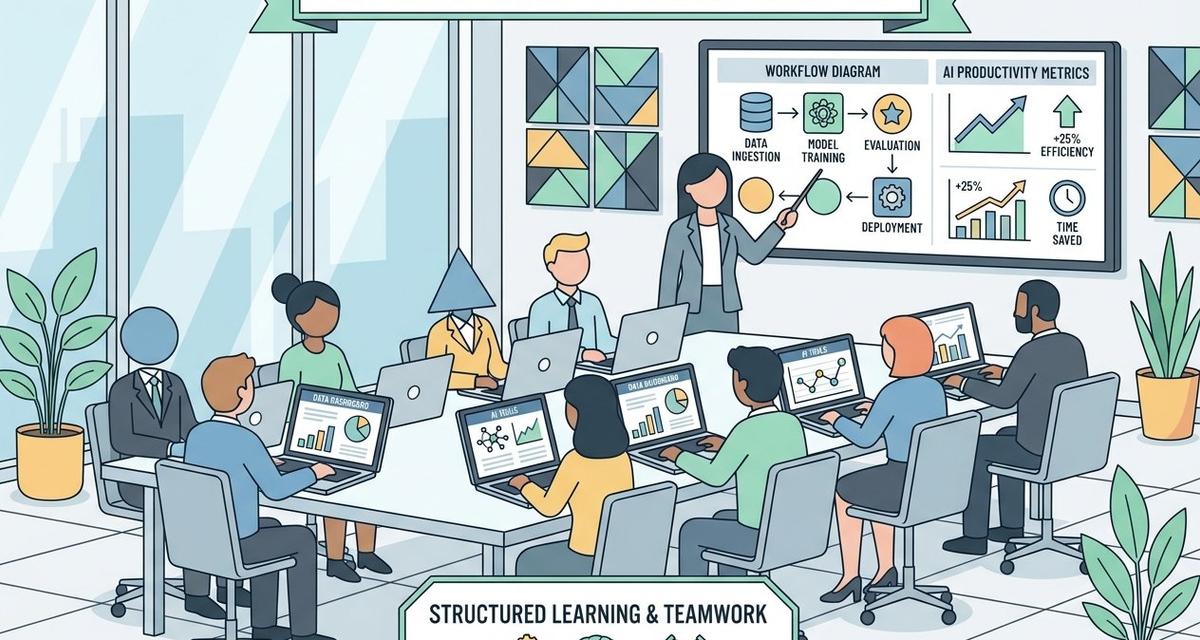
Artificial intelligence is no longer a distant innovation reserved for tech giants. In 2026, 70% of UK small and medium-sized businesses are using AI in some capacity, yet only 31% are seeing measurable returns. The gap between adoption and results almost always comes down to one thing: your people. Without proper AI team training, even the most powerful tools sit unused or, worse, get used incorrectly.
This playbook is designed for small business managers who want to close that gap. Whether you are running a 5-person team or a 50-person operation, the principles of effective AI upskilling UK businesses need remain the same. Let us walk through exactly how to build employee AI skills that stick and deliver real business value.
Why AI Literacy Matters More Than AI Tools
There is a common misconception that buying the right AI tool is the hard part. In reality, the biggest challenge is ensuring your staff can use it confidently and consistently. According to UK government research, only 21% of UK workers feel confident using AI at work, and just 32% have received even basic AI training resources.
This AI literacy gap is costing businesses dearly. A University of St Andrews study analysing approximately 10,000 UK SMEs found that AI adoption increases productivity by 27% to 133%, depending on sector and scope. But those gains only materialise when teams actually know how to apply AI tools to their daily workflows.
For small business managers, AI literacy business training is not optional. It is the foundation upon which every other AI initiative is built.
Step 1: Audit Your Workflows Before Choosing Tools
Before you sign up for any AI platform or book a training session, you need to understand where AI can make the biggest difference in your business. This means conducting a thorough workflow audit.
How to Run a Quick AI Workflow Audit
Start by listing the top 10 most time-consuming weekly tasks for each role in your team. For every task, score it on three criteria:
- Volume: How frequently does this task occur?
- Repetitiveness: Does it follow a predictable pattern?
- Risk: What happens if it goes wrong?
Tasks that score high on volume and repetitiveness but low on risk are your ideal AI candidates. Common examples include drafting email responses, summarising meeting notes, generating social media content, processing invoices, and analysing customer feedback.
This audit-first approach prevents a common pitfall: buying tools that solve problems you do not actually have. At Kaizen AI Consulting, we help small businesses conduct these workflow audits to identify the highest-impact opportunities for AI integration, ensuring your investment in staff AI adoption delivers measurable results from day one.
Step 2: Create a One-Page AI Use Policy
One of the most overlooked steps in AI team training 2026 is establishing clear guidelines before your team starts experimenting. Without a policy, you risk data breaches, inconsistent outputs, and employee confusion about what is and is not acceptable.
What Your AI Policy Should Cover
Keep it simple. A single page is all you need, covering four key areas:
- Approved tools: Which AI platforms are sanctioned for business use? Be specific. List the tools by name, such as ChatGPT, Microsoft Copilot, or Gemini.
- Data boundaries: What information can and cannot be entered into AI tools? Customer personal data, financial records, and proprietary business information should typically be excluded.
- Review requirements: Who must check AI-generated outputs before they reach a customer or client? This is particularly important for client-facing communications and legal documents.
- Incident reporting: How should staff report problems, errors, or concerns about AI outputs?
According to research from Spicy Advisory, only around 22% of UK businesses have provided AI-specific governance training. Having a clear, concise policy puts you ahead of the vast majority of your competitors and protects your business from unnecessary risk.
Step 3: Train Role by Role, Not Company-Wide
Generic, one-size-fits-all AI training rarely works. The AI needs of your marketing team are completely different from those of your finance department or customer service staff. Effective employee AI skills development requires tailored, role-specific training.
Tailored Training by Department
Marketing teams benefit most from learning how to use AI for content generation, social media scheduling, SEO keyword research, and campaign analysis. Tools like ChatGPT and Jasper can dramatically speed up content creation when used correctly.
Finance and admin teams should focus on AI applications for invoice processing, expense categorisation, financial forecasting, and report generation. Spreadsheet-integrated AI tools can save hours of manual data entry each week.
Customer service teams need training on AI chatbot management, automated response templates, sentiment analysis, and escalation workflows. The goal is to enhance human service, not replace it.
Sales teams can leverage AI for lead scoring, personalised outreach drafting, CRM data enrichment, and pipeline forecasting. AI helps prioritise effort so your salespeople focus on the prospects most likely to convert.
This role-specific approach to AI upskilling UK teams ensures every team member sees immediate relevance in their training, which dramatically improves adoption rates.
Step 4: Leverage Free UK Government AI Training Resources
One of the most significant developments for small businesses in 2026 is the UK government’s expanded commitment to AI education. In January 2026, the government launched free AI training courses available to every adult in the UK through the AI Skills Hub. This programme aims to upskill 10 million people by 2030 and is expected to reach at least 2 million SME employees.
Government and Industry Programmes Worth Exploring
- AI Skills Hub: Free government courses covering how to use AI tools for drafting, content creation, and administrative tasks.
- Innovate UK BridgeAI: Free AI training specifically for SMEs in agriculture, construction, and transport sectors.
- British Chambers of Commerce AI Academy: Has already trained over 8,000 business leaders in practical AI applications.
- OpenAI SME AI Accelerator: Targeting 20,000 businesses across the EU and UK with hands-on AI training and support.
Additionally, the government allocated 27 million pounds to the TechLocal scheme as part of the 187 million pound TechFirst programme, creating up to 1,000 new tech jobs and enabling professional practice courses in AI. These free resources are an excellent starting point, particularly for businesses with limited training budgets.
Step 5: Start Small with Quick Wins
The biggest mistake managers make with staff AI adoption is trying to transform everything at once. Instead, identify one or two quick wins that demonstrate immediate value and build momentum.
High-Impact Starting Points
Based on current UK SME data, the three areas offering the fastest return on investment are:
- Customer support automation: Implementing AI-assisted responses for common enquiries can reduce response times by up to 60%.
- Document processing: Using AI to summarise, categorise, and extract data from documents saves hours of manual work each week.
- Content generation: AI-assisted blog posts, social media updates, and email campaigns can be produced in a fraction of the time while maintaining quality when properly reviewed.
For a team of ten completing a structured AI training programme, breakeven typically occurs within four to six weeks. After six months, cumulative time savings often exceed 10 times the training cost. Those numbers make a compelling case for any small business manager seeking budget approval.
Step 6: Measure What Matters
You cannot improve what you do not measure. Tracking the right metrics ensures your AI team training 2026 investment delivers ongoing value rather than fading after the initial enthusiasm wears off.
Three Essential AI Training Metrics
Focus on tracking these three key indicators:
- Hours saved per person per week: This is the most tangible metric. Ask team members to log time saved on specific tasks during the first month after training.
- Voluntary adoption rate: How many staff members are still using AI tools one month after training without being prompted? A rate above 60% indicates successful embedding.
- Output quality improvements: Are proposals, reports, and client communications improving in quality? Compare samples from before and after AI integration.
These metrics give you a clear picture of return on investment and help you identify where additional support or training may be needed. They also provide the evidence you need to justify expanding AI initiatives across the wider business.
Step 7: Build a Culture of Continuous AI Learning
AI tools evolve rapidly. The training you deliver today will need refreshing within six months as new features, tools, and best practices emerge. Building a culture of continuous learning is essential for long-term success with AI literacy business integration.
Practical Ways to Sustain AI Skills
- Monthly AI lunch-and-learn sessions: Dedicate 30 minutes each month for team members to share new AI techniques they have discovered.
- AI champions: Appoint one person per department as an AI champion responsible for staying current with developments and supporting colleagues.
- Experimentation time: Allow team members dedicated time each week to explore new AI applications relevant to their role.
- Regular policy reviews: Update your AI use policy quarterly to reflect new tools, capabilities, and any regulatory changes.
This ongoing approach transforms AI from a one-off project into a fundamental part of how your business operates. As highlighted in our guide on building successful businesses through coaching, sustainable growth comes from embedding best practices into your company culture rather than relying on isolated initiatives.
Overcoming Common Resistance to AI Training
Even with the best plan in place, you will likely encounter resistance from some team members. Understanding the most common objections helps you address them proactively.
Fear of job replacement is the most frequent concern. Be transparent with your team: AI is being introduced to handle repetitive tasks so they can focus on higher-value work that requires human judgement, creativity, and empathy. Frame AI as a productivity partner, not a replacement.
Overwhelm with new technology affects many employees, particularly those less comfortable with digital tools. Start with the simplest applications and build confidence gradually. Celebrate small wins publicly to encourage continued engagement.
Scepticism about AI accuracy is actually healthy. Encourage critical evaluation of AI outputs and reinforce that human oversight remains essential. This scepticism, when channelled constructively, leads to better and more responsible AI use.
Getting Expert Help with AI Team Training
While this playbook provides a solid framework, many small business managers find that having expert guidance accelerates the process and avoids costly mistakes. With 85% of AI projects failing to escape the pilot stage, professional support can make the difference between a successful rollout and a wasted investment.
Kaizen AI Consulting specialises in helping UK small businesses navigate the entire AI adoption journey, from initial workflow audits and policy creation to tailored role-specific training and ongoing support. Our approach ensures your team does not just learn about AI but actually embeds it into their daily work for lasting productivity gains.
Ready to upskill your team and unlock the full potential of AI in your business? Get in touch with Kaizen AI Consulting today for a free consultation on building an AI training programme tailored to your team’s specific needs and your business goals.
Final Thoughts
Training your team to use AI effectively is not about chasing the latest technology trend. It is about systematically building employee AI skills that translate into measurable business outcomes. By auditing your workflows, creating clear policies, training role by role, leveraging free resources, starting with quick wins, measuring results, and fostering continuous learning, you give your business the best possible chance of being among the 31% of UK SMEs that see genuine ROI from their AI investment.
The businesses that thrive in 2026 and beyond will not be those with the most AI tools. They will be those with the best-trained teams. Start building yours today.


