In today’s digital landscape, content marketing has become the cornerstone of successful business strategies across the UK. However, creating content is only half the battle. Without proper measurement and analysis, you’re essentially driving blind. Understanding which content marketing metrics truly matter can mean the difference between wasted resources and remarkable ROI.
According to the Content Marketing Institute, 60% of marketers struggle to measure content effectiveness, yet those who do track performance are 1.6 times more likely to prove content marketing ROI. This comprehensive guide will help you identify and track the KPIs that actually matter for your business success.
Why Traditional Metrics Fall Short
Many businesses focus on vanity metrics like page views and social media likes, but these numbers rarely translate to business growth. Whilst these metrics provide surface-level insights, they don’t reveal the full picture of your content marketing performance. True success lies in measuring outcomes that align with your business objectives.
Research from HubSpot reveals that 70% of marketers actively invest in content marketing, yet only 21% can demonstrate successful ROI. This disconnect highlights the critical need for proper performance tracking and meaningful content analytics.
Essential Content Marketing Metrics for Measuring Success
Engagement Metrics That Matter
Engagement goes far beyond simple views. These content marketing metrics reveal how your audience interacts with your material:
Time on Page: This metric indicates whether visitors find your content valuable enough to consume fully. According to Contentsquare, the average time on page for high-performing content is 2.5 to 3 minutes. If your content consistently underperforms this benchmark, it’s time to reassess your approach.
Scroll Depth: Understanding how far readers scroll reveals which sections resonate and where you lose attention. Content analytics tools can track whether readers reach your calls-to-action or abandon halfway through.
Comments and Social Shares: Whilst raw numbers matter, the quality of engagement is paramount. Meaningful conversations and genuine shares indicate that your content strikes a chord with your target audience.
Conversion-Focused KPIs
Ultimately, content marketing exists to drive business results. These conversion metrics connect content performance to revenue:
Lead Generation Rate: Track how many visitors complete forms, download resources, or subscribe to newsletters. UK businesses using strategic content marketing generate three times more leads than those relying solely on traditional marketing.
Conversion Rate by Content Type: Not all content converts equally. Blog posts might drive awareness, whilst case studies and whitepapers often generate qualified leads. Understanding which content types deliver the best results allows you to optimise your strategy accordingly.
Cost Per Acquisition (CPA): Calculate how much you spend on content creation and distribution versus the number of customers acquired. This metric provides clear insight into your content marketing ROI.
At Kaizen AI Consulting, we help businesses implement sophisticated tracking systems that connect content performance to revenue outcomes, ensuring every piece of content contributes to your bottom line.
SEO Performance Indicators
Search engine visibility remains crucial for UK businesses competing in crowded markets:
Organic Traffic Growth: Monitor not just total traffic, but the quality and consistency of organic visitors. BrightEdge research shows that organic search drives 53% of all website traffic, making it essential for long-term success.
Keyword Rankings: Track your position for target keywords over time. Focus on terms that indicate commercial intent rather than just high search volumes. Performance tracking should include both primary and long-tail keywords relevant to your UK audience.
Backlink Quality: Earning links from authoritative UK websites signals trust and relevance to search engines. Quality trumps quantity every time.
Click-Through Rate (CTR): Your CTR from search results indicates whether your titles and meta descriptions effectively entice clicks. The average CTR for the first position on Google is approximately 28.5%, according to Backlinko.
Advanced Content Analytics for Deeper Insights
Customer Journey Metrics
Understanding how content influences the buyer journey provides invaluable insights for optimising your strategy:
Content Attribution: Which pieces of content are present at various touchpoints before conversion? Multi-touch attribution models reveal how different content types work together to drive results.
Content Consumption Patterns: Analyse which content combinations lead to conversions. Do prospects who read blog posts and download whitepapers convert at higher rates?
Time to Conversion: Track how long it takes prospects to move from first content interaction to conversion. This metric helps you understand your sales cycle and optimise content accordingly.
Brand Awareness Indicators
Whilst harder to quantify, brand awareness metrics provide crucial context for measuring success:
Direct Traffic Growth: Increases in direct traffic suggest growing brand recognition, as more people remember and actively seek your website.
Branded Search Volume: Monitor searches for your company name and branded terms. Growing branded searches indicate successful awareness-building efforts.
Share of Voice: Compare your content’s visibility against competitors in your industry. This metric reveals your position in the market conversation.
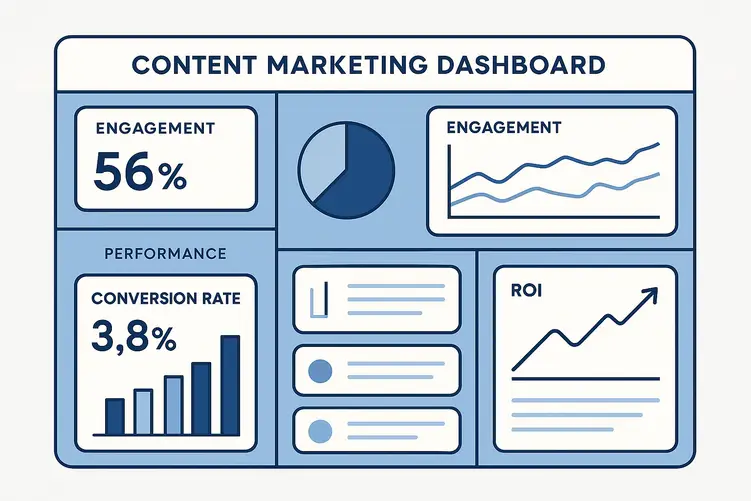
Creating Your Content Marketing Dashboard
With dozens of potential metrics available, creating a focused dashboard prevents analysis paralysis. Select 8-12 KPIs that align directly with your business objectives:
Awareness Stage: Organic traffic, social reach, branded searches
Consideration Stage: Engagement rate, time on page, pages per session
Conversion Stage: Lead generation rate, conversion rate, cost per acquisition
Retention Stage: Return visitor rate, email engagement, customer lifetime value
Implementing robust content analytics solutions doesn’t have to be overwhelming. Kaizen AI Consulting specialises in helping UK businesses establish measurement frameworks that provide actionable insights without requiring extensive technical expertise.
Tools for Effective Performance Tracking
Selecting the right tools streamlines your content marketing metrics analysis:
Google Analytics 4: Provides comprehensive website analytics, including engagement metrics, conversion tracking, and audience insights. The latest version offers enhanced event tracking and cross-platform measurement.
Google Search Console: Essential for monitoring SEO performance, including keyword rankings, click-through rates, and indexing issues specific to UK search results.
Content Management Platforms: Tools like HubSpot, SEMrush, or Ahrefs offer integrated solutions for tracking content performance across multiple channels.
Social Media Analytics: Platform-specific tools provide detailed insights into how your content performs across different social networks.
Turning Data Into Action
Collecting content analytics is meaningless without acting on insights:
Regular Review Cycles: Establish monthly and quarterly reviews to assess performance trends. Look for patterns rather than reacting to short-term fluctuations.
A/B Testing: Systematically test headlines, formats, calls-to-action, and content lengths. Data-driven optimisation leads to continuous improvement.
Content Audits: Periodically evaluate your entire content library. Update high-performing pieces, consolidate similar topics, and remove underperforming content that may hurt SEO.
Competitive Benchmarking: Compare your KPIs against industry standards and direct competitors to identify gaps and opportunities.
Common Pitfalls in Measuring Success
Avoid these frequent mistakes when tracking content marketing metrics:
Focusing on Quantity Over Quality: Publishing 50 mediocre blog posts generates less value than 10 exceptional pieces that truly resonate with your audience.
Ignoring Context: A spike in traffic means little if it doesn’t align with your target audience or business goals. Always consider the bigger picture.
Short-Term Thinking: Content marketing is a long-term strategy. Expecting immediate results leads to premature strategy abandonment.
Inconsistent Tracking: Changing metrics constantly prevents meaningful trend analysis. Commit to your chosen KPIs for at least six months before reassessing.
The Future of Content Marketing Measurement
As technology evolves, so do measurement capabilities. Artificial intelligence and machine learning now enable predictive analytics, helping businesses forecast content performance before publication. Advanced attribution modelling provides clearer pictures of how content influences revenue across complex buyer journeys.
UK businesses that embrace these advanced measurement techniques gain competitive advantages by making faster, more informed decisions about their content strategies.
Taking the Next Step
Measuring content marketing success requires the right combination of tools, expertise, and strategic thinking. Whilst the metrics outlined here provide a solid foundation, implementing comprehensive performance tracking often requires specialist knowledge.
If you’re ready to transform your content marketing from a cost centre into a measurable revenue driver, contact Kaizen AI Consulting today. Our team specialises in helping UK businesses establish robust measurement frameworks, implement advanced analytics solutions, and turn data into actionable strategies that drive real business growth.
Remember, what gets measured gets managed. By focusing on KPIs that actually matter and consistently tracking your content marketing metrics, you’ll gain the insights needed to optimise your strategy, demonstrate ROI, and achieve sustainable business success in the competitive UK market.