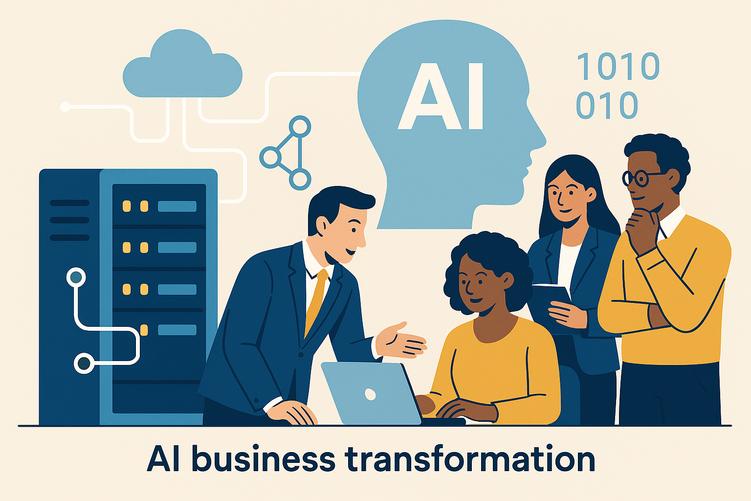
The race to harness artificial intelligence is no longer a futuristic concept but a present-day business imperative. According to PwC research, AI could contribute up to £232 billion to the UK economy by 2030. However, successfully implementing AI requires more than simply purchasing the latest technology. It demands a comprehensive approach to AI infrastructure development and meticulous team readiness planning.
Building an AI-ready business is a transformative journey that touches every aspect of your organisation, from technical systems to company culture. This guide explores the essential steps UK businesses must take to prepare their infrastructure and teams for successful AI adoption.
Understanding AI Infrastructure Requirements
Before embarking on any AI initiative, businesses must establish a solid technological foundation. AI infrastructure encompasses the hardware, software, data systems, and networks that enable artificial intelligence applications to function effectively.
Data Architecture and Storage
Quality data forms the bedrock of any successful AI implementation. According to Gartner, poor data quality costs organisations an average of £9.7 million annually. Your AI infrastructure must include robust data collection, storage, and management systems that ensure accuracy, accessibility, and security.
Cloud-based solutions have become increasingly popular for AI workloads, offering scalability and flexibility without the enormous capital expenditure of on-premises hardware. Hybrid approaches that combine cloud and local storage can provide the best of both worlds, particularly for businesses handling sensitive customer data under GDPR regulations.
Computing Power and Processing Capabilities
AI applications, particularly machine learning models, require significant computational resources. Graphics Processing Units (GPUs) and Tensor Processing Units (TPUs) have become standard for training complex AI models. For many UK SMEs, leveraging cloud-based AI platforms such as Google Cloud AI, Amazon Web Services, or Microsoft Azure provides access to enterprise-grade computing power without prohibitive upfront costs.
The AI preparation phase should include a thorough assessment of your current IT infrastructure and identification of gaps that could hinder AI deployment. Kaizen AI Consulting specialises in conducting comprehensive infrastructure audits that help businesses understand exactly what they need to invest in for successful AI adoption.
Building Team Readiness for AI Integration
Technology alone cannot drive successful business transformation. Research from McKinsey indicates that 84% of executives believe AI will give them a competitive advantage, yet only 16% report having the necessary skills within their organisations. This skills gap represents one of the most significant barriers to AI adoption.
Assessing Current Capabilities
Begin by conducting a skills inventory across your organisation. Identify employees with technical backgrounds, data literacy, or enthusiasm for emerging technologies. These individuals can become your AI champions, helping to drive adoption and support colleagues through the transition.
Consider which roles will be most affected by AI implementation. Rather than viewing AI as a replacement for human workers, frame it as a tool that augments human capabilities. According to the World Economic Forum, whilst AI may displace some jobs, it will create 97 million new roles by 2025, particularly in areas requiring human creativity, strategic thinking, and emotional intelligence.
Training and Upskilling Programmes
Effective team readiness requires investment in comprehensive training programmes. These should be tailored to different roles and skill levels within your organisation:
Executive Leadership: Leaders need strategic understanding of AI capabilities, limitations, and business implications. They should be able to identify opportunities, assess ROI, and champion AI initiatives throughout the organisation.
Technical Teams: Developers, data scientists, and IT professionals require hands-on training in AI frameworks, machine learning algorithms, and AI operations (AIOps). Partnerships with educational institutions or specialist training providers can help develop these capabilities.
Business Users: Employees who will use AI tools daily need practical training focused on specific applications relevant to their roles. This might include training on AI-powered CRM systems, automated reporting tools, or intelligent chatbots.
UK businesses can access funding for AI training through programmes like the Help to Grow: Digital scheme, which provides financial support for technology adoption and skills development.
Creating an AI-Ready Organisational Culture
Perhaps the most overlooked aspect of AI preparation is cultural transformation. AI organisational change requires shifting mindsets, workflows, and decision-making processes throughout your business.
Fostering a Data-Driven Culture
AI thrives in environments where data-driven decision-making is valued and practised. Encourage employees at all levels to base decisions on evidence rather than intuition. Implement systems that make data accessible and understandable to non-technical staff members.
Transparency is crucial. When implementing AI systems, clearly communicate what they do, why they are being introduced, and how they will affect different roles. Address concerns about job security openly and honestly, emphasising how AI will create opportunities for employees to focus on higher-value work.
Establishing Governance and Ethics Frameworks
As AI becomes more prevalent, ethical considerations and governance frameworks become essential. The UK government’s pro-innovation approach to AI regulation emphasises the importance of responsible AI development.
Establish clear policies around data privacy, algorithmic transparency, and bias mitigation. Create an AI ethics committee that includes diverse perspectives and can oversee AI projects to ensure they align with company values and legal requirements.
Developing a Phased Implementation Strategy
Successful business transformation through AI rarely happens overnight. A phased approach allows your organisation to learn, adapt, and build confidence gradually.
Phase One: Pilot Projects
Begin with small-scale pilot projects that address specific business challenges. Choose projects with clear success metrics and manageable scope. This might include automating invoice processing, implementing a customer service chatbot, or using predictive analytics for inventory management.
Pilot projects provide valuable learning opportunities and generate early wins that build momentum for broader AI adoption. Document lessons learned and share success stories across the organisation.
Phase Two: Scaling and Integration
Once pilot projects demonstrate value, scale successful initiatives and integrate AI more deeply into business processes. This phase requires careful change management to ensure smooth transitions and minimise disruption.
Working with experienced partners during this phase can significantly improve outcomes. Kaizen AI Consulting helps businesses navigate the complexities of scaling AI initiatives, providing expertise in both technical implementation and organisational change management to ensure sustainable business transformation.
Phase Three: Continuous Improvement
AI systems require ongoing monitoring, refinement, and updating. Establish processes for measuring AI performance, collecting user feedback, and implementing improvements. Create a culture of continuous learning where teams regularly review AI systems and explore new applications.
Measuring Success and ROI
To justify ongoing investment in AI infrastructure and team development, businesses must demonstrate tangible returns. According to Accenture research, companies that successfully scale AI initiatives see profit margins improve by an average of 3-15%.
Establish clear KPIs before implementing AI projects. These might include efficiency gains, cost reductions, revenue increases, improved customer satisfaction scores, or faster decision-making cycles. Regular reporting on these metrics helps maintain stakeholder support and guides future AI investments.
Overcoming Common Challenges
Every organisation faces obstacles when building AI readiness. Common challenges include resistance to change, budget constraints, skills shortages, and data quality issues. Acknowledging these challenges upfront and developing mitigation strategies is essential for success.
Legacy systems can pose particular challenges for UK businesses, many of which operate on technology infrastructure built over decades. Integration between old and new systems requires careful planning and sometimes significant investment. However, the cost of maintaining outdated systems that cannot support AI capabilities often exceeds the investment required for modernisation.
Taking the Next Step
Building an AI-ready business is not a one-time project but an ongoing commitment to technological advancement and organisational evolution. The businesses that thrive in the AI era will be those that invest thoughtfully in both AI infrastructure and team readiness, creating environments where technology and human capability combine to drive innovation.
The journey may seem daunting, but you do not have to navigate it alone. Whether you are just beginning to explore AI possibilities or looking to scale existing initiatives, expert guidance can accelerate your progress and help you avoid costly mistakes.
Ready to transform your business with AI? Contact Kaizen AI Consulting today for a complimentary consultation. Our team of AI specialists will assess your current infrastructure, identify opportunities for AI integration, and develop a customised roadmap for building an AI-ready organisation that drives sustainable competitive advantage. Do not let your competitors get ahead whilst you are still preparing. Take action now to secure your place in the AI-powered future of UK business.