In today’s hyper-competitive marketplace, understanding your customers isn’t just an advantage – it’s a necessity. Traditional customer segmentation methods, whilst useful, often fall short in capturing the nuanced behaviours and preferences of modern consumers. Enter artificial intelligence: a transformative technology that’s revolutionising how businesses analyse, understand, and target their audiences.
According to research by McKinsey, companies that excel at personalisation generate 40% more revenue from those activities than average players. Yet, achieving this level of personalisation at scale requires sophisticated customer segmentation that goes far beyond basic demographic data. This is where customer segmentation AI becomes invaluable.
Understanding AI-Powered Customer Segmentation
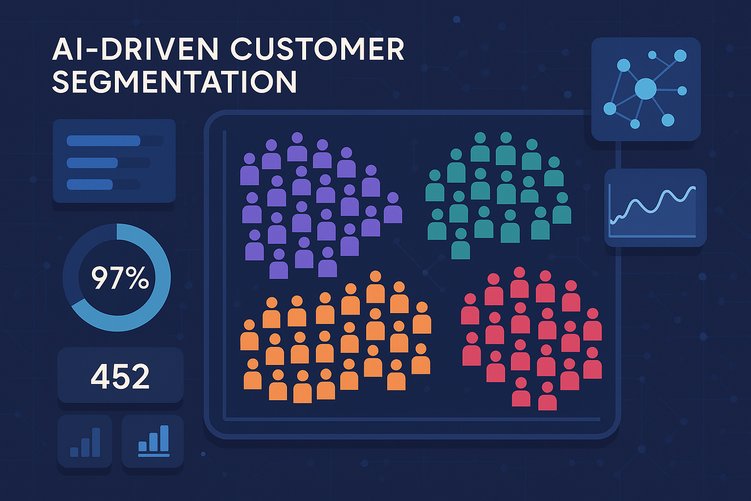
Customer segmentation AI leverages machine learning algorithms to analyse vast amounts of customer data, identifying patterns and groupings that would be impossible for humans to detect manually. Unlike traditional segmentation based on simple demographics like age or location, AI-driven approaches examine hundreds of variables simultaneously, including purchase history, browsing behaviour, engagement patterns, and even sentiment analysis from customer interactions.
The sophistication of modern customer analysis tools means businesses can now create dynamic segments that evolve in real-time as customer behaviours change. Rather than static groups that require quarterly reviews, AI systems continuously refine marketing segments based on the latest data, ensuring your targeting remains accurate and relevant.
A study by Salesforce found that 84% of customers say being treated like a person, not a number, is very important to winning their business. AI-powered segmentation makes this personalisation possible at scale, allowing businesses to treat each customer as an individual whilst managing thousands or millions of relationships.
The Business Benefits of AI-Driven Audience Targeting
Implementing personalisation AI for customer segmentation delivers measurable benefits across multiple business areas. Let’s examine the key advantages that make this technology essential for modern marketing strategies.
Enhanced Marketing ROI
When you target the right message to the right audience at precisely the right time, marketing spend becomes significantly more efficient. Research from Epsilon reveals that 80% of consumers are more likely to make a purchase when brands offer personalised experiences. AI-powered audience targeting ensures every marketing pound is spent reaching customers most likely to convert.
Traditional batch-and-blast email campaigns typically achieve open rates of around 20%, but segmented campaigns using AI can boost this figure to 40% or higher. The improved relevance means customers actually want to engage with your content rather than consigning it to the spam folder.
Improved Customer Lifetime Value
By understanding customer segments at a granular level, businesses can identify high-value customers earlier and nurture these relationships more effectively. AI systems can predict which customers are likely to become brand advocates, which require additional support to prevent churn, and which segments offer the greatest potential for upselling.
This predictive capability transforms customer analysis from a retrospective exercise into a forward-looking strategic tool. Rather than simply reporting what happened last quarter, AI-powered segmentation tells you what’s likely to happen next quarter and what actions you should take in response.
Faster Time to Market
Manual segmentation exercises can take weeks or even months to complete, by which time market conditions may have changed. AI systems perform complex customer analysis in hours or minutes, allowing marketing teams to respond rapidly to emerging opportunities or threats. This agility is particularly valuable in fast-moving sectors where customer preferences shift quickly.
Key Applications of Customer Segmentation AI
Understanding the theory is one thing, but how do businesses actually apply customer segmentation AI in practice? Here are the most impactful use cases transforming marketing results across UK businesses.
Behavioural Segmentation
Rather than grouping customers by who they are, behavioural segmentation focuses on what they do. AI algorithms analyse website navigation patterns, email engagement, purchase frequency, product preferences, and dozens of other behavioural signals to create nuanced customer segments.
For example, an e-commerce retailer might identify a segment of “browse-but-rarely-buy” customers who visit frequently but have low conversion rates. With this insight, targeted interventions such as limited-time offers or abandoned basket emails can be deployed specifically to this group, addressing their unique hesitations.
Predictive Churn Prevention
Losing customers is expensive – acquiring a new customer costs five times more than retaining an existing one, according to research by Invesp. Customer segmentation AI can identify early warning signs that a customer is about to churn, such as declining engagement, reduced purchase frequency, or changes in browsing patterns.
By flagging at-risk customers before they leave, businesses can implement targeted retention campaigns. This might include personalised offers, proactive customer service outreach, or content specifically designed to re-engage wavering customers.
Dynamic Pricing and Promotions
Different customer segments have different price sensitivities and respond to different types of promotions. AI-powered marketing segments allow businesses to optimise pricing and promotional strategies for each group. Price-sensitive segments might receive percentage discounts, whilst premium segments might be offered exclusive early access or bundled services.
This level of sophistication in audience targeting ensures you’re not leaving money on the table by over-discounting to customers who would pay full price, whilst still converting price-conscious customers with appropriate incentives.
Content Personalisation
Generic content appeals to no one. AI-driven segmentation enables businesses to serve personalised content that resonates with each customer’s specific interests and needs. A study by Accenture found that 91% of consumers are more likely to shop with brands that provide relevant offers and recommendations.
Whether it’s personalised product recommendations, tailored blog content, or customised email newsletters, personalisation AI ensures every customer interaction feels relevant and valuable. This builds stronger emotional connections with your brand and increases customer lifetime value.
Implementing AI Customer Segmentation: Best Practices
Whilst the benefits of customer segmentation AI are clear, successful implementation requires careful planning and execution. Here’s how to approach it strategically.
Start With Clean, Comprehensive Data
AI is only as good as the data it learns from. Before implementing AI-powered segmentation, conduct a thorough audit of your customer data. Ensure you’re collecting relevant information across all touchpoints, that data quality is high, and that you have proper consent and compliance with UK GDPR regulations.
Many businesses discover their customer data is siloed across multiple systems – CRM, e-commerce platform, email marketing tool, and analytics platforms. Integrating these data sources provides the comprehensive view necessary for effective customer analysis.
Define Clear Business Objectives
Customer segmentation AI should solve specific business problems, not simply exist because the technology is available. Are you trying to reduce churn? Increase average order value? Improve email engagement? Clear objectives guide which segmentation approaches to prioritise and how to measure success.
Working with experienced partners like Kaizen AI Consulting can help you identify the most impactful use cases for your specific business context and ensure your AI initiatives align with broader strategic goals.
Balance Automation With Human Insight
AI excels at pattern recognition and processing vast data sets, but human marketers bring creativity, emotional intelligence, and strategic thinking that machines cannot replicate. The most successful implementations combine AI-powered customer analysis with human interpretation and creativity.
Use AI to identify segments and predict behaviours, but rely on your marketing team to craft compelling messages and strategies that resonate with those segments. This human-AI collaboration produces better results than either approach alone.
Test, Learn, and Iterate
AI models improve over time as they process more data and receive feedback on their predictions. Implement a structured testing framework that compares AI-driven segments against control groups, measures performance across key metrics, and feeds learnings back into the system.
This continuous improvement approach ensures your customer segmentation becomes more accurate and valuable over time, adapting to evolving customer behaviours and market conditions.
Overcoming Common Implementation Challenges
Despite the clear benefits, many UK businesses encounter obstacles when implementing AI-powered segmentation. Understanding these challenges helps you prepare appropriate solutions.
Data Privacy and Compliance
UK businesses must navigate GDPR requirements and growing consumer concerns about data privacy. Ensure your customer segmentation AI operates transparently, with clear consent mechanisms and robust data security. Customers are increasingly willing to share data if they receive genuine value in return, but any breach of trust can be devastating.
Technical Integration Complexity
Integrating AI tools with existing marketing technology stacks can be complex, particularly for businesses running legacy systems. This is where expert guidance becomes invaluable. Kaizen AI Consulting specialises in helping businesses navigate these technical challenges, ensuring smooth integration and minimal disruption to ongoing operations.
Skills and Knowledge Gaps
Many marketing teams lack experience with AI technologies and data science concepts. Bridging this knowledge gap requires training, but also setting realistic expectations about what AI can and cannot do. Avoid the temptation to view AI as a magic solution that requires no human involvement.
Demonstrating ROI
Stakeholders naturally want to see returns on AI investments. Establish clear measurement frameworks from the outset, tracking not just vanity metrics but genuine business outcomes such as revenue growth, customer retention rates, and marketing efficiency gains. Document both quick wins and longer-term strategic benefits.
The Future of AI-Powered Customer Segmentation
As AI technology continues to evolve, customer segmentation capabilities will become even more sophisticated. We’re already seeing developments in several exciting areas that will shape the future of marketing segments and audience targeting.
Predictive customer lifetime value models are becoming more accurate, allowing businesses to prioritise acquisition and retention efforts more effectively. Real-time personalisation engines can now adjust content and offers within milliseconds based on customer behaviour. Cross-channel orchestration ensures consistent, coordinated customer experiences whether someone interacts via email, website, mobile app, or in-store.
Voice and conversational AI is opening new channels for customer interaction and data collection, whilst advances in natural language processing enable sentiment analysis at scale. These technologies will make customer analysis even more nuanced and actionable.
For UK businesses, staying ahead of these developments is crucial for maintaining competitive advantage. The gap between companies that effectively leverage personalisation AI and those that don’t will continue to widen, with market leaders capturing disproportionate shares of customer attention and spending.
Taking the Next Step
AI-powered customer segmentation represents a fundamental shift in how businesses understand and engage their audiences. The technology delivers measurable improvements in marketing performance, customer satisfaction, and business outcomes. However, successful implementation requires strategic planning, technical expertise, and ongoing optimisation.
Whether you’re just beginning to explore customer segmentation AI or looking to enhance existing capabilities, the key is starting with a clear strategy aligned to your business objectives. Understanding your current data landscape, identifying priority use cases, and building the necessary technical and organisational capabilities are all critical success factors.
The competitive landscape continues to evolve rapidly, and businesses that delay implementing these technologies risk falling behind more agile competitors. However, rushed implementations without proper planning often fail to deliver expected returns.
If you’re ready to transform your marketing performance through AI-powered customer segmentation, reach out to Kaizen AI Consulting today. Our team of AI specialists and marketing experts can assess your current capabilities, identify the highest-impact opportunities, and guide you through every stage of implementation. We combine deep technical knowledge with practical marketing experience to ensure your AI initiatives deliver real business value, not just impressive technology demonstrations.
The future of marketing is personalised, predictive, and powered by AI. The question isn’t whether to embrace customer segmentation AI, but how quickly you can implement it effectively. Your customers expect personalised experiences, your competitors are already investing in these capabilities, and the technology has matured to the point where results are measurable and significant. The time to act is now.