AI for Dental Practices: Automating Bookings, Reminders, and Patient Follow-Ups
The UK dental industry is undergoing a quiet revolution. With over 12,040 dental practice businesses operating across the UK in 2026 and an industry valued at approximately £7.6 billion, competition for patients has never been more intense. Yet many practices are still managing bookings via telephone, sending manual reminder texts, and chasing patients for follow-ups by hand. In a landscape where 9 in 10 NHS practices are unable to offer appointments to new adult patients, private dental practices that can deliver a seamless, tech-enabled experience hold a significant competitive advantage.
Dental AI is no longer a concept reserved for large corporate groups or cutting-edge research clinics. Today, affordable, GDPR-compliant AI tools are helping independent and group dental practices of all sizes automate their patient journeys from first enquiry to post-treatment follow-up. The results are striking: reduced administrative burdens, fewer missed appointments, higher revenue, and a better experience for patients.
This guide explores how dental practice automation is transforming the patient booking experience, appointment reminder systems, and post-treatment follow-up workflows for UK dental practices in 2026.
The Real Cost of Inefficient Scheduling in UK Dental Practices
Before examining the solutions, it is worth understanding the scale of the problem. Missed dental appointments, known in clinical settings as Did Not Attends (DNAs), cost the NHS an estimated £38 million per year, with approximately 7.9 million dental appointments missed annually across the UK. For private practices, the financial impact is equally serious. A practice losing just five missed appointments per week, at an average treatment value of £80, loses over £20,800 per year in revenue. At ten missed appointments per week, that figure rises to over £41,600 per year.
Beyond no-shows, inefficient booking processes create bottlenecks at the front desk. Reception teams spend significant portions of their working day answering calls, manually entering appointments, chasing confirmations, and responding to enquiries that come in outside of opening hours. This time could be better spent on in-person patient care, treatment coordination, and higher-value tasks.
According to a 2025 healthcare automation report by AutomationEdge, AI-driven administrative tools can reduce administrative costs in healthcare practices by up to 40%, primarily by deflecting routine tasks away from human staff. For dental practices operating on tight margins, this kind of operational efficiency is transformative.
What Is Dental AI and How Does It Work in Practice?
Dental AI refers to the use of artificial intelligence technologies across the operational and clinical workflows of a dental practice. Whilst much of the early attention focused on diagnostic AI for radiograph analysis, the fastest-growing area of dental technology in the UK right now is dental practice automation for patient-facing administration.
This includes:
- AI booking chatbots that handle appointment requests via website, SMS, or social media 24 hours a day, 7 days a week
- AI phone systems that answer inbound calls, capture patient details, and book or reschedule appointments without human intervention
- Automated appointment reminder systems that send personalised reminders via SMS, email, or WhatsApp at optimal times before appointments
- Patient recall automation that identifies patients overdue for hygiene visits, check-ups, or incomplete treatment courses and sends targeted re-engagement messages
- Post-treatment follow-up workflows that automatically check in on patients after procedures, gather feedback, and encourage online reviews
According to the British Dental Association’s 2025 Technology Adoption Survey, 78% of UK dental practices now utilise at least one AI-powered tool, and 87% of dentists believe AI will become a standard part of future dental practice. The adoption curve is accelerating rapidly.
Automating Patient Bookings: Converting More Enquiries Into Appointments
One of the most significant revenue leaks in any dental practice is the gap between patient interest and booked appointment. A prospective patient visits your website at 9pm on a Sunday, cannot find an easy way to book, and ends up registering with a competitor who offers online booking. Or they call during a busy period, are placed on hold, and give up. These micro-moments of friction add up to thousands of pounds in lost revenue each year.
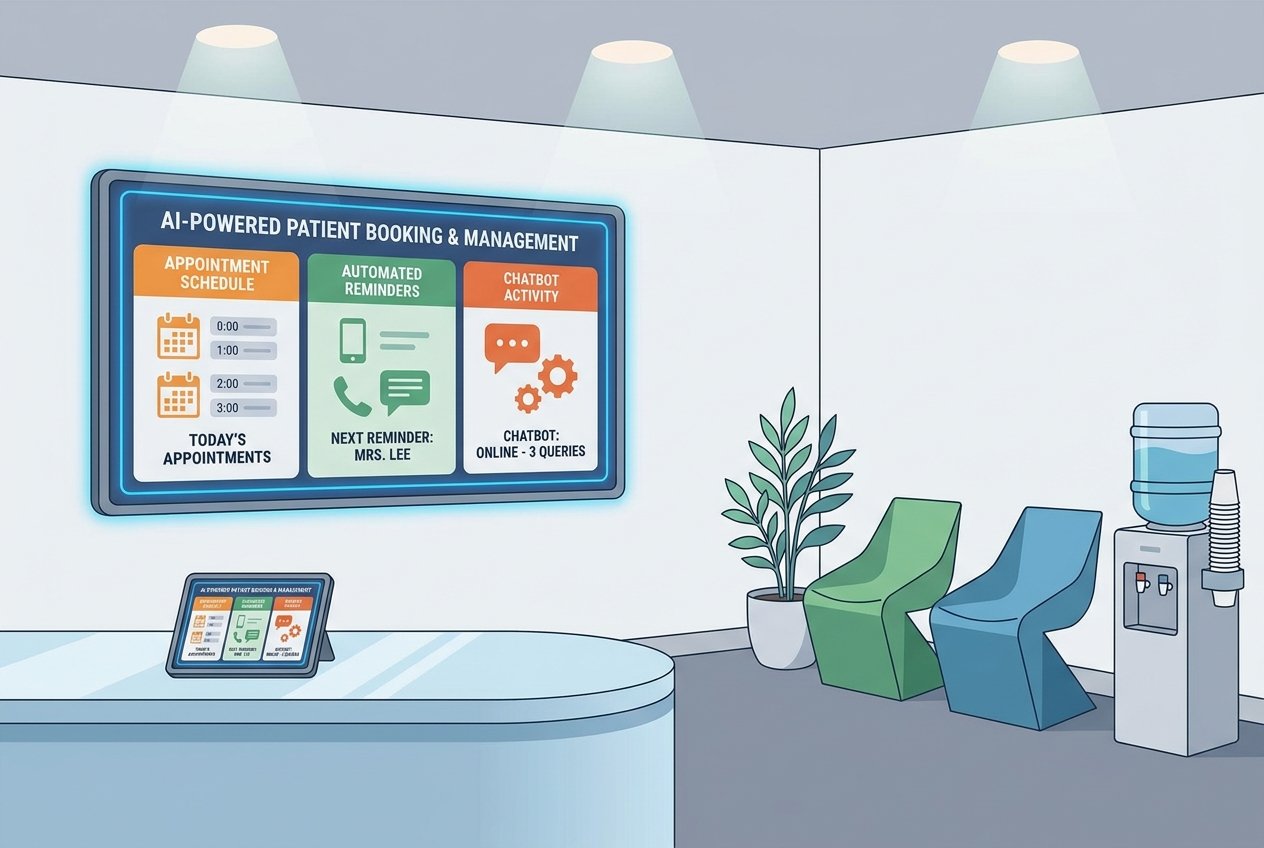
AI patient booking systems address this problem directly. A well-configured AI booking chatbot, integrated with your practice management software, can:
- Handle new patient registration enquiries around the clock
- Display real-time appointment availability and confirm bookings instantly
- Ask relevant triage questions to match patients with the right clinician and appointment type
- Capture patient contact details and preferences for follow-up
- Automatically add new bookings to the practice diary without any manual input
The results from UK dental practice case studies are compelling. One AI telephone system rollout at a UK dental group reported a conversion rate improvement from 10% to 60% for inbound enquiries, with an estimated £90,000 in additional annual revenue. Another multi-site group saw call conversion rise from 40% to 90%, generating £30,000 in reactivated treatments within 30 days of implementation, as reported by Dentistry.co.uk.
Healthcare scheduling AI is no longer the preserve of large hospital trusts. For small and medium-sized independent dental practices across England, Scotland, Wales, and Northern Ireland, these tools are now accessible, affordable, and straightforward to deploy. At Kaizen AI Consulting, we work with UK businesses to identify, configure, and implement the right AI automation tools for their specific workflows, including patient-facing booking and enquiry management systems tailored to the dental and healthcare sector.
Automated Appointment Reminders: The Single Most Effective Tool for Reducing No-Shows
Of all the dental practice automation tools available, automated appointment reminders deliver one of the clearest and most measurable returns on investment. The logic is simple: patients miss appointments because they forget, not because they do not want to attend. A well-timed, personalised reminder removes that barrier.
Modern AI reminder systems go far beyond a basic SMS sent the day before. They use behavioural data and machine learning to determine the optimal time, channel, and message for each patient. A busy professional might respond best to a WhatsApp reminder two days before their appointment. A retiree may prefer a phone call reminder the morning of. AI systems learn these preferences over time and adjust automatically.
Crucially, AI reminder systems also enable instant two-way communication. Rather than passively receiving a reminder, patients can confirm, reschedule, or cancel directly from the message. When a cancellation comes in, the system can automatically offer the freed slot to patients on the waiting list, meaning the appointment is filled rather than lost.
Research across the healthcare sector consistently shows that automated reminder systems can reduce no-show rates by between 10% and 30%, depending on the patient population, reminder timing, and the ease of rescheduling. For a practice experiencing five or more no-shows per week, this represents a substantial recovery of revenue that would otherwise be written off.
A 2026 report on AI chatbot adoption in healthcare highlighted one major medical centre that achieved a 47% increase in digitally confirmed appointments after introducing an AI scheduling and reminder assistant, reducing administrative workload significantly in the process.
Patient Follow-Up and Recall Automation: Maximising Lifetime Patient Value
Patient recall is one of the most underutilised revenue opportunities in UK dentistry. Every dental practice has a database of patients who are overdue for a hygiene appointment, a check-up, or a treatment they previously expressed interest in but never completed. Manually identifying and contacting these patients requires significant time and is rarely done consistently.
AI-powered recall and follow-up systems automate this entire process. By integrating with your practice management software, the AI can:
- Automatically identify patients who are overdue for routine appointments
- Segment patients by treatment type, time since last visit, and engagement history
- Send personalised re-engagement messages at the optimal time
- Follow up on incomplete treatment plans with tailored prompts
- Request patient reviews and testimonials after successful treatments
- Trigger post-treatment care reminders and aftercare instructions
The global AI in dentistry market, valued at USD 559.2 million in 2025 and projected to reach USD 3.26 billion by 2034 at a compound annual growth rate of 21.78%, reflects the extraordinary pace at which dental technology is evolving. Patient recall and follow-up automation is a central driver of this growth, as practices recognise the measurable impact on patient retention and lifetime value.
For practices operating in a competitive private dental market, effective recall automation is the difference between a patient who drifts away and one who returns every six months for decades. Even a modest improvement in patient retention can translate into significant revenue gains over time.
GDPR Compliance: What UK Dental Practices Need to Know
Any discussion of AI in UK dental practices must address data protection. Dental records are classified as special category data under UK GDPR and the Data Protection Act 2018, meaning they attract the highest level of regulatory protection. Before deploying any AI automation tool, dental practices must ensure:
- A lawful basis exists for processing patient data under Article 6 of UK GDPR, alongside a valid Article 9 condition for special category health data
- Patients are transparently informed about how AI tools interact with their data
- A Data Protection Impact Assessment (DPIA) is completed before deploying AI systems that process health data at scale
- Any third-party AI vendors have signed appropriate Data Processing Agreements and can demonstrate compliance with UK data residency and transfer requirements
- Data minimisation principles are upheld, collecting only what is strictly necessary for booking and communication purposes
- The system includes robust encryption, access controls, and audit logs
Compliance need not be a barrier to adoption. The majority of reputable AI booking and patient communication platforms designed for UK dental practices are built with UK GDPR compliance as a foundational requirement. Choosing the right vendor and conducting proper due diligence before implementation is critical, however, and this is an area where specialist guidance can save practices significant time and risk.
Getting Started: A Practical Roadmap for Dental Practice Automation
For dental practice owners considering their first steps into AI automation, the process does not need to be daunting. A practical starting framework involves three phases:
Phase 1: Audit your current patient journey. Map out exactly how patients currently book, receive reminders, and are followed up. Identify the points of friction: Where do enquiries go unanswered? When are no-shows most common? Which patient segments are most overdue for recall?
Phase 2: Prioritise the highest-impact automation. For most UK dental practices, automated appointment reminders deliver the fastest return on investment and the lowest implementation complexity. Start here, then layer in AI booking automation and recall workflows as confidence grows.
Phase 3: Select compliant, integrated tools. Choose AI platforms that integrate natively with your existing practice management software (such as Dentally, Software of Excellence, or Carestream), are demonstrably UK GDPR compliant, and come with clear support and onboarding resources.
Navigating this landscape can be complex, particularly for practice owners without a technology background. This is where working with an experienced AI consulting partner makes a meaningful difference. The team at Kaizen AI Consulting specialises in helping UK businesses, including healthcare and dental practices, design and implement AI automation strategies that are tailored to their specific operational needs, budget, and compliance requirements. From initial audit through to full deployment and staff training, we ensure your practice realises the full value of dental technology without the guesswork.
The Competitive Advantage of Early Adoption
The UK dental market in 2026 is characterised by rising patient expectations, constrained NHS access, and growing competition from corporate dental groups that already invest heavily in technology. A Christie and Co business outlook report published in January 2026 found that 59% of dental professionals hold a positive outlook for the sector in 2026, driven by private patient growth and operational improvements.
Independent dental practices that adopt AI automation now are positioning themselves to capture this growth. The practices that will thrive in the next five years will not necessarily be the ones with the most expensive clinical equipment. They will be the ones that offer the most frictionless, responsive, and personalised patient experience, and AI automation is the most practical and cost-effective route to achieving that.
Whether you operate a single-chair independent practice or a multi-site group, the principles are the same: automate the routine so your team can focus on the exceptional. AI for dental practices is not about replacing people. It is about giving your team the tools to do their best work whilst ensuring no patient falls through the cracks.
Ready to Automate Your Dental Practice?
If you are a dental practice owner or manager looking to reduce administrative burden, cut no-show rates, and grow patient revenue through smarter technology, we would love to help. Get in touch with the team at Kaizen AI Consulting today for a no-obligation consultation. We will assess your current workflows, identify the highest-impact automation opportunities, and recommend a practical, compliant implementation plan built around the specific needs of your practice.
The future of dental practice management is automated, intelligent, and patient-centred. The question is not whether to adopt dental AI, but how quickly you can make it work for your practice.