Setting the right price has always been one of the hardest parts of running a small business. Price too high and you lose customers. Price too low and you leave profit on the table. In 2026, the answer is no longer guesswork. AI dynamic pricing is giving small businesses the same revenue optimisation tools that global enterprises have used for years, and the results are transforming bottom lines across the UK.
According to the SBE Council’s March 2026 Small Business Tech Use Survey, 60% of small businesses either use or plan to use pricing tools. Among those already using them, 94% say the tools improved their competitive position, and an impressive 97% report revenue gains. If you are still setting prices manually, you are almost certainly leaving money on the table.
What Is AI Dynamic Pricing?
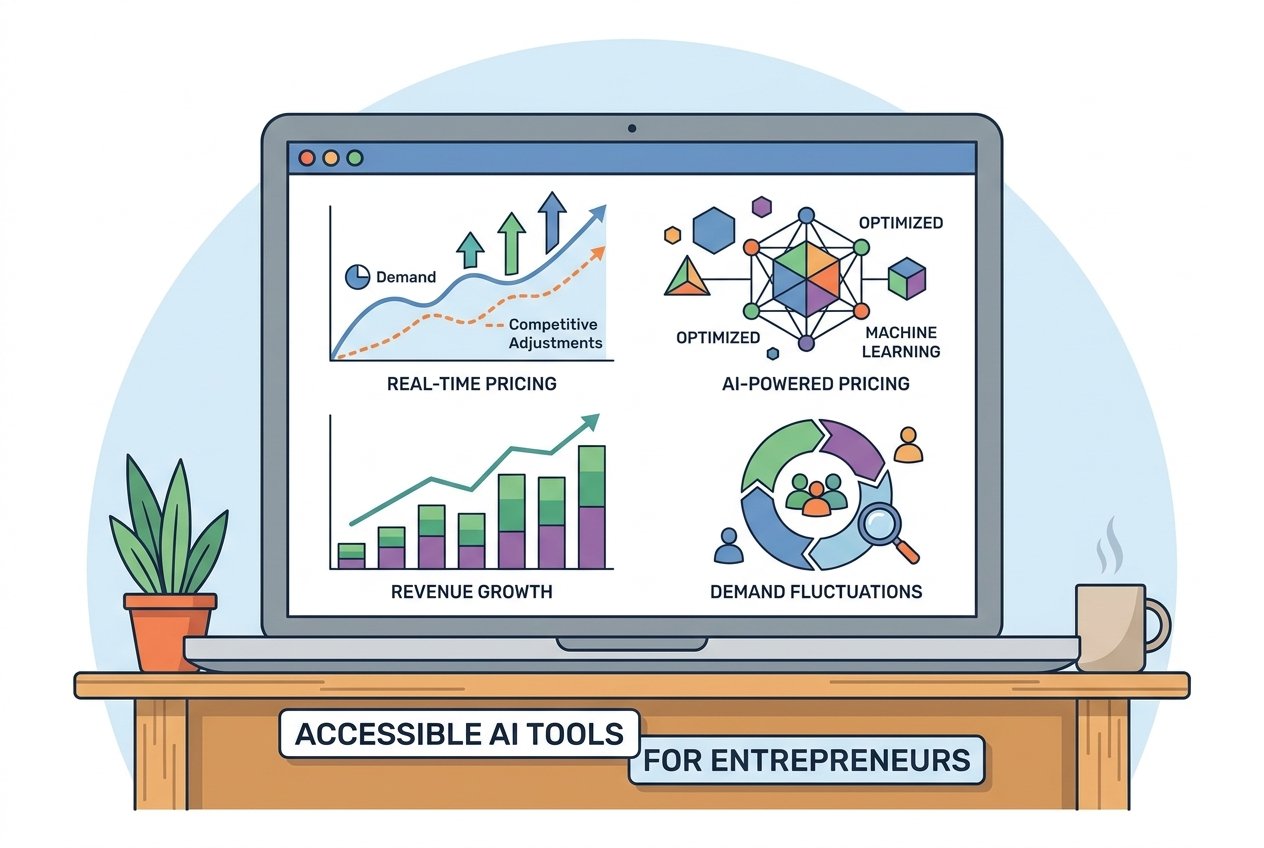
AI dynamic pricing uses machine learning algorithms to analyse real-time data and automatically adjust prices based on demand, competitor activity, inventory levels, customer behaviour, and market conditions. Unlike traditional pricing models that rely on periodic reviews or gut instinct, algorithmic pricing for small business operates continuously, making micro-adjustments that maximise revenue without alienating customers.
The technology gathers data from multiple sources, including your own sales history, competitor pricing, seasonal trends, and even local events. It then predicts how customers will respond to different price points and recommends or implements the optimal price at any given moment. This is not about charging the highest possible price. It is about finding the price that balances volume and margin to produce the best overall outcome.
Why Small Businesses Can No Longer Afford to Ignore Smart Pricing Tools
For years, dynamic pricing was the preserve of airlines, hotels, and multinational retailers with dedicated data science teams. That has changed. Cloud-based smart pricing tools have democratised access, making revenue optimisation affordable for independent retailers, e-commerce operators, hospitality venues, and professional service firms.
Research from Xenoss published in March 2026 found that businesses can see up to 16% revenue growth after implementing AI-based dynamic pricing. Yet the same report revealed that 71% of companies still rely on scattered, limited, and ad-hoc competitor-price tracking. This gap between what is possible and what most small businesses actually do represents a significant competitive opportunity.
In the UK, the trend is accelerating. The Office for National Statistics reported in January 2026 that approximately 25% of UK businesses were already using some form of AI technology by late December 2025, with 15% planning to adopt AI within the next three months. Among larger firms with 250 or more employees, adoption stood at 44%. Small businesses that move early on pricing optimisation will gain a first-mover advantage before these tools become standard across every sector.
How Algorithmic Pricing Works in Practice
Modern AI pricing systems typically follow a three-stage process that turns raw data into profitable pricing decisions.
Data Collection and Integration
The system connects to your point-of-sale software, e-commerce platform, inventory management system, and external data feeds. It collects historical transaction data, current stock levels, competitor prices, web traffic patterns, and macroeconomic indicators. The more data sources you integrate, the more accurate the pricing recommendations become.
Pattern Recognition and Prediction
Machine learning models analyse this data to identify patterns humans would miss. They learn which products are price-sensitive, which customers buy on impulse versus after comparison shopping, and how demand fluctuates by hour, day, or season. The algorithms continuously refine their predictions as new data flows in.
Price Optimisation and Execution
Based on these predictions, the system calculates the price that will maximise revenue, profit, or another defined goal. Some platforms simply recommend prices for human approval, while more advanced systems can update prices automatically within parameters you set. You retain full control over minimum and maximum prices, ensuring your brand positioning remains intact.
The Business Case for Pricing Optimisation
The financial impact of getting pricing right is hard to overstate. A 1% improvement in price realisation typically delivers an 8-11% increase in operating profit, according to multiple management studies. For a small business with tight margins, this can be the difference between struggling and thriving.
Beyond the direct revenue lift, AI dynamic pricing delivers several secondary benefits. It reduces the time owners and managers spend on manual price reviews. It minimises the risk of human error, such as forgetting to update prices after a cost increase. It provides detailed analytics that reveal which products drive profitability and which merely create the illusion of busyness. And it enables rapid response to competitor moves, supply chain disruptions, or shifts in customer demand.
Precedence Research forecasts that the global generative AI in pricing market, valued at USD 311.60 million in 2025, will reach USD 1,335.99 million by 2035. Crucially, SMEs are expected to expand at the highest compound annual growth rate between 2026 and 2035. The message is clear: this is not an enterprise fad. It is the future of how all businesses will set prices.
Common Concerns and How to Address Them
Many small business owners hesitate to adopt algorithmic pricing for understandable reasons. Transparency and customer trust top the list. No one wants to feel they are being exploited by opaque technology. The solution is to implement pricing rules that align with your values. Set clear boundaries on how much prices can change within a given period. Communicate openly with customers about your pricing philosophy. And remember that dynamic pricing includes lowering prices during quiet periods, not just raising them when demand spikes.
Another concern is complexity. Small business owners already wear multiple hats and do not have time to become data scientists. Fortunately, modern smart pricing tools are designed with usability in mind. Many integrate directly with popular platforms like Shopify, WooCommerce, and Square. They offer dashboards that translate algorithmic outputs into plain English recommendations. And they allow you to start with simple rules-based pricing before graduating to full AI-driven optimisation.
Regulatory considerations also matter, particularly in the UK and EU. The EU’s Digital Services Act requires transparency in online transactions, and policymakers are paying increasing attention to personalised pricing practices. Reputable pricing platforms build compliance features into their products, but business owners should stay informed about evolving rules. Working with experienced consultants can help you navigate these requirements confidently.
Getting Started with AI Dynamic Pricing
The journey to pricing optimisation does not require a complete overhaul of your business systems overnight. A phased approach typically delivers the best results.
Start by auditing your current pricing process. How do you set prices today? How often do you review them? What data do you currently use? This baseline assessment reveals quick wins and identifies the data gaps you need to fill.
Next, choose a pricing tool that integrates with your existing technology stack. For e-commerce businesses, platforms like specialised AI solutions for small businesses can connect directly to your online store. For brick-and-mortar retailers, look for systems that work with your EPOS system. The key is minimising disruption while maximising data flow.
Begin with a limited product range or a single category. Test the system’s recommendations against your manual prices. Measure the impact on sales volume, revenue, and customer feedback. Once you see positive results, expand to additional products and enable more automated features.
At Kaizen AI Consulting, we help small businesses implement pricing optimisation strategies that fit their specific industry, customer base, and technology environment. Our team works with you to select the right smart pricing tools, integrate them with your existing systems, and build pricing rules that protect your brand while growing your revenue.
Real-World Applications Across Industries
AI dynamic pricing is not limited to any single sector. Independent hotels and guesthouses use it to adjust room rates based on local events, weather forecasts, and booking patterns. Restaurants apply it to delivery menu pricing during peak hours. Retailers optimise prices across thousands of SKUs based on competitor monitoring and stock levels. Professional service firms use value-based pricing models supported by AI analysis of project scope, client history, and market rates.
Even businesses with fixed costs, such as manufacturers and wholesalers, benefit from algorithmic pricing for contract negotiations, volume discounts, and channel pricing. The BCG noted in May 2026 that one sales team saw margins increase by 2 percentage points after using real-time AI pricing recommendations. For a business with millions in revenue, that translates into substantial additional profit.
The Cost of Waiting
Every day you rely on static pricing is a day your competitors might be optimising theirs. The SBE Council survey found that 90% of businesses already using pricing tools plan to increase their usage in the next twelve months. This means the competitive gap between businesses using AI dynamic pricing and those that are not will widen rapidly.
UK AI consulting day rates currently range from £1,200 to £8,500 depending on the provider and scope, according to 2026 market data. However, focused engagements in the £50,000 to £150,000 range often show the fastest payback, averaging around fourteen months. For small businesses, the return on investment from pricing optimisation typically comes much faster because the revenue impact is immediate and the implementation costs are lower than enterprise-scale projects.
Conclusion
AI dynamic pricing has moved from enterprise luxury to small business necessity. The technology is accessible, the business case is proven, and the cost of inaction is measurable lost revenue. Whether you run an online shop, a local service business, or a hospitality venue, smart pricing tools can help you capture the full value of what you sell.
You do not need to navigate this transformation alone. Contact Kaizen AI Consulting today to discuss how we can help you implement a pricing optimisation strategy tailored to your business. Our experts will guide you through tool selection, system integration, and ongoing optimisation, ensuring you stop leaving money on the table and start maximising every transaction.